Casa Batlló
Barcelona, Spain
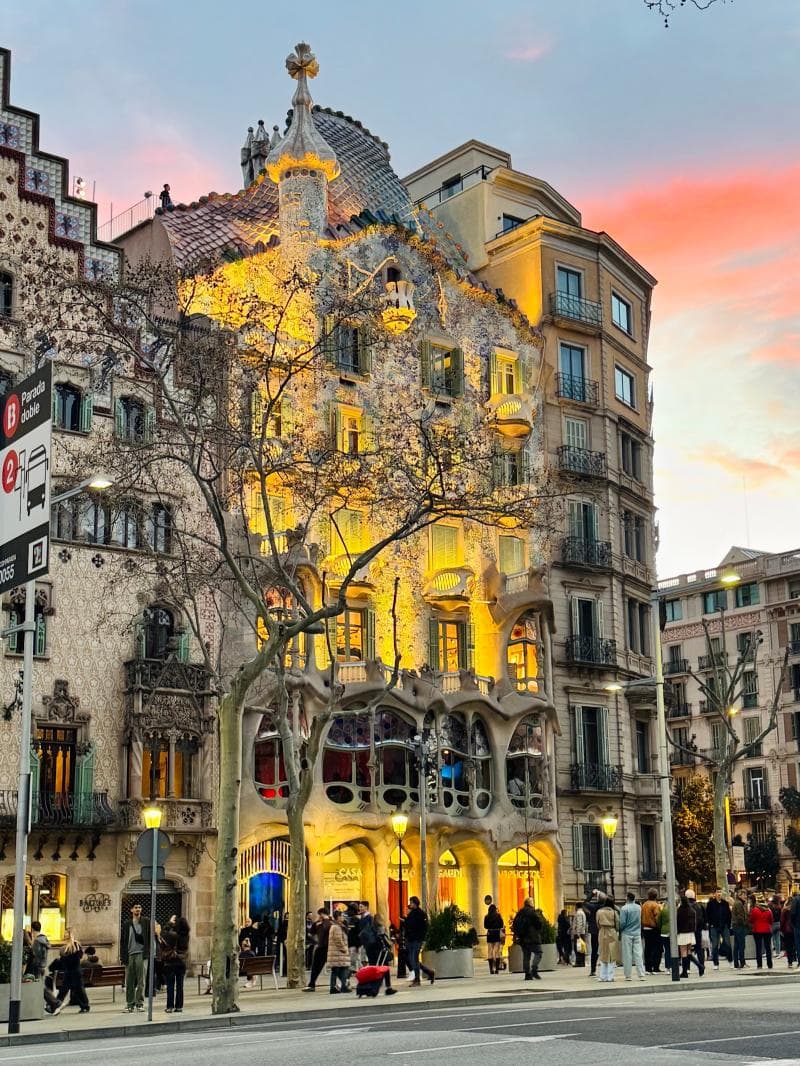
Discover Casa Batlló in Barcelona, Spain – Antoni Gaudí's iconic modernist masterpiece, a UNESCO World Heritage site with unique, nature-inspired architecture.
Overview
Nestled on the vibrant Passeig de Gràcia in the heart of Barcelona, Spain, Casa Batlló stands as a breathtaking testament to the boundless imagination of Antoni Gaudí. This architectural marvel, completed between 1904 and 1906, is a cornerstone of Catalan Modernisme and has captivated visitors from around the globe for its fantastical forms and vibrant facade. Recognized as a UNESCO World Heritage site since 2005, Casa Batlló is not merely a building but a sculpted narrative that invites onlookers into a dreamlike world, where conventional lines give way to organic curves and natural inspiration.
History & Cultural Background
The story of Casa Batlló begins not with a new construction, but with a radical transformation. The original building, erected in 1877 by Emili Sala Cortés (one of Gaudí's former professors), was a conventional structure of its time. In 1903, the property was acquired by Josep Batlló i Casanovas, a wealthy textile industrialist who sought a home that would truly stand out among the city's burgeoning bourgeoisie. Initially contemplating demolition, Josep Batlló granted Gaudí complete creative freedom, and the visionary architect instead undertook an ambitious renovation between 1904 and 1906. This decision led to one of Gaudí's most original and iconic works, defying the architectural norms of the era.
Casa Batlló is famously located within the 'Illa de la Discòrdia' or 'Block of Discord,' a prestigious section of Passeig de Gràcia. This block earned its name because it showcases striking and distinctly different modernist buildings designed by rival architects of the period, including works by Lluís Domènech i Montaner and Josep Puig i Cadafalch. In 1969, Casa Batlló was declared a Historic-Artistic Monument, and its inclusion in the UNESCO World Heritage list in 2005 solidified its status as an invaluable cultural asset. The house opened its doors to the public for cultural tours in 2002, allowing millions to experience Gaudí's genius firsthand.
What Makes It Special
Gaudí's unparalleled ability to draw inspiration from nature is profoundly evident throughout Casa Batlló. The building famously eschews straight lines, embracing organic, undulating forms that mimic elements from the natural world. The facade is a vibrant canvas, adorned with a colorful mosaic made of broken ceramic tiles, known as 'trencadís,' and glass, which shimmers and shifts in color like a dynamic, living surface. The skeletal-like columns and distinctive balconies, often likened to masks or skulls, lend the building a truly unique and somewhat mysterious character.
Perhaps the most iconic feature is the roof, designed to resemble the scaly back of a dragon, covered with iridescent tiles. A four-armed cross crowns the structure, adding to its symbolic richness. Inside, the innovative design continues with curved walls, elaborate woodwork, and a remarkable central lightwell. This lightwell, clad in varying shades of blue ceramic tiles, not only floods the interior with natural light but also aids in ventilation, demonstrating Gaudí's ingenious blend of aesthetics and functionality. From the mushroom-shaped fireplace on the Noble Floor to the attic's parabolic arches reminiscent of a whale's ribcage, every detail reflects Gaudí's artistic vision and deep connection to nature.
Stories, Fun Facts & Local Details
Casa Batlló has earned several evocative nicknames over the years. It is often referred to as 'Casa dels Ossos' or 'House of Bones,' a nod to its bone-like pillars and skull-shaped balconies. Another popular moniker is the 'House of the Dragon,' inspired by the undulating, scaly roof, which many believe depicts the dragon slain by Saint George, the patron saint of Catalonia. The cross on the rooftop is said to represent Saint George's sword, piercing the beast's back.
Gaudí himself never provided explicit explanations for the symbolism within Casa Batlló, encouraging visitors to interpret the details with their own imagination. This playful ambiguity adds to the building's enduring charm and intrigue. The Batlló family resided in the main apartment for decades, until the 1950s. After passing through various hands, the Bernat family, known for the Chupa Chups lollipop company, acquired the property in 1993 and subsequently opened it to the public for events and cultural tours. Today, Casa Batlló welcomes over a million visitors annually, making it one of Barcelona's most celebrated attractions.
Visitor Perspective
Visiting Casa Batlló offers an immersive and unforgettable journey into Antoni Gaudí's creative universe. The experience is enhanced by modern technology, including augmented reality guides that bring Gaudí's visions to life, making the intricate details and natural inspirations even more comprehensible. Guests consistently praise the whimsical and imaginative atmosphere, feeling as though they are stepping into a fairytale.
Exploring the various levels, from the elaborate Noble Floor to the unique attic and the iconic rooftop terrace, reveals new perspectives and stunning architectural elements at every turn. The rooftop, in particular, offers not only a closer look at the dragon's back but also panoramic views of Barcelona. For a smooth visit, it is highly recommended to book tickets in advance, especially during peak seasons. Wearing comfortable shoes is also advisable to fully enjoy the exploration of this extraordinary building. Recent enhancements, such as new immersive experiences like the Gaudí Cube and a renovated stairwell by Kengo Kuma, continue to enrich the visitor's adventure into Gaudí's mind.
Coordinates: 2.16492, 41.39158
View on Google Maps💬 How Travelers Describe This Place
Based on community votes
Must See
670Photogenic
620Unique
594Beautiful
166Interesting
83
Traveler Stories
Discover memorable experiences shared by travelers who have visited this place.
No traveler stories yet.
Be the first traveler to share what made this place memorable.
Things to see at Casa Batlló



Tour
By
Spot
Discover amazing places around the world. Your journey starts here.
Explore
© 2026 TourBySpot. All rights reserved.