Light Well
Barcelona, Spain
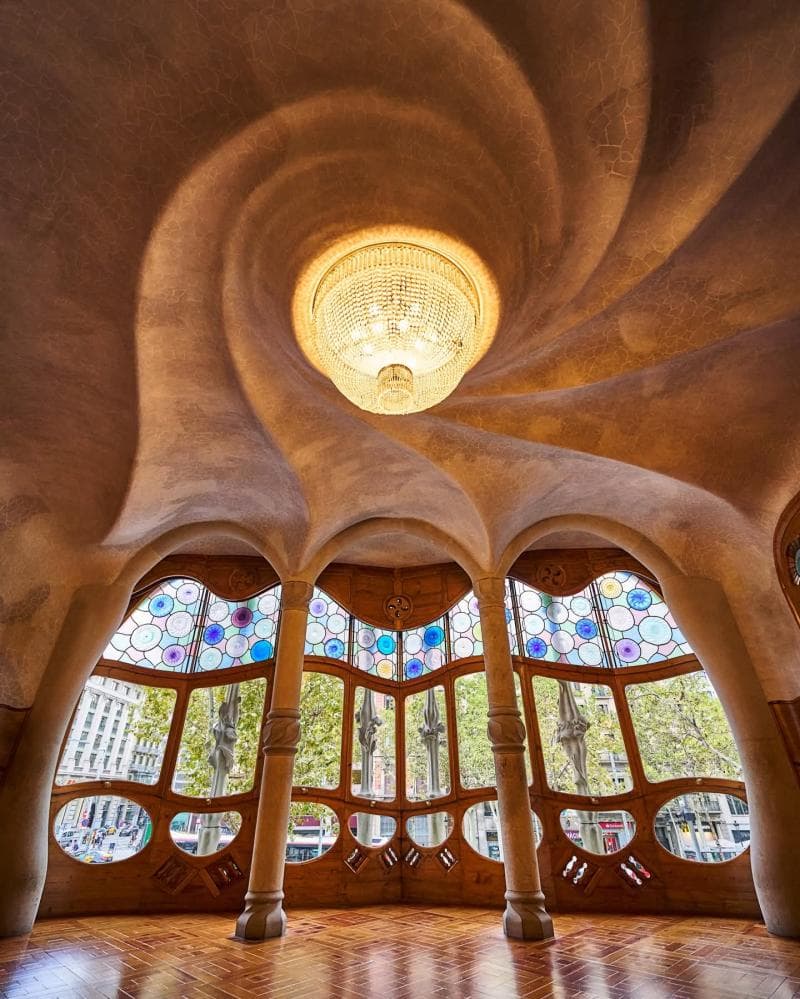
Explore the Light Well at Casa Batlló in Barcelona, Spain – Gaudí's stunning architectural solution for natural light and air.
Overview
Deep within the extraordinary Casa Batlló in Barcelona, Spain, lies a masterpiece of architectural innovation and natural inspiration: the Light Well. Also known as the Atrium, this central vertical shaft is far more than a mere functional element; it is the luminous heart of Antoni Gaudí's iconic creation, designed to bring light and air to every corner of the building. Its striking design transforms what could have been a utilitarian space into an immersive visual experience, a hallmark of Gaudí's genius and his deep connection to nature.
Gaudí’s expansion and artistic treatment of the Light Well was a pivotal part of the 1904-1906 renovation of Casa Batlló. It stands as a testament to his ability to blend practical solutions with breathtaking aesthetics, creating a space that is both highly functional and deeply evocative. The Light Well's unique features, particularly its use of color and light, make it an unforgettable part of any visit to this UNESCO World Heritage site.
History & Cultural Background
Casa Batlló was originally built in 1877 by Emilio Sala Cortés, one of Gaudí's architecture professors. In 1903, textile industrialist Josep Batlló acquired the building and initially considered demolishing it. However, Gaudí convinced him that a radical renovation would suffice, thus embarking on a project from 1904 to 1906 that would transform the conventional building into a Modernista marvel.
At the turn of the 20th century, urban buildings in Barcelona, particularly townhouses like Casa Batlló, faced significant challenges in terms of natural lighting and ventilation, especially for internal rooms and upper floors. Gaudí's design for the Light Well directly addressed these issues, pioneering solutions that were ahead of their time. His approach was deeply rooted in the Modernisme movement, which emphasized organic forms, natural light, and artisanal craftsmanship, often drawing inspiration from the Mediterranean environment. By expanding the central well, Gaudí not only solved a practical problem but also created a profound architectural statement that integrated light and air into the building's very essence.
What Makes It Special
The Light Well's distinctiveness lies in its ingenious design and Gaudí's masterful manipulation of light, color, and form. The walls of the well are adorned with ceramic tiles in a gradient of blue shades, ranging from darker tones at the top to lighter ones at the bottom. This meticulous arrangement is not merely decorative; it's a brilliant optical illusion designed to ensure that natural light is distributed uniformly to all floors.
Complementing this, the windows bordering the Light Well are strategically sized: smaller at the top, where light is most abundant, and progressively larger towards the lower levels to capture and channel more light into the rooms below. Furthermore, these windows feature adjustable wooden slats or shutters, allowing residents to regulate both ventilation and the intensity of incoming light, demonstrating Gaudí's commitment to both comfort and energy efficiency. An original wooden-cabin elevator, still operational, adds to the historical charm and functionality of this central space.
Stories, Fun Facts & Local Details
Gaudí's Light Well is often described as evoking an underwater realm or the depths of the sea. This 'submarine atmosphere' is enhanced by skylights resembling tortoise shells and vaulted walls with sinuous shapes found in the nearby lobby, immersing visitors in a fantastical world reminiscent of Jules Verne. The way the blue tiles, sometimes numbering over thirty custom shades, reflect and diffuse light creates a captivating visual poetry, making the space feel like a 'vertical river of color and air' or a 'column of captured sky'.
A fascinating detail is how the glass on each stairwell landing distorts the tiles of the Light Well, transforming them into beautiful, undulating 'water waves' as one ascends or descends, adding to the organic, fluid sensation. This design reflects Gaudí's profound inspiration from nature and his belief that there are 'no straight lines or sharp corners in nature'. The Light Well also played a crucial role in Gaudí's advanced, passive ventilation system, allowing air to circulate efficiently throughout the building long before modern air conditioning.
Visitor Perspective
Stepping into the Light Well of Casa Batlló is often cited as one of the most transcendent moments of a visit. Travelers frequently describe feeling transported, as if suspended inside a vast azure ocean cavern, or moving through a sunlit sea. The ever-changing play of light and shadow on the gradient blue tiles provides a dynamic and engaging experience. Visitors are encouraged to pause, look up towards the main skylight, or observe the varying reflections as they move through the different levels.
The Light Well is not just a passageway; it's an integral part of the narrative Gaudí created, a demonstration of how art and function can merge to create something truly magical. It offers a tangible insight into Gaudí's innovative mind and his commitment to crafting spaces that are not only beautiful but also harmonious with their environment. The collective impression is one of wonder and appreciation for the architect's ability to turn a challenging urban condition into an awe-inspiring natural phenomenon.
Coordinates: 2.1649, 41.3916
View on Google Maps💬 How Travelers Describe This Place
Based on community votes
Must See
826Photogenic
494Beautiful
242Interesting
125Unique
82
Traveler Stories
Discover memorable experiences shared by travelers who have visited this place.
No traveler stories yet.
Be the first traveler to share what made this place memorable.

Tour
By
Spot
Discover amazing places around the world. Your journey starts here.
Explore
© 2026 TourBySpot. All rights reserved.