Noble Floor
Barcelona, Spain
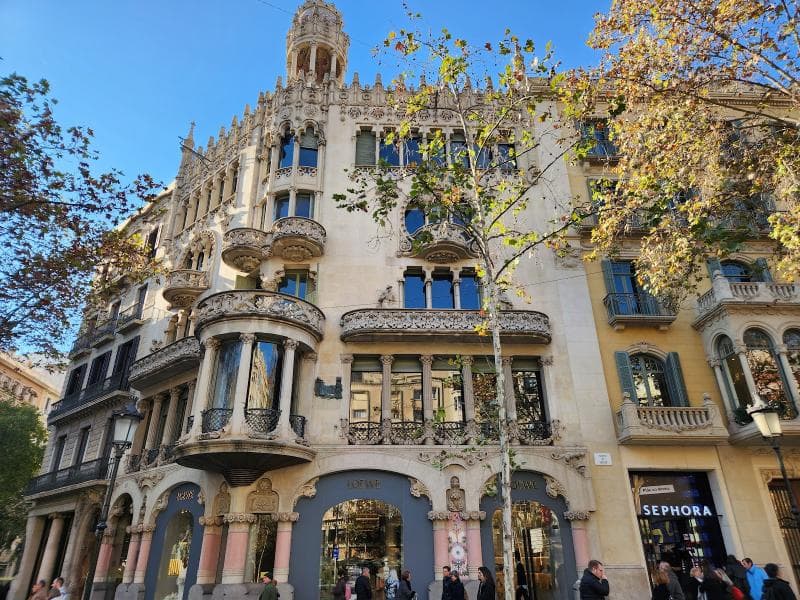
Discover the Noble Floor of Casa Batlló in Barcelona, Spain, a Modernisme masterpiece by Antoni Gaudí, featuring organic designs and rich history.
Overview
Stepping into the Noble Floor, or Planta Noble, of Casa Batlló in Barcelona, Spain, is to enter a meticulously crafted world where art and architecture intertwine. This grand space was once the primary residence of the affluent Batlló family, who commissioned Antoni Gaudí to transform their ordinary 19th-century building into the Modernisme masterpiece we see today. Located on the bustling Passeig de Gràcia, the Noble Floor represents the heart of the home, a sprawling area of over 700 square meters designed for both lavish living and the daily routines of a prominent industrialist family. It offers a profound glimpse into Gaudí's genius, showcasing his innovative use of organic forms, light, and texture to create an immersive, almost dreamlike environment for its inhabitants.
As you explore, you will discover distinct areas such as Mr. Batlló's private office, a spacious dining room, and even a secluded spot designed for courting, all connected by Gaudí's signature fluid designs. The experience of the Noble Floor is one of continuous discovery, where every detail, from the ceilings to the doorframes, speaks to a vision that transcended conventional architecture.
History & Cultural Background
The building now known as Casa Batlló was originally constructed in 1877. In 1903, it was acquired by Josep Batlló i Casanovas, a wealthy textile industrialist who owned several factories in Barcelona. Batlló initially considered demolishing the existing structure but, convinced by Gaudí's audacious vision, instead granted him complete creative freedom to undertake a radical renovation between 1904 and 1906. Gaudí's transformation went far beyond a mere remodel; he completely reconfigured the interior partitioning, expanded the central light well, and added new floors, effectively creating a new architectural icon. This period marked a flourishing of Catalan Modernisme, an art nouveau movement characterized by its embrace of natural forms, elaborate ornamentation, and a departure from strict academic styles. Casa Batlló quickly became a prominent example of this movement, located within the 'Block of Discord' on Passeig de Gràcia, a street famed for its magnificent Modernisme architecture. Its innovative design earned it recognition, and in 2005, Casa Batlló was declared a UNESCO World Heritage Site, cementing its place as a globally significant cultural monument.
What Makes It Special
The Noble Floor's uniqueness lies in Gaudí's masterful application of organic architecture, where straight lines are virtually absent. Instead, visitors are enveloped by undulating walls, vaulted ceilings, and fluid forms that mimic elements found in nature. The entrance from the communal lobby sets the tone, evoking an 'underwater ambiance' with its turtle shell-like skylights and sinuous, vaulted walls. Inside the Noble Floor itself, the large oak doors and carved columns contribute to this naturalistic aesthetic. One of its most iconic features is the main living room, which boasts a grand bay window overlooking Passeig de Gràcia, allowing abundant natural light to flood the space. The Batlló family's private dining room opens onto an exclusive indoor garden or rear patio, a serene oasis within the bustling city, designed with elegant ceramic patterns and mosaic tiles. This integration of indoor and outdoor spaces, coupled with the flowing, sculpted stonework and absence of sharp angles, creates a sense of harmony and continuous movement, a hallmark of Gaudí's inventive genius.
Stories, Fun Facts & Local Details
The Noble Floor is rich with subtle storytelling. The famous mushroom-shaped fireplace in Mr. Batlló's study is not merely a functional item but a whimsical, sculptural element that captivates visitors and sparks the imagination. The design throughout the floor, with its animal-like decor and absence of right angles, is a testament to Gaudí's belief in drawing inspiration directly from nature. The family inhabited this floor until the 1950s, allowing their daily lives to unfold amidst Gaudí's fantastical creations. The house itself is affectionately known as 'Casa dels ossos' or the 'House of Bones' due to its skeletal façade, and elements within the Noble Floor reflect this biomorphic aesthetic. For instance, some interpret the columns and balcony designs on the exterior as resembling bones, further contributing to this evocative nickname. The painstaking restoration efforts, which have included archaeological techniques to recover original stuccoes and reproduce wainscoting, ensure that these historical and artistic details are preserved for future generations, maintaining the authenticity of Gaudí's original vision.
Visitor Perspective
Today, the Noble Floor is a primary highlight for visitors to Casa Batlló, offering an immersive journey into Gaudí's extraordinary world. It was first opened to the public as a museum in 2002, allowing countless individuals to experience the private residence of the Batlló family. The ample space, combined with the intricate details and innovative use of light, encourages a slow and contemplative visit. As you move through the rooms, you can appreciate the craftsmanship of the wooden elements, the subtle play of colors, and the way Gaudí manipulated space to create both grandeur and intimacy. The large windows provide a unique perspective of Passeig de Gràcia, offering a contrast between the organic fluidity of the interior and the bustling urban landscape outside. Exploring the Noble Floor is not just about observing architecture; it's about feeling the artistic pulse of Catalan Modernisme and understanding how Gaudí envisioned a living space, blurring the lines between art, nature, and daily life. It is an essential part of the Casa Batlló experience, showcasing the pinnacle of Gaudí's residential design before he dedicated himself fully to the Sagrada Familia.
Coordinates: 2.16492, 41.39158
View on Google Maps💬 How Travelers Describe This Place
Based on community votes
Must See
980Photogenic
944Interesting
396Beautiful
389Unique
340
Traveler Stories
Discover memorable experiences shared by travelers who have visited this place.
No traveler stories yet.
Be the first traveler to share what made this place memorable.

Tour
By
Spot
Discover amazing places around the world. Your journey starts here.
Explore
© 2026 TourBySpot. All rights reserved.