Calanques National Park
Marseille, France
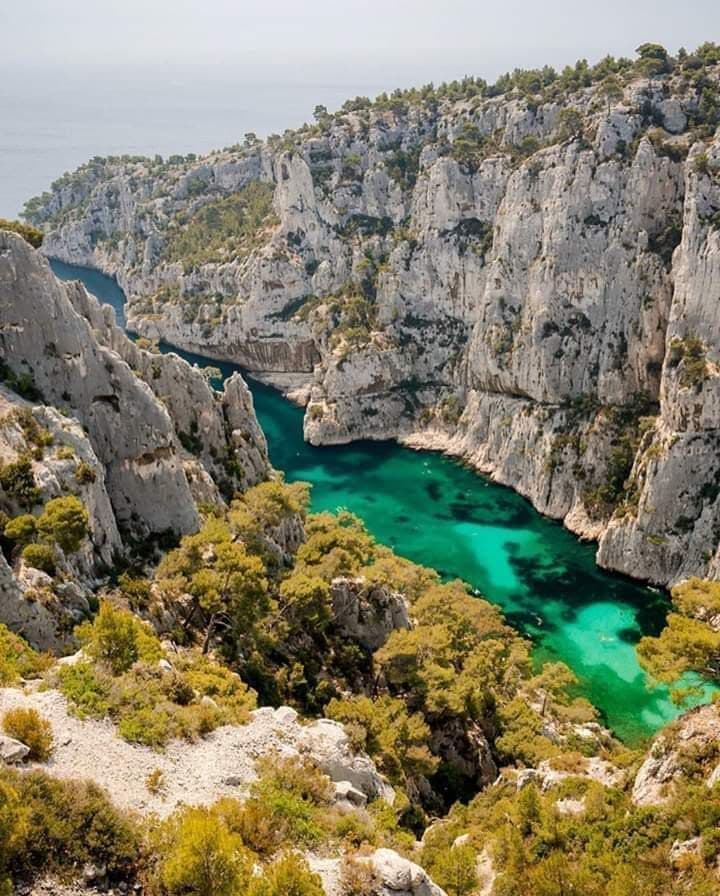
Discover Calanques National Park in Marseille, France. Explore stunning limestone cliffs, turquoise coves, and rich biodiversity in this unique Mediterranean gem.
Overview
Nestled along the Mediterranean coastline, Calanques National Park, stretching between Marseille and Cassis in France, is a breathtaking natural wonder. Established on April 18, 2012, it holds the unique distinction of being Europe's only peri-urban national park encompassing both terrestrial and marine environments. This spectacular landscape is defined by its dramatic, bone-white limestone cliffs that plunge into the intensely turquoise waters, forming steep-walled inlets known as 'calanques'. Covering approximately 520 square kilometers, a remarkable 93 percent of its territory is oceanic, making it a crucial protected area for a rich tapestry of biodiversity. Visitors are drawn to its rugged beauty, from the iconic Calanque d'En-Vau with its towering walls, to the more accessible Calanque de Sormiou and Morgiou, each offering a distinct slice of this Mediterranean paradise.
History & Cultural Background
The story of Calanques National Park is etched in millions of years of geological activity and millennia of human presence. The park's prominent limestone formations originated some 80 million years ago during the Jurassic and Cretaceous periods, when organic and mineral sediments accumulated on ancient seabeds. Tectonic plate collisions approximately 60 million years ago uplifted these rocks, and subsequent erosion by wind, water, and glacial cycles sculpted the distinctive steep inlets and karst topography seen today.
Human history in the Calanques dates back to the Paleolithic period. Evidence of this ancient past is famously preserved in the Cosquer Cave, an extraordinary underwater grotto featuring prehistoric paintings. Over centuries, the Calanques played a strategic role, serving as a natural defense system for Marseille with watchtowers from the 14th century and later fortifications like the Château d'If. Traditional activities such as fishing thrived, with small cabins, known as 'cabanons,' dotting the coves, reflecting a deep-rooted connection between the local populace and the sea.
The push for preservation began as early as 1923 with the establishment of the 'Comité de défense des Calanques,' aiming to prevent industrial development. Decades of effort culminated in the official creation of Calanques National Park in 2012, ensuring the protection of its unique natural and cultural heritage.
What Makes It Special
The Calanques National Park is an ecological gem, boasting a remarkable blend of geological grandeur and vibrant biodiversity. Its most defining feature is, of course, the 'calanques' themselves: dramatic, narrow inlets carved into the white limestone cliffs, often concealing secluded beaches and crystalline waters. This rugged terrain supports a diverse ecosystem, hosting 140 protected terrestrial animal and plant species and 60 protected marine species.
On land, you might spot rare birds like Bonelli's eagle nesting in the cliff faces, alongside Montpellier snakes and European leaf-toed geckos. The flora is adapted to the arid, rocky environment, featuring Aleppo pines, fragrant herbs like thyme and rosemary, and protected species such as Marseille's sea lavender. Beneath the waves, the park's marine area, which makes up 90% of its core, reveals an equally rich world with underwater canyons reaching depths of over 1,500 meters, home to bottlenose dolphins, pilot whales, and loggerhead sea turtles.
The park's identity as Europe's only peri-urban, continental, insular, and marine national park in a Mediterranean environment makes it truly exceptional, offering a wild escape just moments from the bustling city of Marseille.
Stories, Fun Facts & Local Details
Among the most intriguing aspects of the Calanques is the Cosquer Cave, an extraordinary Paleolithic painted cave. Discovered in 1985 by diver Henri Cosquer and officially declared in 1991, this cave's entrance is 37 meters underwater at the foot of Cap Morgiou. Its walls bear unique rock paintings dating back over 20,000 years, depicting hand stencils, seals, and notably, penguins – a rare representation in prehistoric art, offering a fascinating glimpse into a time when the sea level was much lower and the climate colder. Although the original cave is closed to the public to preserve its delicate artworks, a replica in Marseille allows visitors to experience its ancient wonders.
Another local detail is the presence of 'cabanons,' small, traditional cabins often built by fishermen, which are an integral part of the Calanques' cultural fabric, particularly in coves like Sormiou and Morgiou. These simple dwellings speak to a long history of human connection and resourcefulness in this seemingly wild environment. Further east, towards La Ciotat, the Soubeyranes cliffs stand out, not just for being among Europe's highest sea cliffs, but also for their striking red-ochre hues, a contrast to the brilliant white limestone of the main Calanques massif, due to their different geological composition of pudding-stone.
Visitor Perspective
Exploring Calanques National Park is an immersive experience that caters to a range of interests, from the intrepid adventurer to those seeking serene natural beauty. Many visitors choose to hike along its extensive network of trails, with routes varying in difficulty. Popular choices include paths leading to the iconic calanques like Sormiou, Morgiou, and En-Vau, offering unparalleled views of the dramatic coastline. It's crucial to be prepared, especially during warmer months, as trails can be rugged with no shade, and carrying sufficient water (at least 2 liters per person) is essential since there are no water points within the park.
For those who prefer a different perspective, boat tours, kayaking, and paddleboarding are popular ways to explore the hidden coves and admire the sheer cliffs from the sea. Diving and snorkeling are also excellent options for discovering the park's vibrant underwater world. It's important for visitors to be aware of seasonal restrictions, particularly from June to September, when hiking access to certain areas may be closed due to high fire risk. Checking the park's official website for daily access conditions is highly recommended to ensure a safe and enjoyable visit to this fragile yet magnificent landscape.
Coordinates: 5.467, 43.217
View on Google Maps💬 How Travelers Describe This Place
Based on community votes
Interesting
623Photogenic
343Unique
302Must See
250Beautiful
88
Traveler Stories
Discover memorable experiences shared by travelers who have visited this place.
No traveler stories yet.
Be the first traveler to share what made this place memorable.
Things to see at Calanques National Park



Tour
By
Spot
Discover amazing places around the world. Your journey starts here.
Explore
© 2026 TourBySpot. All rights reserved.