Scenic Lookouts
Marseille, France
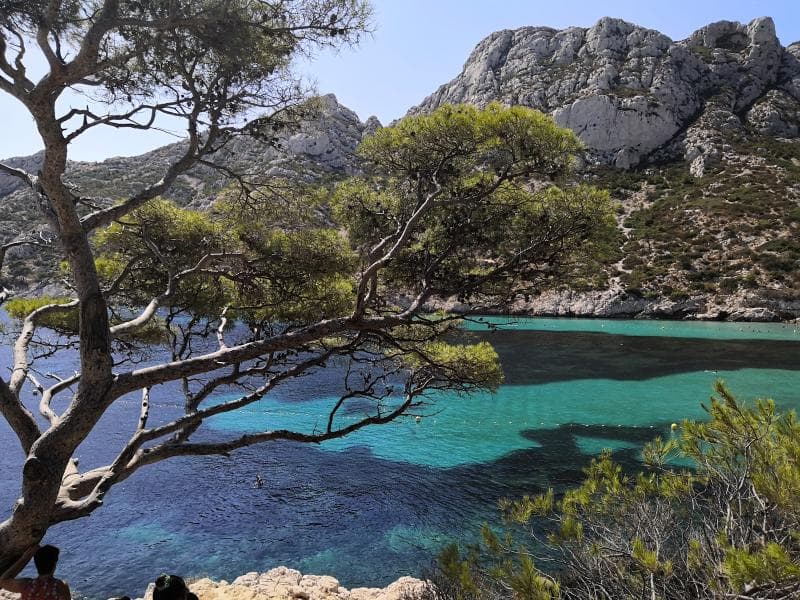
Discover the stunning scenic lookouts of Calanques National Park in Marseille, France. Explore dramatic cliffs, turquoise waters, and rich history.
Overview
Nestled along the Mediterranean coast between the vibrant city of Marseille and the charming town of Cassis, Calanques National Park offers a breathtaking spectacle of nature's artistry. This unique landscape, often described as 'Marseille's fjords,' is characterized by dramatic white limestone cliffs that plunge into crystal-clear turquoise waters. It is Europe's only periurban national park, seamlessly blending a wild natural environment with the proximity of a major metropolis. Within this stunning expanse, numerous scenic lookouts provide unparalleled panoramas, inviting visitors to gaze upon a world where sea, rock, and silence converge.
The park encompasses both terrestrial and marine environments, stretching for approximately 20 kilometers and covering an area of 520 square kilometers, with a significant marine component. Popular viewpoints, such as the Belvédère de Sugiton, the various vistas along the Corniche des Crêtes leading to Cap Canaille, and the stunning overlook of Calanque d'En-Vau, are renowned for their magnificent perspectives, offering diverse angles on the park's rugged beauty.
History & Cultural Background
The geological narrative of the Calanques began approximately 80 million years ago, during the Mesozoic era, when sedimentary limestone rocks formed at the bottom of a tropical sea. Around 60 million years ago, the collision of the African and European tectonic plates uplifted these formations. Over millennia, particularly during the Quaternary ice ages, erosion by water and wind sculpted deep, narrow valleys into the limestone massifs. As sea levels rose, these valleys were submerged, creating the distinctive calanques we see today. The very name 'Calanque' itself stems from the old Provençal word 'calo,' meaning 'small rocky cove,' and a Ligurian root 'anca,' denoting a steep slope.
Human presence in the Calanques dates back to the Paleolithic period, with remarkable evidence found in the Cosquer Cave, adorned with prehistoric cave paintings. Throughout history, the Calanques have served various purposes: from natural defense systems with watchtowers built as early as the 14th century, to sites for agriculture, livestock farming, and fishing, with traditional 'cabanons' (cabins) still dotting some coves. Industrial activities like forestry, lime kilns, and limestone quarries also left their mark until the early 20th century. The imperative to preserve this unique natural heritage led to the establishment of the Comité de défense des Calanques in 1923, culminating in the official creation of Calanques National Park on April 18, 2012, a significant achievement in environmental conservation.
What Makes It Special
What truly sets the scenic lookouts of Calanques National Park apart is the unparalleled drama of their vistas. Imagine towering white-gray limestone cliffs, sculpted by nature into intricate forms, contrasting vividly with the deep azure and turquoise hues of the Mediterranean Sea below. This striking visual dichotomy is a photographer's dream and a source of profound inspiration. From viewpoints like the Belvédère de Sugiton, visitors can take in a sweeping panorama that includes the impressive Grande Candelle and Devenson Cliffs, the scattered Riou archipelago, and the distant silhouette of Cap Canaille.
Cap Canaille itself boasts the title of France's highest maritime cliff, reaching 394 meters, offering awe-inspiring views over the Bay of Cassis and beyond. The iconic Calanque d'En-Vau is often hailed as the 'queen' of the Calanques, celebrated for its narrow inlet encased by dizzying high cliffs and its pristine blue waters, which are particularly spectacular when viewed from above. These lookouts are not merely vantage points; they are windows into a remarkable ecosystem, home to diverse flora and fauna that have adapted to this arid, rocky environment.
Stories, Fun Facts & Local Details
The Calanques have long stirred the human imagination. Beyond their geological marvels, these rugged shores have inspired authors, artists, and explorers. The profound beauty of the region, especially its unique light, has been a muse for painters. A poignant story connected to the area is the recovery of aviator Saint-Exupéry's bracelet from the waters near the Riou archipelago, shedding light on his disappearance.
The geology itself tells tales: the 'poudingue' rock, a conglomerate of pebble debris, takes its name from the English word 'pudding,' linked to the French 'boudin'. Locals have a deep connection to these coves; the traditional 'cabanons' in places like Sormiou and Morgiou are more than just dwellings; they represent a lifestyle intimately tied to the sea and the land. Even the names of prominent features carry local flavor, such as 'Ilot du Torpilleur' at Sugiton, named for its resemblance to a warship. The struggle for the park's creation is a testament to the community's dedication to preserving this natural jewel for future generations.
Visitor Perspective
For the curious traveler, exploring the scenic lookouts of Calanques National Park is an immersive experience. While many calanques offer beaches and water activities, the true magic of the lookouts lies in the panoramic views afforded by the challenging hikes. Trails within the park vary in difficulty, from moderate paths to strenuous treks. The path to the Belvédère de Sugiton, for instance, offers a relatively short walk from Luminy University campus, culminating in sweeping views without the demanding descent into the calanque itself. Accessing the Belvédère d'En-Vau often involves a hike from Cassis, rewarding the effort with truly iconic scenery.
Visitors should be prepared for rocky terrain and sun exposure, making sturdy footwear and ample water essential. Due to the popularity of certain areas, especially Calanque d'En-Vau and Sugiton, access might be regulated or limited, particularly during peak summer months, sometimes requiring advance booking to preserve these fragile environments. Despite the potential for crowds, the feeling of standing atop these ancient cliffs, gazing at the pristine Mediterranean, instills a sense of awe and a profound connection to the wild heart of Provence.
Coordinates: 5.467, 43.217
View on Google Maps💬 How Travelers Describe This Place
Based on community votes
Unique
989Beautiful
613Photogenic
603Interesting
581Must See
207
Traveler Stories
Discover memorable experiences shared by travelers who have visited this place.
No traveler stories yet.
Be the first traveler to share what made this place memorable.

Tour
By
Spot
Discover amazing places around the world. Your journey starts here.
Explore
© 2026 TourBySpot. All rights reserved.