Calanque De Sormiou
Marseille, France
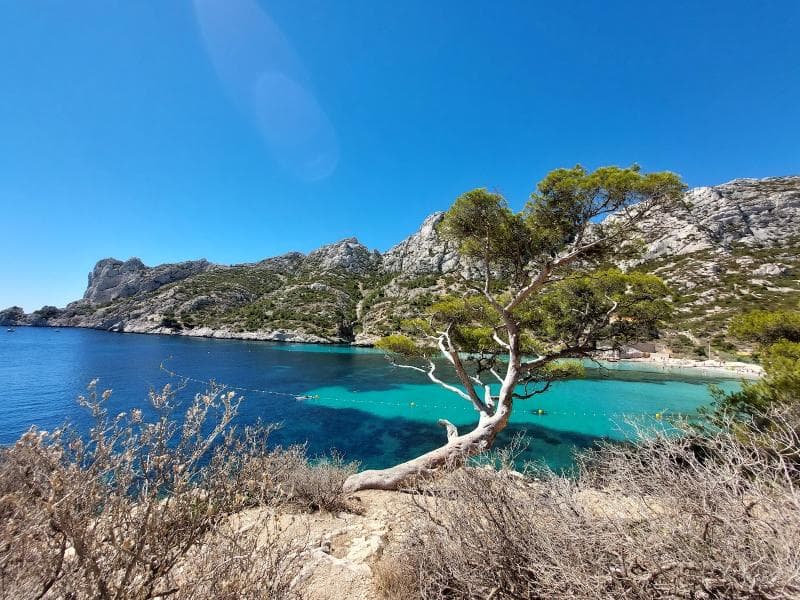
Discover Calanque de Sormiou, a stunning natural inlet in Calanques National Park, Marseille, France. Explore its turquoise waters, sandy beach, and rich history.
Overview
Nestled within the breathtaking Calanques National Park, Calanque de Sormiou stands as a jewel of the Mediterranean coastline, located just south of Marseille, France. It is renowned for its striking natural beauty, characterized by dramatic white limestone cliffs, brilliantly clear turquoise waters, and one of the rare sandy beaches found in the calanques. As the widest of the calanques in Marseille, stretching approximately 800 meters long and 600 meters wide, Sormiou offers a more expansive and welcoming embrace than its narrower counterparts. Its charm is further enhanced by the presence of a quaint fishing port and a collection of traditional 'cabanons' – small, rustic fishermen's houses that dot the shoreline. This picturesque setting makes it a popular destination for a variety of activities, from tranquil swimming and sunbathing to adventurous diving, rock climbing, and scenic hiking. However, due to its immense popularity and delicate ecosystem, access to Calanque de Sormiou, especially by road, is carefully regulated, particularly during the peak summer months and periods of high fire risk.
History & Cultural Background
Calanque de Sormiou boasts a rich history that stretches back millennia, testifying to a profound and enduring human connection with this unique natural environment. Archaeological evidence, notably from the nearby Cosquer Cave, indicates human occupation since the Mesolithic era, long before the sea level rose to its current position. During Classical Antiquity, the area saw settlements by the Ligurians, followed by the Phocean Greeks, and later the Romans, each leaving their mark on the landscape. Historically, Sormiou has always been a haven for fishermen, whose families often combined their maritime pursuits with agriculture and pastoralism in the surrounding hills. The iconic 'cabanons' that define Sormiou's character began appearing in their current form towards the end of the 19th century. A notable period in its history includes 1894, when Alfred de Ferry, husband of the poetess Marie Burett (known as Marie de Sormiou), commissioned the construction of a large house and seventeen of these distinctive cabanons. For centuries, the community in Sormiou was sustained by two wells drawing on underground water sources, a testament to the resourcefulness of its early inhabitants, with these wells only drying up in the 20th century.
What Makes It Special
What truly sets Calanque de Sormiou apart is a combination of its geographical attributes and its unique cultural fabric. Its status as the widest calanque in Marseille allows for a more open and inviting atmosphere, unlike the more enclosed, fjord-like inlets. The presence of a significant sandy beach is a particular rarity and a major draw in this rocky coastal region, making it an ideal spot for relaxation and family outings. The astonishing clarity and vibrant turquoise hues of its waters are frequently compared to the exotic beauty of Polynesian lagoons, creating an 'open-air swimming pool' sensation that is utterly captivating. Beyond its surface allure, Sormiou reveals hidden wonders, most notably the Capelan Cave. This magnificent semi-submerged sea cave, accessible to divers and skilled swimmers, offers an exceptional spectacle as sunlight penetrates its depths, turning the water an extraordinary blue. Sormiou is also celebrated as a premier diving destination, boasting splendid seabeds and intricate underwater tunnels that thrill enthusiasts. Furthermore, the towering limestone cliffs provide numerous challenging routes, establishing Sormiou as a significant site for rock climbing. It holds the distinction of being the only calanque in the Calanques National Park with a supervised swimming area and lifeguards during the summer season, adding a layer of safety for visitors.
Stories, Fun Facts & Local Details
Calanque de Sormiou is imbued with stories and intriguing facts that highlight its deep connection to both nature and humanity. Its stunning landscapes have not gone unnoticed by filmmakers; the calanque served as a memorable backdrop for scenes in the French crime thriller 'La French', starring Jean Dujardin. Perhaps one of its most significant historical ties is to the pioneering world of scuba diving. It was in the clear waters of Sormiou that Jacques Cousteau and Albert Falco, a local protégé, conducted early experiments. Falco, who would later become the captain of Cousteau's legendary research vessel, the Calypso, learned to dive here. The calanque even saw the testing of the first prototype isothermal neoprene wetsuit, an innovation that revolutionized diving globally. Albert Falco’s autobiography, titled 'Sormiou, the blue cradle of my memories', further solidifies this bond, and fittingly, the protected marine area of Sormiou now bears his name. The 'cabanons' are more than just houses; they represent a cherished inheritance, passed down through generations of Marseillais families, embodying a unique way of life and a profound attachment to the calanque. As part of the Calanques National Park, Sormiou belongs to a truly unique protected area – Europe's only national park that encompasses land, marine, and peri-urban zones, highlighting its critical ecological importance right on the doorstep of a major city. However, this popularity comes with a challenge: the calanque can experience significant over-tourism, especially in summer, leading to necessary access restrictions to preserve its fragile beauty.
Visitor Perspective
Approaching Calanque de Sormiou offers an immersive experience, whether by land or sea. For those journeying on foot, the calanque is typically accessed via hiking trails from Les Baumettes or La Cayolle, with a scenic walk generally taking between 45 minutes to an hour. Hikers should come prepared: sturdy footwear, ample water (at least 1.5 liters per person for a half-day), a hat, and sunscreen are essential, as paths can be rocky, steep, and exposed to the sun. While the route from Les Baumettes offers some initial shade through a pine forest, the descent into the calanque can be quite open and warm. It is crucial to check the Calanques National Park's official website for daily updates on fire risk, as the park, including Sormiou, may be closed to the public during periods of high danger. Vehicular access to Sormiou is highly restricted, particularly during the summer season, often reserved only for residents or patrons with restaurant reservations. If driving is an option, be aware that parking is typically paid and can be limited. To minimize environmental impact and avoid congestion, visitors are strongly encouraged to utilize public transport, such as buses, and then walk the remainder of the way. Despite the logistical considerations and potential for crowds in peak season, the reward of reaching Sormiou's serene shores, with its mesmerizing waters and peaceful atmosphere, makes the effort truly worthwhile, offering a feeling of being wonderfully disconnected from the urban bustle.
Coordinates: 5.419993, 43.210689
View on Google Maps💬 How Travelers Describe This Place
Based on community votes
Interesting
996Must See
658Unique
585Photogenic
143Beautiful
69
Traveler Stories
Discover memorable experiences shared by travelers who have visited this place.
No traveler stories yet.
Be the first traveler to share what made this place memorable.

Tour
By
Spot
Discover amazing places around the world. Your journey starts here.
Explore
© 2026 TourBySpot. All rights reserved.