Buckingham Palace
London, United Kingdom
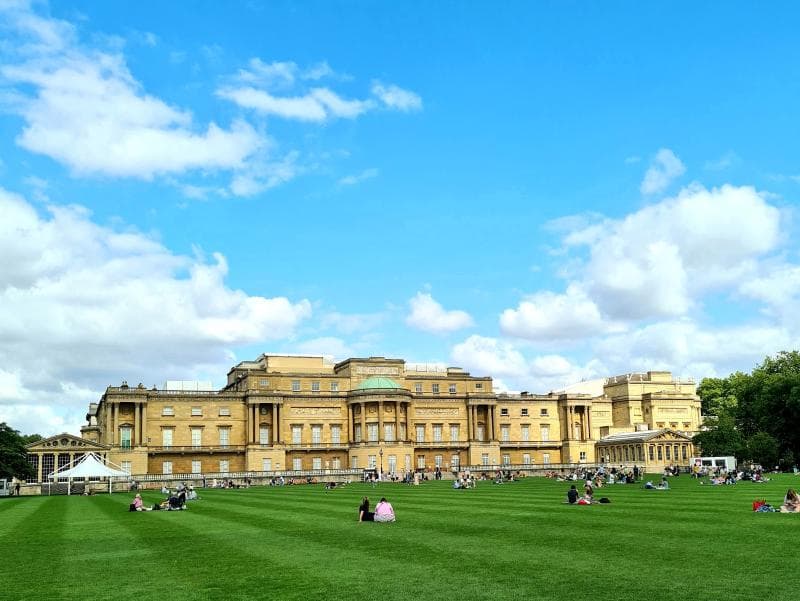

Explore Buckingham Palace, the official London residence of the King in the United Kingdom. Discover its rich history, State Rooms, and royal traditions.
Overview
Buckingham Palace, an iconic symbol of the British monarchy, stands majestically in the heart of London, United Kingdom. It serves as the official London residence and administrative headquarters of the King. Far more than just a palace, it is a working royal palace, the focal point for national celebrations, and a vibrant hub for state occasions. Every summer, a portion of this grand residence, specifically the lavish State Rooms, opens its doors to the public, offering a rare glimpse into royal life and history. Visitors can immerse themselves in the rich heritage and witness the grandeur that defines this globally recognized landmark.
History & Cultural Background
The story of Buckingham Palace begins not as a royal residence, but as a private townhouse. In 1703, a large mansion known as Buckingham House was built for the Duke of Buckingham. It wasn't until 1761 that King George III acquired the property as a private home for his wife, Queen Charlotte, subsequently naming it 'The Queen's House'. Fourteen of George III's fifteen children were born here.
The transformation into the grand palace we see today began in the 19th century. Under George IV, significant architectural work was undertaken by John Nash and later Edward Blore, who constructed three wings around a central courtyard. By 1837, upon the accession of Queen Victoria, Buckingham Palace officially became the London residence of the British monarch. Since then, it has been continuously expanded and refined, becoming an essential part of England's cultural tapestry and a testament to centuries of royal history.
What Makes It Special
What sets Buckingham Palace apart is its enduring role as a living, working palace. It is not merely a museum but the administrative centre for the Monarchy, hosting countless official events, audiences, and ceremonies throughout the year. Its 775 rooms include 19 opulent State Rooms, 52 royal and guest bedrooms, 188 staff bedrooms, 92 offices, and 78 bathrooms, illustrating its immense scale.
These State Rooms are magnificently decorated with some of the finest treasures from the Royal Collection, featuring priceless artworks by masters such as Rembrandt, Rubens, and Canaletto. The palace's grounds also boast the largest private garden in London, spanning 39 to 42 acres, complete with a helipad, a lake, and a tennis court. This blend of historical grandeur, artistic wealth, and continuous royal function makes Buckingham Palace truly unique.
Stories, Fun Facts & Local Details
Buckingham Palace holds a fascinating collection of stories and lesser-known facts. For instance, the palace has its own dedicated team of two horological conservators who are responsible for winding the astounding 350 clocks and watches within the royal household each week. It's often described as a 'village in itself' because, in addition to its residential and administrative functions, it houses its own cinema, swimming pool, post office, police station, and even an ATM.
Legend also speaks of secret tunnels running beneath the palace, with one tale recounting King George VI and the Queen Mother encountering a man living in them. The palace's origins as a townhouse for a duke, rather than being purpose-built for royalty, adds another layer to its intriguing history, showing its evolution from a grand private dwelling to the epicentre of a nation's monarchy.
Visitor Perspective
Visiting Buckingham Palace offers a captivating experience, particularly during its summer opening, typically from July to September, when the State Rooms are accessible. Timed admission tickets are essential and should be booked well in advance, especially for peak season.
While photography is strictly prohibited inside the State Rooms, visitors are welcome to capture memories in the palace gardens. A visit usually takes between two and three hours, allowing ample time to explore the opulent interiors and the works from the Royal Collection. For those planning a visit, arriving about 15 minutes before your timed entry is recommended due to airport-style security checks. The famous Changing of the Guard ceremony, a free and iconic spectacle of British pageantry, also draws large crowds and is a must-see for many visitors, though it is best to arrive early to secure a good viewing spot.
Coordinates: -0.142, 51.501
View on Google Maps💬 How Travelers Describe This Place
Based on community votes
Beautiful
980Photogenic
396Unique
389Interesting
340Must See
201
Traveler Stories
Discover memorable experiences shared by travelers who have visited this place.
No traveler stories yet.
Be the first traveler to share what made this place memorable.
Things to see at Buckingham Palace



Tour
By
Spot
Discover amazing places around the world. Your journey starts here.
Explore
© 2026 TourBySpot. All rights reserved.