Bridge Of Peace
Tbilisi, Georgia
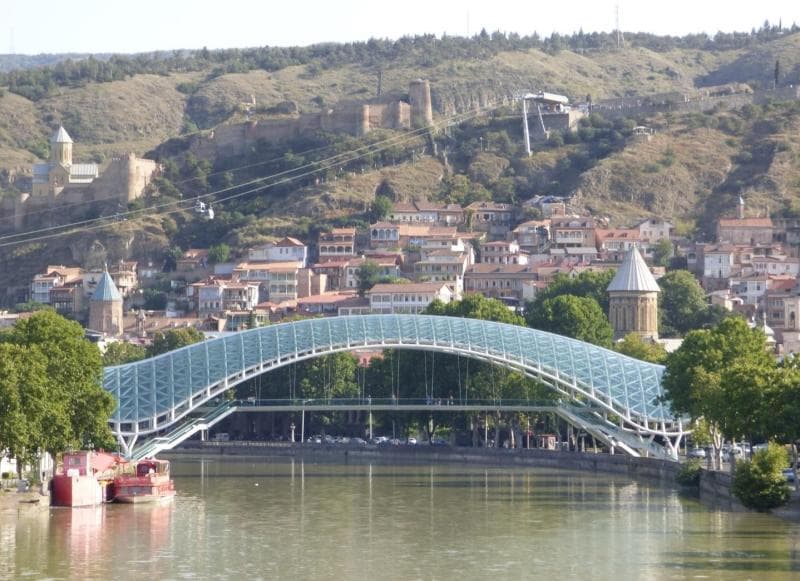
Discover the Bridge of Peace in Tbilisi, Georgia – an iconic pedestrian bridge linking Old Town with Rike Park, famous for its glass design and LED light shows.
Overview
The Bridge of Peace, known locally as მშვიდობის ხიდი (mshvidobis khidi), is an iconic pedestrian bridge spanning the Kura (Mtkvari) River in the heart of Tbilisi, Georgia. This striking bow-shaped structure, crafted from steel and glass, gracefully connects Rike Park on one bank with the historic Old Town on the other. Inaugurated on May 6, 2010, it quickly transformed into a vital pedestrian artery and a significant tourist attraction, becoming one of the Georgian capital's most recognized landmarks. Stretching approximately 150 to 156 meters across the river, the bridge offers both a practical crossing and a unique viewing platform for the city's blend of ancient and modern architecture.
History & Cultural Background
The creation of the Bridge of Peace was a deliberate initiative by the Tbilisi City Hall, aiming to forge a contemporary connection between the city's ancient quarters and its developing modern districts. Its construction commenced in 2009 and coincided with a period of ambitious urban reform following Georgia's Rose Revolution in 2003, under the leadership of then-President Mikheil Saakashvili. The bridge was envisioned as a symbol of Georgia's forward-looking perspective, signaling its aspiration towards a European identity.
Choosing the name 'Bridge of Peace' was deeply symbolic, especially considering Georgia's recent history of conflicts, including the 2008 war with Russia. The bridge thus became an emblem of peace, reconciliation, and the nation's drive for stability and progress. While now celebrated, its futuristic design initially sparked considerable debate among locals and experts. Many worried that such a bold, ultra-modern structure would clash with the centuries-old architectural heritage of Old Tbilisi, with some even dubbing it the 'glass alien'.
What Makes It Special
The Bridge of Peace is a testament to innovative design and engineering. It was conceived by the renowned Italian architect Michele De Lucchi, who also contributed to other prominent buildings in Tbilisi, such as the Ceremonial Palace of Georgia. The intricate lighting design, a crucial element of its allure, was the work of French lighting designer Philippe Martinaud. The bridge's steel and glass components were prefabricated in Italy, then transported to Tbilisi in 200 trucks for on-site assembly, a remarkable logistical feat.
What truly sets the bridge apart is its mesmerizing nocturnal transformation. Adorned with thousands of LED lights—estimates range from 10,000 to over 30,000—it comes alive approximately 90 minutes before sunset. These LEDs create an interactive light display, programmed to shift through various patterns and hues. A particularly intriguing feature of this lighting system is its ability to transmit subtle messages in Morse code. These messages represent the chemical elements found in the human body, symbolizing life, universal unity, and communication, adding a profound layer of meaning to the structure.
Stories, Fun Facts & Local Details
Walking across the Bridge of Peace offers more than just a passage; it provides panoramic vistas of Tbilisi's diverse landscape. From its transparent pathway, visitors can admire historic landmarks like the Metekhi Church perched on its cliff, the imposing Narikala Fortress dominating the skyline, and the statue of the city's legendary founder, Vakhtang Gorgasali. On the opposite side, one can glimpse the Baratashvili Bridge and the contemporary lines of the Ceremonial Palace of Georgia.
The bridge itself is a narrative of contrasts, metaphorically connecting not just two riverbanks but also two eras—Georgia's rich historical past and its dynamic, modern future. It embodies the dialogue between tradition and modernity, East and West. Despite the initial apprehension about its contemporary style, the Bridge of Peace has firmly cemented its place in Tbilisi's identity, becoming a beloved symbol of the city's progress and a captivating landmark that blends seamlessly into the urban fabric after dark. The adjacent Rike Park also offers green spaces and direct access to the cable car leading up to Narikala Fortress, extending the visitor experience.
Visitor Perspective
The Bridge of Peace is an essential stop for any traveler exploring Tbilisi. It is incredibly popular for leisurely strolls and is a prime location for photography, especially as evening descends and its spectacular light show begins. Its central location ensures easy accessibility; it's often within walking distance from many city center hotels and tourist sites, and the Freedom Square metro station is a short walk away.
Visitors often spend around 30 to 60 minutes crossing the bridge, taking in the views, and capturing memorable photographs. It serves as an excellent starting point for further exploration of nearby attractions such as the ancient Narikala Fortress, the majestic Holy Trinity Cathedral, the relaxing Rike Park, and the atmospheric Abanotubani sulfur baths. The experience of witnessing the bridge's lights interact with the historic backdrop of Tbilisi is truly enchanting, making it a highlight of any visit.
Coordinates: 44.8082, 41.6929
View on Google Maps💬 How Travelers Describe This Place
Based on community votes
Photogenic
926Must See
703Interesting
646Unique
380Beautiful
291
Traveler Stories
Discover memorable experiences shared by travelers who have visited this place.
No traveler stories yet.
Be the first traveler to share what made this place memorable.
Things to see at Bridge Of Peace



Tour
By
Spot
Discover amazing places around the world. Your journey starts here.
Explore
© 2026 TourBySpot. All rights reserved.