Photography Points
Tbilisi, Georgia
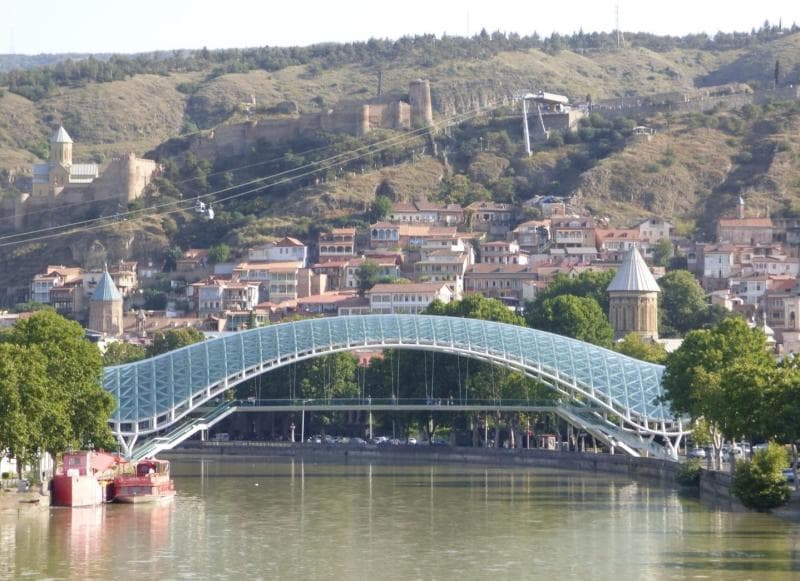
Discover the Bridge of Peace in Tbilisi, Georgia. Explore its unique glass and steel architecture, rich history, and stunning photography points connecting old and new. A must-visit landmark.
Overview
The Bridge of Peace, or Mshvidobis Khidi in Georgian, stands as a captivating pedestrian bridge spanning the Mtkvari (Kura) River in the heart of Tbilisi, Georgia. Inaugurated in May 2010, this bow-shaped, steel-and-glass marvel has rapidly transformed into one of the city's most recognizable and photographed landmarks. It serves as both a practical connector and a symbolic link, bridging the historic charm of Old Tbilisi with the contemporary vibrancy of Rike Park. The bridge's sleek, futuristic design contrasts strikingly with its ancient surroundings, making it a focal point for locals and travelers alike, especially as dusk transforms into a spectacular light show.
History & Cultural Background
The concept for the Bridge of Peace emerged following the 2008 Russo-Georgian War, under the administration of then-President Mikheil Saakashvili. The city embarked on an ambitious urban renewal project, intending the bridge to symbolize Georgia's resilience and forward-looking vision. It was conceived not just as a crossing but as a monument to peace, unity, and a connection between the nation's rich heritage and its modern aspirations. Designed by the acclaimed Italian architect Michele De Lucchi, with lighting by French designer Philippe Martinaud, the bridge was officially opened on May 6, 2010. Its contemporary aesthetic initially sparked debate, with some viewing its futuristic design as clashing with Tbilisi's historic backdrop. However, it has since become an integral part of the city's visual identity, embodying a dialogue between past and present.
What Makes It Special
The Bridge of Peace is distinguished by its unique architectural and engineering prowess. Spanning approximately 150 meters, the structure features a curved steel-and-glass canopy that appears light and almost suspended, supported by only four pillars on the riverbanks. The design evokes the graceful shape of a marine animal's shell or a sweeping bow. By day, the translucent glass panels allow views of the sky and the surrounding landscape, while at night, the bridge truly comes alive. It is equipped with an intricate illumination system comprising over 1,208 custom LED fixtures embedded in the canopy, handrails, and beneath the pedestrian deck. These lights activate about 90 minutes before sunset, transforming the bridge into a glowing ribbon that reflects beautifully on the Mtkvari River. The components of this impressive structure were prefabricated in Italy and then transported to Tbilisi for assembly.
Stories, Fun Facts & Local Details
Beyond its striking visual appeal, the Bridge of Peace holds a fascinating secret within its nightly illumination. The LED system, designed by Philippe Martinaud, transmits a repeating message in Morse code. This message subtly flashes the names of the chemical elements present in the human body, such as carbon, oxygen, hydrogen, and nitrogen. This ingenious detail serves as a powerful message of peace and unity, reminding all who cross that, regardless of nationality, race, religion, or political affiliation, all human beings are composed of the same fundamental elements. This profound symbolism reinforces the bridge's name. During its construction and early days, the bridge's ultra-modern look in a historic setting led some detractors to jokingly nickname it 'Always Ultra,' highlighting the contrast. The bridge's total length is about 156 meters, and its width is 5 meters, showcasing a blend of impressive scale and pedestrian-friendly design.
Visitor Perspective
For any curious traveler, the Bridge of Peace offers unparalleled photography opportunities from various angles and at different times of day. During daylight hours, the bridge's transparent glass roof provides excellent vantage points for capturing the historical landmarks of Old Tbilisi, including the majestic Narikala Fortress, the ancient Metekhi Church, the statue of Vakhtang Gorgasali, and the picturesque Abanotubani sulfur baths. Crossing the bridge itself offers dynamic perspectives of the Mtkvari River and Rike Park. As evening approaches, the bridge transforms into a breathtaking spectacle, with its thousands of LEDs creating a magical glow, making sunset and nighttime ideal for dramatic shots. For the best panoramic photographs of the bridge against the city's backdrop, consider views from the Baratashvili Bridge, the high street above Rike Park, or even the plateau near Tabor Monastery. Photographers often recommend visiting at sunrise to avoid crowds and capture the serene beauty of the bridge, while sunset offers vibrant colors and the onset of its iconic light show.
Coordinates: 44.808268, 41.692957
View on Google Maps💬 How Travelers Describe This Place
Based on community votes
Photogenic
995Interesting
964Beautiful
926Must See
646Unique
482
Traveler Stories
Discover memorable experiences shared by travelers who have visited this place.
No traveler stories yet.
Be the first traveler to share what made this place memorable.

Tour
By
Spot
Discover amazing places around the world. Your journey starts here.
Explore
© 2026 TourBySpot. All rights reserved.