River Views
Tbilisi, Georgia
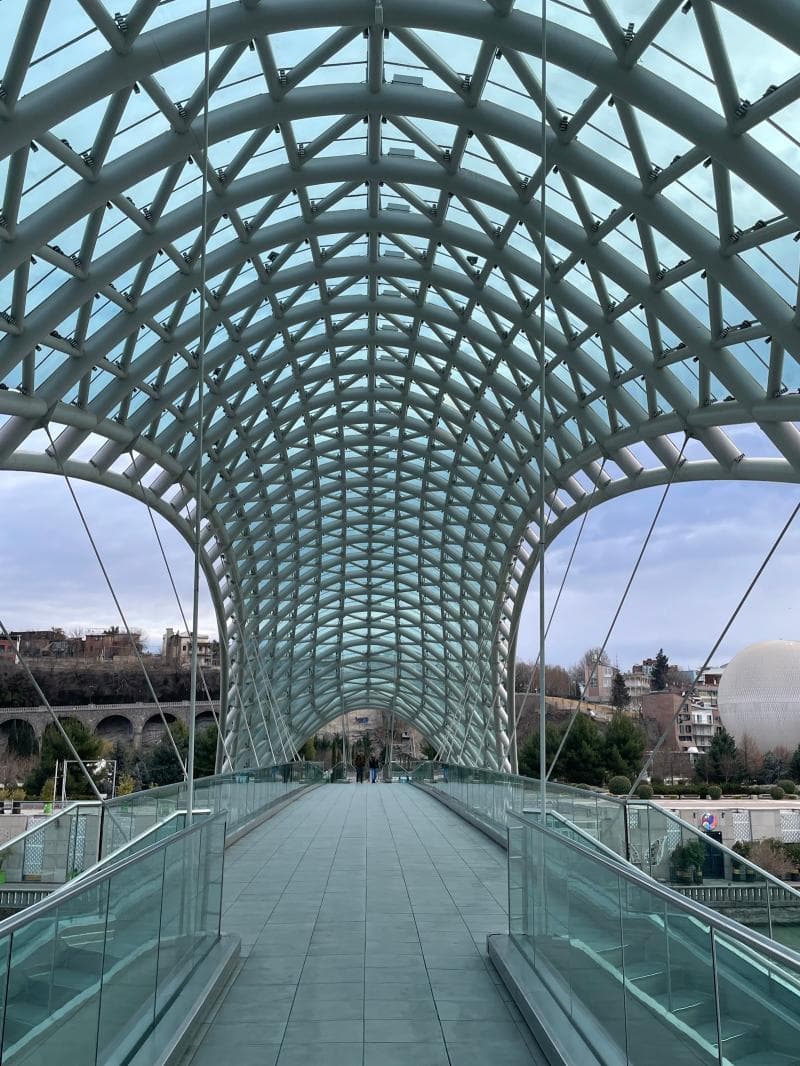
Discover the stunning River Views from the Bridge of Peace in Tbilisi, Georgia, connecting old and new over the Mtkvari River.
Overview
Perched gracefully over the Mtkvari (Kura) River in the vibrant heart of Tbilisi, Georgia, the Bridge of Peace is more than just a pedestrian crossing; it is a captivating landmark offering unparalleled 'River Views'. This modern marvel seamlessly connects the city's historic Old Town with the contemporary Rike Park, creating a symbolic link between Tbilisi's rich past and its forward-looking future. As you stroll across its impressive glass-and-steel structure, you're treated to panoramic vistas that encapsulate the city's unique charm, from ancient fortresses to bustling riverbanks. Whether bathed in daylight or dazzling with its nightly light show, the river views from the Bridge of Peace are an essential part of the Tbilisi experience.
History & Cultural Background
The Bridge of Peace was officially inaugurated on May 6, 2010, marking a significant moment in Tbilisi's urban development. It was conceived as part of an initiative to modernize and rejuvenate the city following the 2003 Rose Revolution, under the leadership of President Mikheil Saakashvili. The city's administration commissioned its creation to connect the old and new districts, symbolizing Georgia's journey from its past to a brighter future. The Mtkvari River itself, over which the bridge spans, has been the lifeblood of Tbilisi for millennia, shaping its geography, influencing its expansion, and serving as a focal point for trade and settlement. The river has witnessed countless historical events and has been integral to the city's identity and culture, with its banks framing everything from ancient churches to bathhouses.
What Makes It Special
The Bridge of Peace stands out with its distinctive bow-shaped design, a remarkable fusion of steel and glass that appears almost weightless above the Mtkvari River. Designed by Italian architect Michele De Lucchi and brought to life with a sophisticated lighting scheme by French designer Philippe Martinaud, the bridge was constructed in Italy and transported to Tbilisi in 200 components. Its canopy, spanning 156 meters, is made up of triangular glass elements on a reticular metal pipe structure. However, what truly sets the 'River Views' from this bridge apart is its extraordinary interactive light display. Up to 50,000 LED bulbs illuminate the bridge every night, beginning 90 minutes before sunset. These lights not only transform the bridge into a glittering spectacle but also transmit a message in Morse code every hour, spelling out the elements of the periodic table found in the human body – a powerful 'anthem of life and peace among people and nations'. Additionally, 240 motion sensors within the glass railings light up as visitors walk by, creating a personalized experience.
Stories, Fun Facts & Local Details
Despite its popularity and iconic status today, the Bridge of Peace was initially met with some controversy. Its strikingly modern design drew criticism from certain politicians, architects, and urban planners who felt it clashed with the traditional historical aesthetic of Old Tbilisi. Some locals even gave it the humorous nickname 'Always Ultra' due to its perceived shape. Yet, it has undeniably become one of Tbilisi's most recognized landmarks, embodying the city's embrace of contemporary architectural expression alongside its ancient heritage. From the bridge, visitors can easily spot iconic Tbilisi sights such as the historic Metekhi Church, the majestic Narikala Fortress overlooking the city, and the statue of Tbilisi's founder, Vakhtang Gorgasali. On the other side, views extend to the Baratashvili Bridge and the Ceremonial Palace of Georgia. The connection it provides to Rike Park also makes it a gateway to other recreational activities and the cable car leading up to Narikala Fortress.
Visitor Perspective
Experiencing the 'River Views' from the Bridge of Peace is a must-do for any traveler in Tbilisi. During the day, the transparent structure allows for clear, expansive views of the Mtkvari River flowing beneath, with the ancient buildings of the Old Town on one side and the greenery of Rike Park on the other. It's a fantastic spot for photography, capturing the juxtaposition of old and new. As evening approaches, the bridge transforms. The illumination, which begins shortly before sunset, casts a magical glow, reflecting off the river's surface and bringing the entire cityscape to life. Walking across at night, with the interactive lights responding to your presence and the city twinkling around you, is a truly memorable experience. Many consider it one of the best vantage points to appreciate Tbilisi's unique urban landscape, especially during sunrise, sunset, or at night.
Coordinates: 44.8082, 41.6929
View on Google Maps💬 How Travelers Describe This Place
Based on community votes
Beautiful
703Photogenic
646Interesting
380Unique
291Must See
28
Traveler Stories
Discover memorable experiences shared by travelers who have visited this place.
No traveler stories yet.
Be the first traveler to share what made this place memorable.

Tour
By
Spot
Discover amazing places around the world. Your journey starts here.
Explore
© 2026 TourBySpot. All rights reserved.