LED Light Show
Tbilisi, Georgia
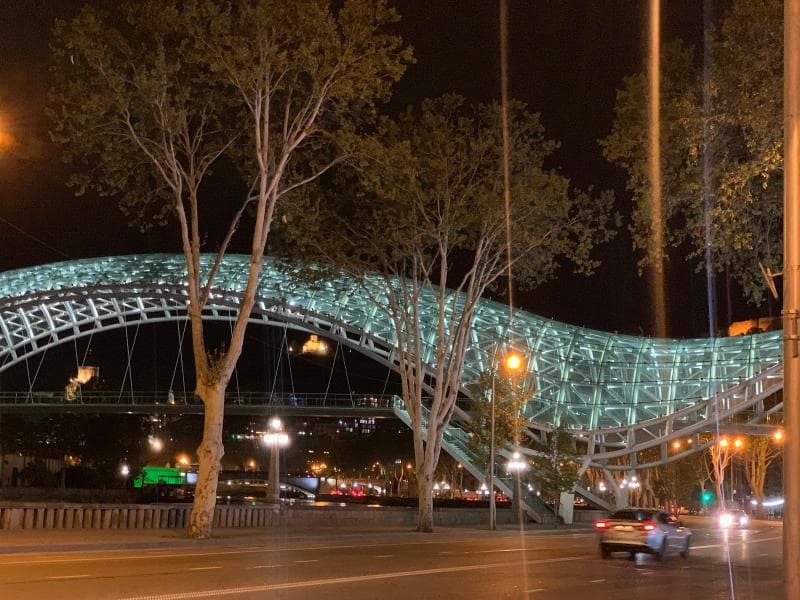
Discover the stunning LED Light Show at the Bridge of Peace in Tbilisi, Georgia. An architectural marvel illuminating the Mtkvari River with symbolic Morse code messages.
Overview
The Bridge of Peace, known locally as Mshvidobis Khidi, is a striking pedestrian bridge that gracefully spans the Mtkvari (Kura) River in the heart of Tbilisi, Georgia. This bow-shaped structure of steel and glass serves as a vital pedestrian link, connecting the historic Old Town with the more contemporary Rike Park. Since its inauguration on May 6, 2010, the bridge has rapidly transformed into one of Tbilisi's most iconic and photographed landmarks, drawing both locals and international travelers with its distinctive architecture and, most notably, its captivating LED light show that illuminates the night sky.
Designed to be more than just a crossing, the Bridge of Peace embodies a symbolic connection between Tbilisi's rich past and its forward-looking future. Its modern form, a deliberate contrast to the surrounding ancient architecture, creates a fascinating visual dialogue. The bridge is especially renowned for its sophisticated lighting system, which transforms it into a dynamic art installation after dark, making it a focal point of the city's evening landscape.
History & Cultural Background
The conception of the Bridge of Peace emerged during a period of significant urban renewal in Georgia, following the 2003 Rose Revolution and the 2008 Russo-Georgian War. Initiated by the Tbilisi City Hall under then-President Mikheil Saakashvili, the project aimed to revitalize the city's infrastructure and project an image of modernization and resilience to the world. The bridge was designed by acclaimed Italian architect Michele De Lucchi, known for his contemporary European architectural contributions, and the elaborate lighting scheme was the brainchild of French designer Philippe Martinaud.
Opened on May 6, 2010, the bridge quickly became a subject of discussion due to its avant-garde style juxtaposed against Tbilisi's medieval backdrop. While some initially found its futuristic design clashing with the historical essence of the city, many have come to embrace it as a symbol of Georgia's aspirations towards a peaceful and progressive future. The name 'Bridge of Peace' itself carries profound meaning, reflecting a desire for unity and harmony after periods of conflict. The structure itself was prefabricated in Italy and then transported in components to Tbilisi for on-site assembly, a testament to its international collaborative design and construction.
What Makes It Special
Beyond its striking bow-shaped form of steel and glass, the true magic of the Bridge of Peace lies in its innovative LED light show. This sophisticated illumination system, designed by Philippe Martinaud, features thousands of custom LED fixtures embedded within the bridge's wavy glass canopy and handrails. These lights are programmed to activate 90 minutes before sunset each day, casting a spectacular glow that reflects beautifully on the Mtkvari River below and illuminates the surrounding cityscape until 90 minutes after sunrise.
What truly sets this light show apart is its thematic message. The LEDs are programmed to transmit a repeating message in Morse code, spelling out the chemical elements that constitute the human body—such as carbon, oxygen, hydrogen, and nitrogen. This 'anthem of life and peace' serves as a profound reminder that, regardless of nationality, race, or belief, all human beings are fundamentally composed of the same basic elements, promoting a universal message of unity. The bridge also incorporates interactive elements, with motion sensors in the glass railings that respond to pedestrians, creating a dynamic and personalized lighting experience as people cross.
Stories, Fun Facts & Local Details
The Bridge of Peace is often affectionately referred to as the 'Glass Bridge' by locals and tourists alike, owing to its extensive use of glass panels. Its design, sometimes described as resembling a massive marine animal's shell or a graceful bow, adds to its unique character. The bridge's lighting system comprises several distinct programs that cycle through every hour, offering a continuously evolving visual spectacle. Beyond the Morse code message, other patterns include lights twinkling like stars, or waves of light moving across the bridge from one end to the other, or meeting in the middle.
Despite its modern aesthetic, the Bridge of Peace integrates surprisingly well with the historical views it offers. From its walkway, visitors can admire significant landmarks such as the ancient Metekhi Church, the imposing Narikala Fortress, and the statue of Tbilisi's founder, Vakhtang Gorgasali, creating a compelling juxtaposition of old and new. The bridge's location also makes it a popular spot for observing daily life along the river and serves as a convenient starting point for exploring both the historical districts and the recreational offerings of Rike Park.
Visitor Perspective
For any traveler to Tbilisi, experiencing the Bridge of Peace, particularly its LED light show, is an absolute must-do. During the day, the bridge provides panoramic views of the city, allowing visitors to appreciate the blend of Tbilisi's diverse architectural styles and its natural riverine setting. It serves as a practical and picturesque pathway, seamlessly connecting cultural sites and green spaces.
However, it is after dusk when the bridge truly comes alive. The activation of the LED lights transforms the structure into a breathtaking display of shimmering patterns and meaningful messages. Walking across the illuminated bridge at night offers a uniquely enchanting experience, making one feel a part of the city's vibrant nocturnal pulse. The interactive lights, responding to individual footsteps, add a whimsical touch, fostering a sense of personal connection to this modern marvel. Photographers often flock here around sunset to capture the bridge in its full glory, as the last rays of sunlight give way to the intricate dance of light. It's an experience that beautifully encapsulates Tbilisi's dynamic spirit, bridging centuries of history with contemporary innovation.
Coordinates: 44.8082, 41.6929
View on Google Maps💬 How Travelers Describe This Place
Based on community votes
Beautiful
539Interesting
517Photogenic
422Unique
251Must See
234
Traveler Stories
Discover memorable experiences shared by travelers who have visited this place.
No traveler stories yet.
Be the first traveler to share what made this place memorable.

Tour
By
Spot
Discover amazing places around the world. Your journey starts here.
Explore
© 2026 TourBySpot. All rights reserved.