Glass Walkway
Tbilisi, Georgia
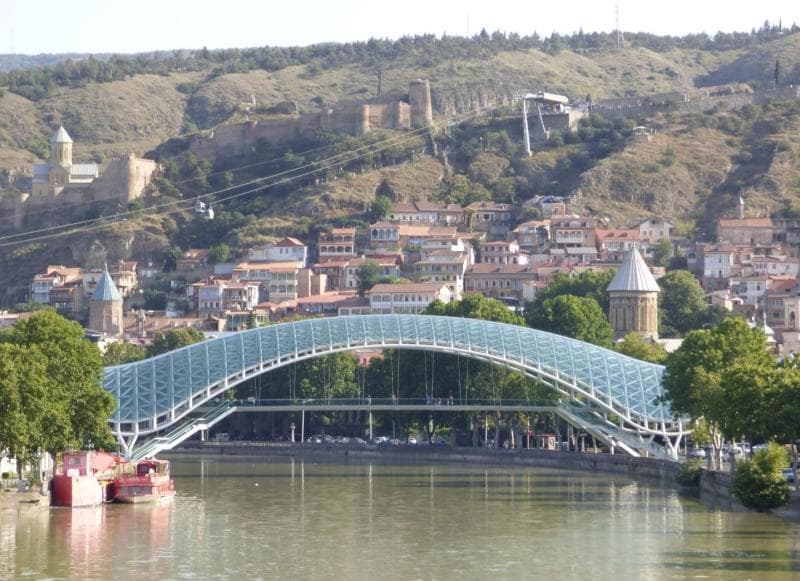
Explore the iconic Glass Walkway of the Bridge of Peace in Tbilisi, Georgia. This stunning glass-and-steel pedestrian bridge offers breathtaking views and a unique light show.
Overview
Spanning gracefully across the Mtkvari (Kura) River in Tbilisi, Georgia, the Bridge of Peace stands as a striking symbol of the city's blend of ancient history and modern ambition. Opened to the public in May 2010, this bow-shaped pedestrian bridge is distinctive for its predominantly glass and steel construction, offering visitors a unique 'glass walkway' experience over the flowing waters below. It serves as a vital connection, linking the historic Old Town with the contemporary Rike Park, and has quickly become one of the most recognizable landmarks in the Georgian capital.
History & Cultural Background
The Bridge of Peace was conceived by Italian architect Michele De Lucchi, known for his modern designs, and its intricate lighting system was crafted by French lighting designer Philippe Martinaud. Its creation was part of a broader urban revitalization project initiated under President Mikheil Saakashvili following the 2003 Rose Revolution, aiming to project a forward-looking image of Georgia to the world. The bridge was designed to be a symbolic link, both physically and metaphorically, between Tbilisi's storied past and its aspirations for the future.
However, the bridge's boldly modern aesthetic was not without controversy upon its inauguration. Its contemporary glass and steel structure sharply contrasted with the traditional architecture of the surrounding Old Town, sparking debates among locals, politicians, and urban planners. While some critics felt it detracted from the historical ambiance, others lauded it as an emblem of progress and the nation's European orientation. The bridge itself was prefabricated in Italy, then transported to Tbilisi in approximately 200 disassembled components for on-site assembly, a testament to the international collaboration behind its design and construction.
What Makes It Special
What truly sets the Bridge of Peace apart is its innovative use of glass and steel, forming a literal 'glass walkway' that allows for an immersive connection with the environment. This transparency provides unique perspectives of the Mtkvari River and the cityscape. Above the pedestrian path, a vast canopy of glass panels, mounted within a metal frame, forms the bridge's wave-like roof. This structure comes alive each evening with an extraordinary interactive light display, featuring thousands of LED lights and 240 motion sensors.
The lighting system, a masterpiece by Philippe Martinaud, does more than simply illuminate; it broadcasts a profound message. Every hour, the LED lights transmit a coded sequence in Morse code, representing the chemical elements found in the human body. This artistic and scientific fusion is intended by the designers as an 'anthem of life and peace among people and nations,' underscoring universal human connection regardless of background or origin. As pedestrians traverse the bridge, the embedded sensors react, creating a dynamic light show that responds to their movement, giving the impression that the bridge lights up for each individual.
Stories, Fun Facts & Local Details
Amidst the varied opinions surrounding its modern design, the Bridge of Peace has acquired an interesting local nickname: the 'Always Ultra' bridge, humorously referring to its distinctive curved shape. Despite, or perhaps because of, the initial discussions, the bridge has firmly cemented its place in Tbilisi's identity. During its unveiling, Georgia's President Mikheil Saakashvili articulated its broader significance, stating that the bridge 'symbolises the path of Georgia from the past to better future. This is a bridge between the greatest Georgian culture and its present development.'
Its unique architectural and artistic merits have garnered international recognition. In 2012, the Bridge of Peace was notably listed among the 'Top-13 most unusual bridges in the world,' a testament to its groundbreaking design and profound symbolism. The intricate details of its construction, including the fact that its many parts were built abroad and then assembled on site, add another layer to its compelling story as a monument of global collaboration and local vision.
Visitor Perspective
For any traveler exploring Tbilisi, walking across the Bridge of Peace is an unforgettable experience. By day, the glass walkway offers magnificent panoramic views of the city's diverse landscape. Looking upstream, one can admire the ancient Narikala Fortress perched on a hill, the historic Metekhi Church, and the statue of the city's founder, Vakhtang Gorgasali, all juxtaposed against the modern glass and steel. Downstream views often reveal other contemporary structures and the winding Mtkvari River itself, providing excellent photographic opportunities.
However, the true magic of the bridge unfolds as dusk descends. Approximately 90 minutes before sunset, the thousands of LED lights begin to shimmer, transforming the bridge into a glowing, ethereal pathway. The interplay of light, glass, and the reflections on the river creates a mesmerizing spectacle, making it an ideal spot for an evening stroll. The Bridge of Peace is not just a functional crossing; it is an engaging encounter with art, engineering, and the hopeful spirit of a city that cherishes its heritage while embracing its future. It serves as a popular gathering point for both locals and tourists, embodying a harmonious convergence of practical utility and aesthetic wonder.
Coordinates: 44.8082, 41.6929
View on Google Maps💬 How Travelers Describe This Place
Based on community votes
Beautiful
799Interesting
424Photogenic
234Must See
181Unique
30
Traveler Stories
Discover memorable experiences shared by travelers who have visited this place.
No traveler stories yet.
Be the first traveler to share what made this place memorable.

Tour
By
Spot
Discover amazing places around the world. Your journey starts here.
Explore
© 2026 TourBySpot. All rights reserved.