Night Illumination Zones
Tbilisi, Georgia
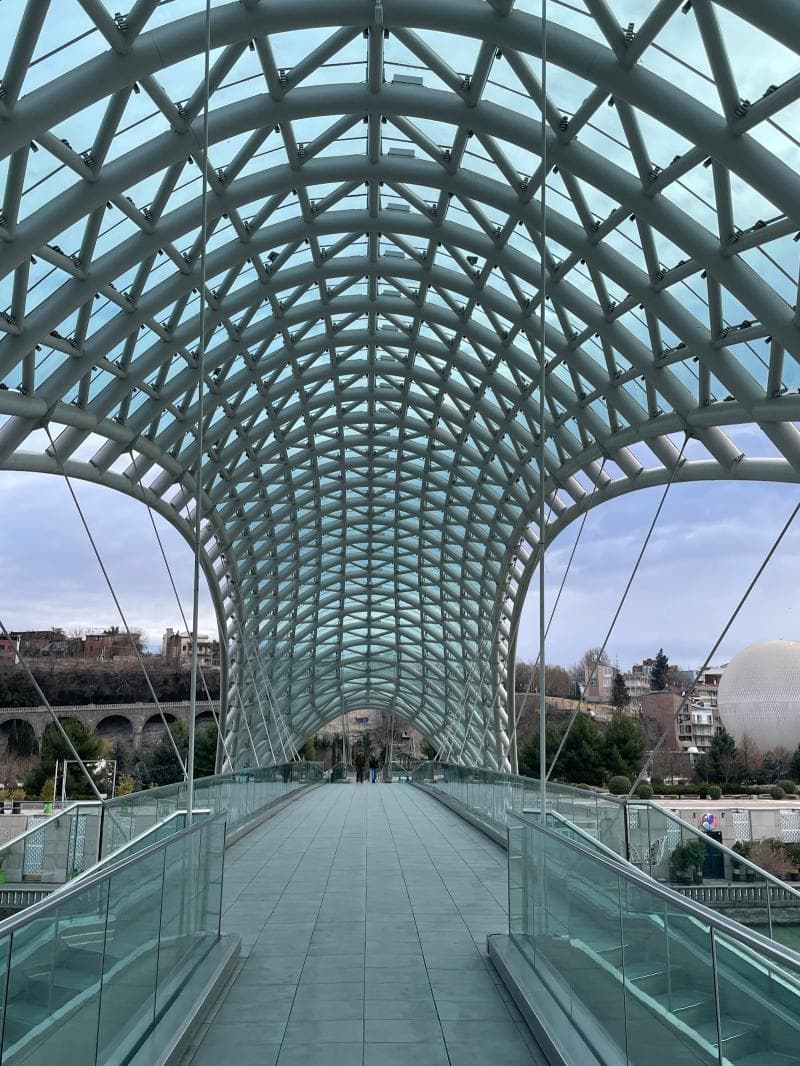
Experience the mesmerizing Night Illumination Zones of the Bridge of Peace in Tbilisi, Georgia, a stunning LED-lit pedestrian landmark.
Overview
The Bridge of Peace in Tbilisi, Georgia, stands as a striking testament to modern architectural vision, gracefully arching over the Mtkvari (Kura) River. This pedestrian bridge, renowned for its captivating 'Night Illumination Zones', serves as a vital contemporary link between the historic Old Town and the newer Rike Park area. Since its inauguration, it has not only become a key pedestrian thoroughfare but also a significant tourist attraction, offering panoramic views of the city's ancient landmarks alongside its own futuristic glow. Designed to be a prominent feature in the urban landscape, its transparent glass and steel structure truly comes alive after dusk, transforming into a mesmerizing spectacle of light and design.
History & Cultural Background
Commissioned by the Tbilisi City Hall, the Bridge of Peace was conceived to connect the city's diverse districts, symbolizing Georgia's forward-looking aspirations while respecting its rich historical tapestry. The official opening took place on May 6, 2010. The design was entrusted to the acclaimed Italian architect Michele De Lucchi, known for his ability to blend modern aesthetics with functionality. Collaborating on the bridge's most distinctive feature, its intricate lighting system, was French lighting designer Philippe Martinaud. The bridge's structure was meticulously prefabricated in Italy, transported to Tbilisi in numerous trucks, and then assembled on-site, with the lighting elements integrated during this process. This bold architectural statement became a cornerstone of Tbilisi's modernization initiatives, reflecting a period of significant urban reform and an embrace of contemporary design in the early 21st century.
What Makes It Special
The true magic of the Bridge of Peace unfolds with its 'Night Illumination Zones', which are, in essence, the entirety of its state-of-the-art lighting design. The bridge is fitted with thousands of LED lights, with some sources citing over 1,200 custom LED fixtures on the roof and others mentioning up to 50,000 or more LED bulbs across the structure. These lights are switched on approximately 90 minutes before sunset and remain active until 90 minutes after sunrise, creating an extended period of dazzling display. The illumination is not static; it features four different lighting programs that run on the canopy every hour, creating dynamic patterns. These programs include lights moving in waves across the river, or bands of light starting from either end and meeting in the middle before fading. Furthermore, the handrail glass panels along the walkway are equipped with embedded linear low-power LED arrays that are triggered by 240 motion sensors, giving the impression that the bridge lights up interactively as pedestrians pass.
Stories, Fun Facts & Local Details
Beyond its visual appeal, the Bridge of Peace carries a deeper symbolic message embedded within its illumination. Every hour, a message in Morse code scrolls across two parapets of the bridge. This message renders the periodic table of elements, specifically those that constitute the human body. The lighting designer, Philippe Martinaud, intended this to be a celebration of 'life and peace between people' and an 'anthem of life and peace among people and nations', suggesting that despite differences, all humans are fundamentally composed of the same elements. The bridge's curved steel and glass canopy design has been likened to a marine animal, a leaf, or even, humorously by some locals, a sanitary pad, earning it the nickname 'Always Ultra'. Its contemporary design, while lauded for its innovation and beauty, initially sparked some debate about its harmony with Tbilisi's ancient architectural heritage. However, it has since become an undeniable and celebrated icon of the city, listed among the world's most unusual bridges.
Visitor Perspective
Walking across the Bridge of Peace, particularly during its nightly illumination, offers a truly enchanting experience. The interactive lights beneath one's feet create a sense of being part of the artwork, while the ever-changing light patterns overhead contribute to an almost ethereal atmosphere. From the bridge, visitors can take in breathtaking views of significant Tbilisi landmarks, including the Metekhi Church, the statue of city founder Vakhtang Gorgasali, and the ancient Narikala Fortress on one side, contrasted with the modern Rike Park on the other. The reflections of the glittering bridge on the Mtkvari River add another layer of visual splendor, making it a prime spot for photography, especially at night. To fully appreciate the illumination, visiting between 6:00 PM and 10:00 PM is often recommended, as this period typically offers the full light show and cooler evening breezes. It is a free and accessible attraction that provides a unique blend of architectural innovation, cultural symbolism, and a captivating light show, making it a must-see for any curious traveler to Tbilisi.
Coordinates: 44.8082, 41.6929
View on Google Maps💬 How Travelers Describe This Place
Based on community votes
Unique
539Photogenic
517Must See
424Interesting
251Beautiful
234
Traveler Stories
Discover memorable experiences shared by travelers who have visited this place.
No traveler stories yet.
Be the first traveler to share what made this place memorable.

Tour
By
Spot
Discover amazing places around the world. Your journey starts here.
Explore
© 2026 TourBySpot. All rights reserved.