Berlin Wall Memorial
Berlin, Germany
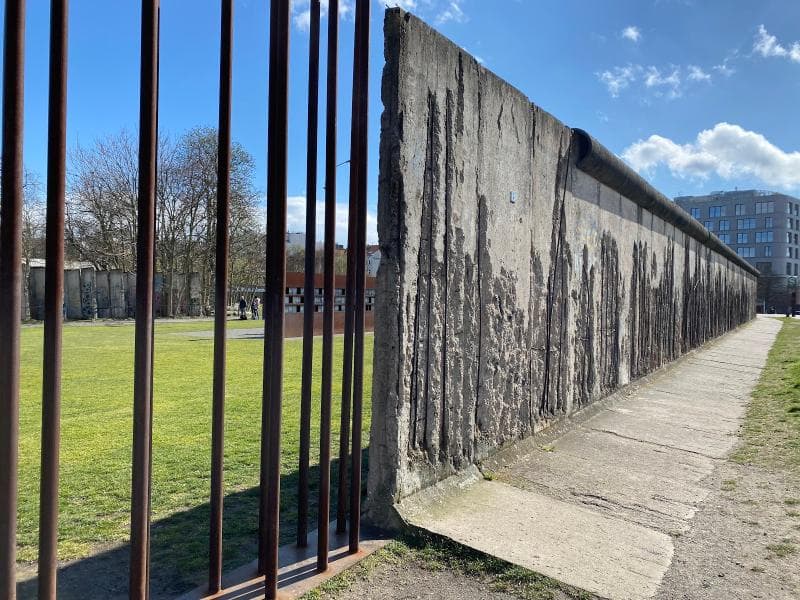
Explore the Berlin Wall Memorial on Bernauer Straße, Berlin, Germany. Discover the history of Germany's division and honor victims.
Overview
The Berlin Wall Memorial, or Gedenkstätte Berliner Mauer, stands as the central memorial site commemorating Germany's division, situated on the historically significant Bernauer Straße in Berlin. It serves as a powerful reminder of the physical and ideological barrier that once split the city and the nation. The memorial aims to document the history of the Berlin Wall from its construction to its fall, honoring those who suffered and died during that tumultuous period. It stretches for approximately 1.4 kilometers along the former border strip, providing visitors with an authentic impression of the border fortifications that defined a tragic chapter in German history.
History & Cultural Background
The Berlin Wall was erected by the East German government on August 13, 1961, primarily to prevent its citizens from fleeing to West Berlin. It became a stark symbol of the Cold War's ideological divide between the communist Eastern Bloc and the capitalist Western Bloc. Bernauer Straße, forming the border between the East Berlin district of Mitte and the West Berlin district of Wedding, became a focal point of dramatic events immediately following the Wall's construction. Residents of houses on the East Berlin side found their windows bricked up, and many attempted daring escapes, often by abseiling or jumping into safety nets provided by West Berlin firefighters. Some were seriously injured or even killed in these attempts. A few weeks after the Wall went up, these border-adjacent houses were evacuated, and their residents forcibly resettled. The memorial itself was created in 1998 by the Federal Republic of Germany and the Federal State of Berlin to preserve this critical historical site.
What Makes It Special
What sets the Berlin Wall Memorial apart is its dedication to preserving the terrifying reality of the border. It features a preserved section of the original Wall, complete with the 'death strip' and a watchtower, offering a lasting impression of the elaborate barrier that divided the country. Unlike other sites, it provides an authentic reconstruction of the border system as it existed in the late 1980s. The memorial complex includes an open-air exhibition, a Visitor Center, and a Documentation Center. The Documentation Center offers multimedia displays, maps, and interviews, detailing the Wall's construction, maintenance, and eventual destruction. From its five-story observation tower, visitors can look out over the preserved border fortifications. The Chapel of Reconciliation, built on the site of a church blown up by the GDR in 1985 because it stood in the 'death strip', offers a place for reflection. Adjacent to this is the Window of Remembrance, a solemn installation honoring over 140 individuals who lost their lives attempting to cross the Wall.
Stories, Fun Facts & Local Details
Bernauer Straße is rich with poignant stories of individual defiance and tragic fates. It was here that residents leaped from their windows into the West, and where numerous escape tunnels were secretly built. One iconic image from the Wall's early days is that of East German border guard Conrad Schumann leaping over barbed wire into West Berlin. The memorial also recounts tales of the 'Wall woodpecker' phenomenon, where people eagerly chipped away at the Wall for souvenirs after its fall, symbolizing liberation and the end of division. The first blocks were actually lifted from the Wall on Bernauer Straße on the night of November 10-11, 1989, symbolizing the reunification of East and West. The outdoor exhibition itself is divided into four sections, exploring topics like the 'Death Strip', the destruction of the city, the building of the Wall, and everyday life during its existence, bringing personal narratives and historical events together.
Visitor Perspective
A visit to the Berlin Wall Memorial is a deeply moving and educational experience, offering profound insights into Berlin's divided past and the resilience of its people. Visitors are encouraged to start at the Visitor Center at Bernauer Straße 119, where they can find introductory information, a small bookshop, and an introductory film. The outdoor exhibition is open daily from 8 a.m. to 10 p.m., while the Documentation Center and Visitor Center are typically open Tuesday to Sunday from 10 a.m. to 6 p.m. Admission to all parts of the memorial is free. Walking along the 1.4-kilometer stretch provides a tangible sense of the Wall's impact, allowing for quiet contemplation and a powerful understanding of the sacrifices made for freedom. The memorial deliberately avoids dramatic effects, instead fostering a contemplative atmosphere for remembrance.
Coordinates: 13.390125425357455, 52.53502271238896
View on Google Maps💬 How Travelers Describe This Place
Based on community votes
Must See
921Unique
831Photogenic
433Beautiful
232Interesting
211
Traveler Stories
Discover memorable experiences shared by travelers who have visited this place.
No traveler stories yet.
Be the first traveler to share what made this place memorable.
Things to see at Berlin Wall Memorial



Tour
By
Spot
Discover amazing places around the world. Your journey starts here.
Explore
© 2026 TourBySpot. All rights reserved.