Border Strip
Berlin, Germany
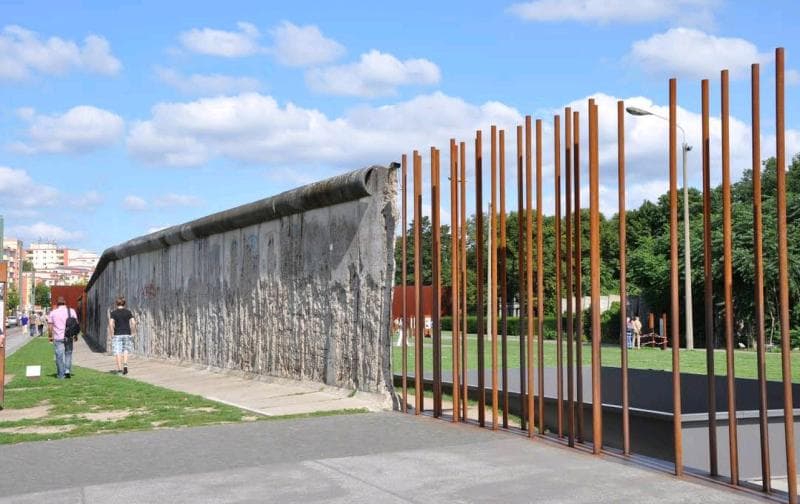
Explore the Border Strip at the Berlin Wall Memorial in Berlin, Germany. Discover the history of this 'Death Strip' and its impact on a divided city.
Overview
The Border Strip, often chillingly referred to as the 'Death Strip' (Todesstreifen), formed the most formidable barrier within the Berlin Wall system. Located within the Berlin Wall Memorial on Bernauer Strasse in Berlin, Germany, this preserved section offers a profound glimpse into the city's divided past. It was a meticulously engineered no-man's-land designed to prevent escape from East to West Berlin, stretching between the two parallel walls. Today, the memorial stands as a central site of remembrance, providing visitors with a tangible connection to the Cold War era and the human stories intertwined with the Wall's construction and fall.
The memorial on Bernauer Strasse is unique because it preserves actual remnants and traces of the border fortifications, including a section of the outer wall, the watchtower, and the ground where the Border Strip once lay. Through an open-air exhibition, visitors can walk along the former death strip, encountering informational panels, historical photographs, and reconstructed elements that demonstrate the sheer complexity and brutality of the border regime.
History & Cultural Background
When the Berlin Wall was erected on August 13, 1961, Bernauer Strasse became an immediate focal point of division. The border line ran directly in front of the apartment buildings on the East Berlin side, with the pavement belonging to West Berlin. This created incredibly dramatic scenes, as residents attempted daring escapes by jumping from their windows into rescue nets held by West Berlin firefighters below, or by abseiling down. Many of these attempts resulted in injury, and some even in death.
The Border Strip itself was continuously refined and fortified over the Wall's 28-year existence. By the 1980s, it typically included a patrol road for military vehicles, raked sand strips to reveal footprints, anti-vehicle trenches, and trip wires connected to signal flares or even automatic firing devices. Guard dog runs and powerful floodlights made night escapes equally perilous, all under the constant watch of armed border guards in watchtowers, who had orders to shoot. The Church of Reconciliation, originally situated directly in this death strip, was tragically blown up by GDR troops in 1985 to further clear the line of sight.
What Makes It Special
The Border Strip at the Berlin Wall Memorial is special because it is not merely a symbolic representation; it is a preserved piece of history. Unlike other sites where only fragments or artistic interpretations remain, here you can truly grasp the scale and sophistication of the border fortifications. The use of reddish steel elements to mark where the wall once stood and where escape tunnels were dug allows for a powerful visualization of the vanished structures and the incredible human ingenuity and desperation that characterized this era.
Furthermore, the memorial is the central site of remembrance for the division of Berlin, offering a comprehensive and authentic experience. It integrates various elements, including the preserved section of the Wall, a watchtower, the Chapel of Reconciliation (rebuilt on the site of the original), and the Window of Remembrance dedicated to those who died. This holistic approach ensures that visitors understand not only the physical barrier but also its profound human cost.
Stories, Fun Facts & Local Details
The history of Bernauer Strasse is rich with individual stories of courage and tragedy. It was here that the iconic photograph of border policeman Conrad Schumann leaping over barbed wire to freedom was captured just days after the Wall's construction. Countless escape attempts, both successful and failed, took place along this stretch, including the digging of elaborate tunnels beneath the street. One tunnel, known as Tunnel 57, saw 57 East Berliners escape to the West over two days in 1964.
The destruction of the Church of Reconciliation in 1985, because it obstructed the view across the Border Strip, serves as a stark reminder of the regime's ruthless efficiency. Today, the new Chapel of Reconciliation stands as a symbol of hope and a place for quiet reflection, offering daily remembrance services for the victims of the Wall.
Visitor Perspective
Visiting the Border Strip at the Berlin Wall Memorial is a deeply moving and educational experience. The open-air exhibition, stretching approximately 1.4 kilometers, allows for an immersive journey through history. As you walk the path, audio and visual material brings the stories of those affected by the Wall to life. From the observation tower, you gain a panoramic view of the preserved border fortifications, offering a sobering perspective on the former division.
The memorial encourages contemplation and respect for the victims of communist tyranny and the divided city. It is a place to learn about resilience, separation, and the eventual reunification that brought hope to a once-divided city. The site is easily accessible and provides a powerful, tangible connection to a critical period of 20th-century history.
Coordinates: 13.38972, 52.535
View on Google Maps💬 How Travelers Describe This Place
Based on community votes
Beautiful
981Unique
617Interesting
357Photogenic
147Must See
28
Traveler Stories
Discover memorable experiences shared by travelers who have visited this place.
No traveler stories yet.
Be the first traveler to share what made this place memorable.

Tour
By
Spot
Discover amazing places around the world. Your journey starts here.
Explore
© 2026 TourBySpot. All rights reserved.