Belvedere Palace
Vienna, Austria
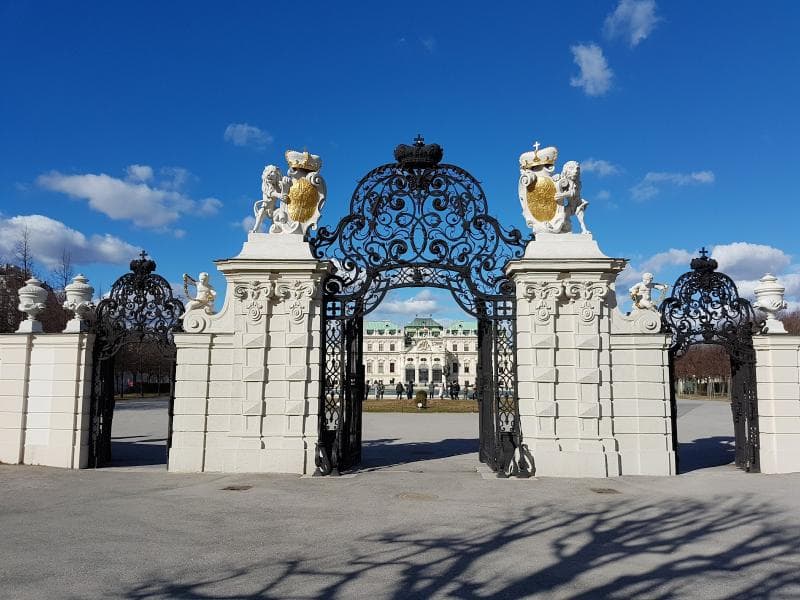
Explore Belvedere Palace in Vienna, Austria, home to Gustav Klimt's 'The Kiss' and stunning Baroque architecture. Discover its rich history and art.
Overview
Nestled in the heart of Vienna, Austria, the Belvedere Palace stands as a magnificent Baroque masterpiece, captivating visitors with its opulent architecture, sprawling gardens, and world-class art collection. This historic complex comprises two grand palaces, the Upper and Lower Belvedere, along with the Orangery, Palace Stables, and a formal Baroque garden, all contributing to its designation as a UNESCO World Heritage Site. Today, the Belvedere is one of Austria's premier art museums, showcasing an extensive array of Austrian art from the Middle Ages to the present day, complemented by works from international artists.
Its location in Vienna's third district, Landstraße, positions it as an essential cultural landmark on the southeastern edge of the city's historic center. The Belvedere attracts over 1.5 million visitors annually, making it one of the most visited cultural sites in Vienna.
History & Cultural Background
The Belvedere's story began in the early 18th century, commissioned by the illustrious Prince Eugene of Savoy, a renowned statesman and military commander of the Holy Roman Empire. Designed principally by the eminent Baroque architect Johann Lukas von Hildebrandt, the complex was conceived as Prince Eugene's summer residence. Construction of the Lower Belvedere, where the Prince resided, was completed around 1716, while the more ceremonial Upper Belvedere was finished by 1724.
Following Prince Eugene's death, the entire complex was acquired by Empress Maria Theresa. She transformed the Upper Belvedere into an exhibition venue for the imperial collections, thus establishing it as one of the world's first public museums in 1777. The palace has also witnessed pivotal moments in Austrian history, most notably the signing of the Austrian State Treaty in the Marble Hall of the Upper Belvedere on May 15, 1955, which restored Austria's full sovereignty.
What Makes It Special
The Belvedere is a stunning example of Baroque architecture, characterized by its grandeur, symmetrical design, and intricate decorative details. The Upper Belvedere, intended for lavish celebrations and official representation, features a magnificent central hall with painted ceilings and golden ornaments. In contrast, the Lower Belvedere, Prince Eugene's former residence, offers insights into opulent Baroque living through its Marble Gallery, Grotesque Hall, and Gold Cabinet.
Connecting these two palaces are the spectacular Baroque gardens, meticulously designed by Dominique Girard, a pupil of André Le Nôtre, the landscape architect behind Versailles. These formal French-style gardens boast symmetrical parterres, elegant water basins, cascades, clipped hedges, and sculptures imbued with mythological references that subtly allude to Prince Eugene's triumphs.
The palace is globally renowned for housing the world's largest collection of Gustav Klimt's masterpieces, including his iconic work, 'The Kiss.' The art collection also spans Austrian art from the Middle Ages to the present, featuring significant works by artists such as Egon Schiele, Oskar Kokoschka, and international masters like Claude Monet and Vincent van Gogh.
Stories, Fun Facts & Local Details
Prince Eugene of Savoy's journey to commissioning the Belvedere is a story of ambition and resilience. After being denied a position in the French army by King Louis XIV, he found his destiny in Austria, where his military prowess led to immense wealth, which he then invested in creating his grand summer residence. He was not only a military genius but also a significant patron of the arts, assembling an impressive personal collection.
An interesting anecdote tells that after Prince Eugene's death, his niece, Princess Maria Anna Victoria of Savoy, initially declined to inherit the palace, paving the way for Empress Maria Theresa to acquire it. Historically, the Belvedere gardens were also known to house exotic animals, a symbol of prestige among royalty. A modern touch to its legacy: the Upper Belvedere is featured on the Austrian 20 Euro cent coin, a testament to its cultural significance.
Visitor Perspective
Visiting the Belvedere offers a multifaceted experience for art and history enthusiasts. Many visitors find that exploring the Upper Belvedere, the Lower Belvedere, and the expansive gardens between them provides a comprehensive understanding of the complex. To fully appreciate the highlights, including Klimt's 'The Kiss,' one might spend one to two hours in the Upper Belvedere, or three to six hours if exploring all three venues.
For a more serene experience and to avoid crowds, it's often recommended to visit during spring or fall, or to arrive early in the morning shortly after opening. The gardens, accessible free of charge, offer a picturesque setting for leisurely strolls and provide excellent photo opportunities, including the famous 'Canaletto View' of Vienna's historic skyline. The Upper Belvedere is also equipped with step-free access, ramps, and elevators, ensuring accessibility for most visitors. Booking tickets online in advance is advisable to secure entry and minimize waiting times, especially during peak seasons.
Coordinates: 16.38028, 48.19417
View on Google Maps💬 How Travelers Describe This Place
Based on community votes
Unique
948Interesting
913Must See
595Photogenic
337Beautiful
196
Traveler Stories
Discover memorable experiences shared by travelers who have visited this place.
No traveler stories yet.
Be the first traveler to share what made this place memorable.
Things to see at Belvedere Palace



Tour
By
Spot
Discover amazing places around the world. Your journey starts here.
Explore
© 2026 TourBySpot. All rights reserved.