Palace Gardens
Vienna, Austria
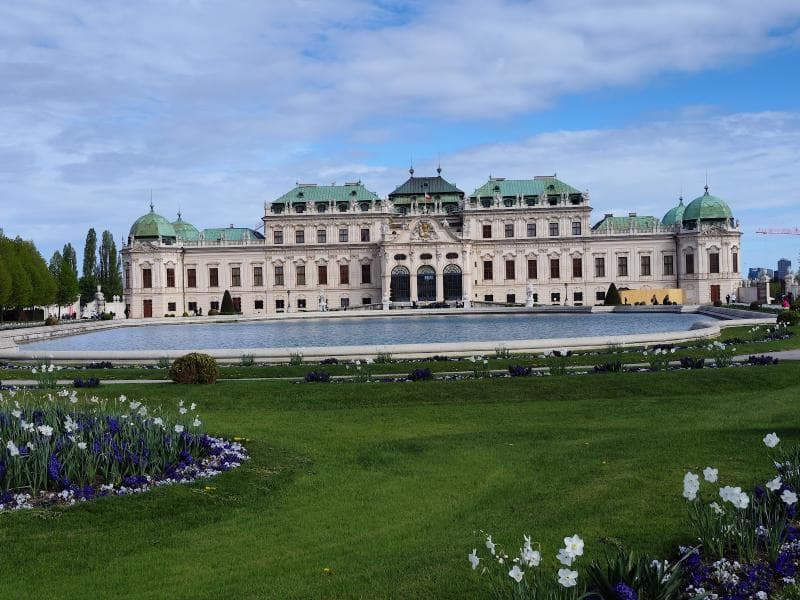
Explore the magnificent Palace Gardens of Belvedere Palace in Vienna, Austria. Discover Baroque design, historical context, and serene beauty.
Overview
The Palace Gardens of the Belvedere in Vienna, Austria, stand as a magnificent testament to Baroque landscape design, recognized as one of the most exquisite in the world. Situated elegantly between the Upper and Lower Belvedere palaces, these gardens unfold across three grand terraces, creating a visually stunning connection between the two architectural masterpieces. Designed in the formal French style by Dominique Girard, who trained in the gardens of Versailles, they embody the essential elements of 18th-century Baroque garden artistry.
Visitors are greeted by a harmonious blend of symmetrical parterres, intricate water features including cascades and basins, artfully trimmed hedges, and classical sculptures. Beyond the main Baroque garden, the Belvedere complex also encompasses specialized areas such as the historic Alpine Garden and borders the expansive Botanical Garden, offering diverse horticultural experiences.
History & Cultural Background
The story of the Belvedere Palace Gardens begins in the early 18th century with Prince Eugene of Savoy, a celebrated military commander and patron of the arts. Prince Eugene commissioned architect Johann Lukas von Hildebrandt to build his summer residence, the Belvedere, and entrusted Dominique Girard with the design of its elaborate gardens. Girard's training, inspired by the grand designs of Versailles, brought a distinct French flair to the Viennese landscape, featuring formal, terraced layouts that were a hallmark of the era.
Construction of the gardens commenced around 1700, making them one of the earliest parts of the Belvedere complex. After Prince Eugene's death, the entire complex was acquired by Empress Maria Theresa, who, in 1777, opened the Upper Belvedere as one of the world's first public museums. The main gardens followed suit, becoming accessible to the public around 1780. Today, the Belvedere Palace and its gardens are an integral part of the Historic Centre of Vienna, a designated UNESCO World Heritage Site, underscoring their profound cultural and historical significance.
What Makes It Special
The Belvedere Palace Gardens are celebrated for their meticulous Baroque composition and artistic integration with the palaces. The main garden's design between the Upper and Lower Belvedere is a masterpiece of visual perspective, employing cascading terraces that lead the eye through a series of dramatic focal points.
One of the most captivating features is the great reflection pond on the south side of the Upper Belvedere, which perfectly mirrors the palace's monumental façade, creating a stunning visual effect often captured in photographs. Along the grand axis, visitors encounter ornate fountains, such as the Cascade Fountain with its five tiers and Baroque statues, and the Muschelbrunnen, or Shell Fountain, adorned with triton figures. Numerous marble sculptures by artists like Giovanni Stanetti, often depicting mythological themes, add depth and narrative to the landscape. The meticulously kept flower parterres, clipped hedges, and gravel paths contribute to the gardens' formal elegance. Additionally, the complex includes the Kammergarten, or Privy Garden, a more secluded space west of the Lower Belvedere once exclusively for the Prince's enjoyment. The Alpine Garden, established in 1803 and moved to Belvedere in 1865, stands as Europe's oldest, boasting a rich collection of over 4,000 alpine plant species and Japanese bonsai.
Stories, Fun Facts & Local Details
Prince Eugene's vision for the Belvedere was not merely a residence but a grand statement of his achievements and cultural sophistication. The sculptures throughout the gardens are not just decorative; many feature mythological references designed to subtly allude to Prince Eugene's rise and connect him to figures like the god Apollo, symbolizing his glory and intellect. Interestingly, the gardens once housed a menagerie, a trend among royalty to display exotic animals as symbols of power and prestige, a practice long since discontinued.
The Alpine Garden, a unique facet of the Belvedere's green spaces, has a fascinating history rooted in the botanical interests of Archduke Johann. Originally located at Schönbrunn, it was relocated to the Belvedere in 1865 and continues to play a vital role in species conservation and biodiversity research, featuring rare specimens and an impressive bonsai collection. The main Baroque gardens have been open to the public without an entrance fee since the late 18th century, a progressive move that allowed ordinary citizens to enjoy this imperial splendor. From the Upper Belvedere, one can still experience the famous 'Canaletto Blick,' a panoramic view across Vienna towards St. Stephen's Cathedral, which Bernardo Bellotto famously painted.
Visitor Perspective
Exploring the Palace Gardens at Belvedere offers a serene and enriching experience for any traveler. A leisurely stroll through the terraced landscape between the Upper and Lower Belvedere provides continuously changing perspectives of both palaces, their intricate architecture, and the stunning Baroque design of the grounds. Walking downwards from the Upper Belvedere towards the Lower, visitors are treated to iconic views, particularly the reflection of the Upper Palace in the large pond, a quintessential photo opportunity in Vienna.
The gardens are a peaceful retreat from the city's hustle, offering quiet corners amidst the grand design. Even in winter, the geometric patterns of the flower beds and pruned conifers maintain their structured beauty. While the main Baroque gardens are freely accessible year-round, giving everyone the chance to appreciate their grandeur, certain areas like the Privy Garden require a ticket for entry, typically bundled with admission to the Lower Belvedere. Whether seeking historical context, photographic opportunities, or simply a moment of tranquility surrounded by natural and artistic beauty, the Belvedere Palace Gardens offer a memorable journey through Austria's imperial past.
Coordinates: 16.38091, 48.19156
View on Google Maps💬 How Travelers Describe This Place
Based on community votes
Unique
910Beautiful
755Photogenic
658Interesting
374Must See
28
Traveler Stories
Discover memorable experiences shared by travelers who have visited this place.
No traveler stories yet.
Be the first traveler to share what made this place memorable.

Tour
By
Spot
Discover amazing places around the world. Your journey starts here.
Explore
© 2026 TourBySpot. All rights reserved.