Upper Belvedere
Vienna, Austria
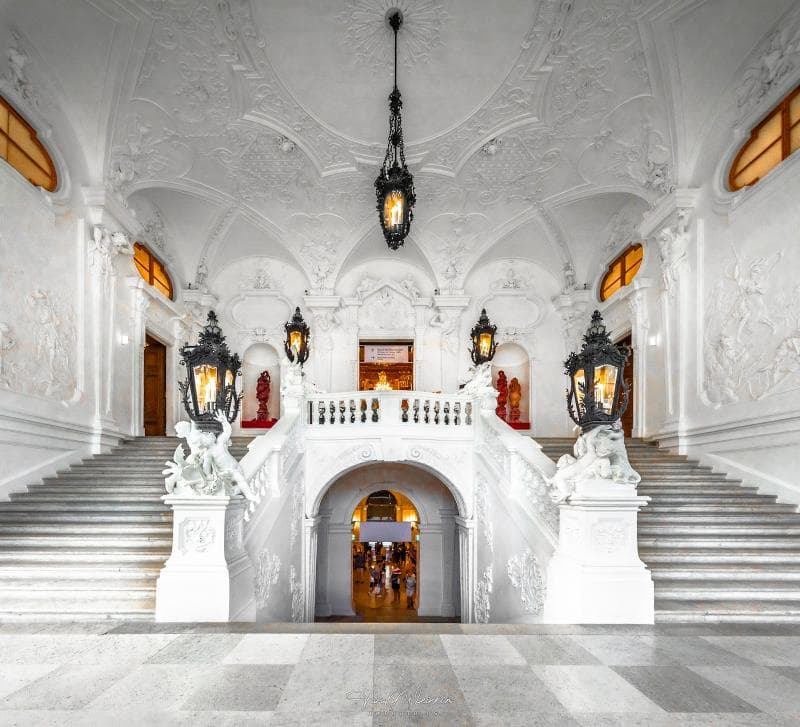
Explore Vienna's Upper Belvedere, home to Gustav Klimt's 'The Kiss' and a vast collection of Austrian art within a stunning Baroque palace. Discover history and masterpieces in Austria.
Overview
The Upper Belvedere, nestled within the magnificent Belvedere Palace complex in Vienna, Austria, stands as a crowning achievement of Baroque architecture and a beacon of Austrian art. Originally conceived as a grand ceremonial palace for Prince Eugene of Savoy, it now houses the permanent collection of the Belvedere Museum, attracting visitors worldwide with its celebrated masterpieces.
As part of a sprawling Baroque ensemble, the Upper Belvedere forms a harmonious whole with the Lower Belvedere, the Orangery, palace stables, and elaborately designed formal gardens. It offers not only an extraordinary journey through centuries of Austrian art but also an immersive experience of lavish imperial history and breathtaking views of Vienna.
History & Cultural Background
The construction of the Upper Belvedere began in 1717 and was completed by 1723, commissioned by the esteemed military general and art connoisseur Prince Eugene of Savoy. Designed primarily by Johann Lukas von Hildebrandt, the palace was intended not as a private residence but as a majestic venue for state receptions, festivals, and to display the prince's extensive art collection and library. This distinction highlights its role as a representational building, a symbol of power and prestige.
After Prince Eugene's death in 1736, the complex passed to the Habsburgs. Empress Maria Theresa later acquired the property and, notably, decided to open the imperial art collection to the public in the Upper Belvedere in 1781, making it one of the world's first public museums. This act democratized art, allowing a wider audience to appreciate the imperial treasures. Though the imperial collection eventually moved, the Upper Belvedere's legacy as a public art institution was firmly established.
What Makes It Special
The Upper Belvedere's special allure stems from a unique blend of its architectural grandeur and its unparalleled art collection. Architect Hildebrandt's design was revolutionary for its time, moving away from classic Baroque models to create a dynamic sequence of spaces, characterized by unpredictable shapes, varying heights, and a distinctive visual rhythm. Inside, the Sala Terrena impresses with its ceiling supported by Atlas figures, while the magnificent Marble Hall boasts frescoes by Carlo Innocenzo Carlone and offers sweeping views of Vienna.
However, what truly distinguishes the Upper Belvedere today is its status as home to the world's largest collection of Gustav Klimt's oil paintings. Foremost among these is the iconic 'The Kiss' (1908), a masterpiece of Viennese Modernism and Symbolism that captivates with its shimmering gold leaf. Beyond Klimt, the museum showcases Austrian art from the Middle Ages to the present day, featuring works by other prominent artists such as Egon Schiele, Oskar Kokoschka, and masterpieces by international artists like Vincent van Gogh and Claude Monet.
Stories, Fun Facts & Local Details
Prince Eugene's meticulous involvement in the palace's construction is evident in letters detailing the swift progress of work, allowing him to host guests like the Turkish ambassador Ibrahim Pasha even before its full completion. A fascinating detail is the original intention of the Sala Terrena, where structural issues necessitated the addition of strong pillars, inadvertently giving the room its unique and memorable appearance.
The Marble Hall holds significant historical weight beyond its artistic beauty; it was here, in 1955, that the Austrian State Treaty was signed, officially ending the Allied occupation and marking Austria's regained sovereignty. For a more lighthearted fact, the Upper Belvedere is so iconic that it features on the 20-cent Austrian euro coins, making it a tangible piece of the nation's identity.
Visitor Perspective
Visiting the Upper Belvedere is an experience that transcends a typical museum visit. The journey often begins with a stroll through the formal Baroque gardens, which are artworks in themselves, connecting the Upper and Lower Belvedere with symmetrical parterres, water basins, and sculptures. The architectural design ensures that every sightline is intentional, from the tiered gardens framing the facade to the strategic alignment of the Marble Hall's windows with the Lower Belvedere in the distance.
Inside, the sheer scale and beauty of the staterooms complement the artistic treasures. While Gustav Klimt's 'The Kiss' is undoubtedly a magnet for visitors, the entire collection, spanning centuries, offers a rich narrative of Austrian art history. The museum encourages a contemplative experience, particularly during less crowded times, allowing for intimate appreciation of the artworks and the palatial setting. It's a place where art, history, and architectural splendor converge, leaving a lasting impression on every curious traveler.
Coordinates: 16.38028, 48.19417
View on Google Maps💬 How Travelers Describe This Place
Based on community votes
Must See
913Photogenic
748Interesting
499Beautiful
337Unique
94
Traveler Stories
Discover memorable experiences shared by travelers who have visited this place.
No traveler stories yet.
Be the first traveler to share what made this place memorable.

Tour
By
Spot
Discover amazing places around the world. Your journey starts here.
Explore
© 2026 TourBySpot. All rights reserved.