Belgrade Fortress
Belgrade, Serbia
Explore Belgrade Fortress, an ancient citadel and Kalemegdan Park in Belgrade, Serbia. Discover its rich history, panoramic views, and cultural significance.
Overview
Perched majestically at the confluence of the Sava and Danube rivers, Belgrade Fortress, locally known as Kalemegdan, stands as the enduring historical heart of Belgrade, Serbia. This vast complex is much more than just a fortress; it is a sprawling open-air museum, a vibrant park, and a beloved urban green space that captures centuries of history within its ancient walls. It serves as Belgrade's most visited tourist attraction, drawing millions of visitors annually to explore its rich past and enjoy panoramic views.
The fortress complex encompasses the old citadel, divided into the Upper and Lower Towns, and is surrounded by Kalemegdan Park, which is further split into Great and Little Kalemegdan. This unique blend of formidable military architecture and tranquil natural surroundings offers a multifaceted experience, inviting visitors to wander through various historical epochs while enjoying the city's natural beauty.
History & Cultural Background
The history of Belgrade Fortress spans over two millennia, reflecting the tumultuous and layered past of the city itself. Its origins trace back to the 3rd century BC when Celtic tribes established the settlement of Singidunum. The Romans later fortified this strategic location, building the first stone fort, remnants of which can still be seen today. Over centuries, the fortress witnessed the rise and fall of numerous empires and rulers, including the Byzantines, Goths, Huns, Serbs, Hungarians, Ottomans, and Austrians. Each left an indelible mark on its architecture and cultural landscape.
Under Byzantine Emperor Justinian I, the fortress was significantly rebuilt in the 6th century. It became a Serbian capital in 1404 under Despot Stefan Lazarević, who further developed it into an impressive defensive and cultural center. Later, it endured prolonged Ottoman rule, punctuated by periods of Austrian occupation, during which much of the fortress's present-day structure was built according to Vauban principles. Recognized for its immense significance, Belgrade Fortress was declared a Monument of Culture of Exceptional Importance in 1979 and is protected by the Republic of Serbia.
What Makes It Special
What truly sets Belgrade Fortress apart is its remarkable ability to integrate millennia of history into a living, accessible space. Its strategic position at the confluence of two major European rivers offers breathtaking, unparalleled vistas of New Belgrade, Zemun, and the Great War Island. The fortress is a testament to continuous architectural evolution, where Roman ruins stand alongside medieval towers, Ottoman gates, and 18th-century Austrian bastions.
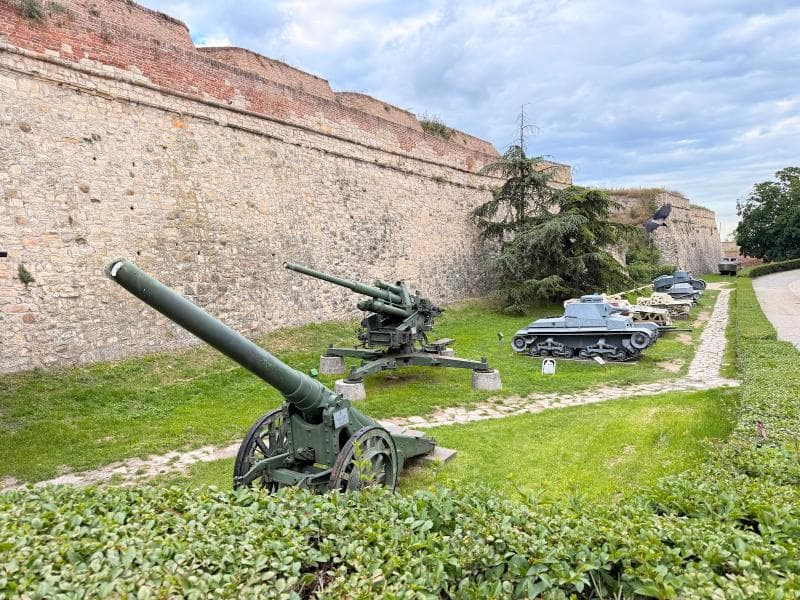
Within the complex, visitors encounter iconic landmarks such as the triumphant Victor Monument, a symbol of Belgrade's resilience. The Clock Gate and its Sahat Kula (Clock Tower) offer additional panoramic views. The Ružica Church, adorned with chandeliers made from spent ammunition, and the Chapel of Saint Petka, known for its miraculous spring, provide spiritual solace. The 'Roman Well,' despite its name, is an 18th-century Austrian construction shrouded in legends. The Military Museum, with its outdoor exhibits of artillery, further enriches the historical experience.
Stories, Fun Facts & Local Details
The very name 'Kalemegdan' comes from two Turkish words: 'kale' meaning fortress and 'meydan' meaning field, literally 'fortress field,' reflecting its historical use by the Ottomans. Belgrade itself, or 'Beograd,' translates to 'White City,' a name believed to originate from the white stone used to build its early fortifications.
The mysterious 'Roman Well' has inspired numerous urban legends and even captivated film director Alfred Hitchcock, who reportedly found it one of Belgrade's most intriguing spots. While not Roman, its depths and enigmatic atmosphere continue to fascinate. Adding to its unique character, a zoo, known as 'The Garden of Good Hope,' is nestled within the fortress walls, offering a surprising juxtaposition of ancient history and wildlife.
For locals, Kalemegdan is much more than a historical site; it's Belgrade's collective living room. You'll see people strolling, reading, playing chess, or simply enjoying the sunset over the rivers. It's a popular venue for cultural events, open-air concerts, and festivals like the Belgrade Beer Fest, making it a vibrant hub where daily life intertwines with ancient stones.
Visitor Perspective
A visit to Belgrade Fortress is a journey through time that can easily fill several hours, or even a full day. The outdoor grounds of the fortress and Kalemegdan Park are free to explore, offering endless opportunities for leisurely walks, historical discovery, and stunning photo opportunities. While much of the fortress is open, certain attractions like the Roman Well, Clock Tower, Military Bunker, Big Gunpowder Magazine, and the Military Museum have separate entry fees and operating hours.
For a historical immersion, mornings are ideal, allowing ample time to explore the various sections, gates, and museums. Late afternoons are particularly magical, as the fortress offers unparalleled spots to witness the sunset over the Sava and Danube, casting a golden glow over the city. While many paths are manageable, visitors should be prepared for mixed terrains, including cobblestones, slopes, and stairs, especially when exploring the Lower Town. It's a site that appeals to all ages, providing a perfect blend of education, relaxation, and panoramic beauty.
Coordinates: 20.45, 44.823
View on Google Maps💬 How Travelers Describe This Place
Based on community votes
Beautiful
551Must See
547Photogenic
421Unique
298Interesting
212
Traveler Stories
Discover memorable experiences shared by travelers who have visited this place.
No traveler stories yet.
Be the first traveler to share what made this place memorable.
Things to see at Belgrade Fortress



Tour
By
Spot
Discover amazing places around the world. Your journey starts here.
Explore
© 2026 TourBySpot. All rights reserved.