Sahat Gate
Belgrade, Serbia
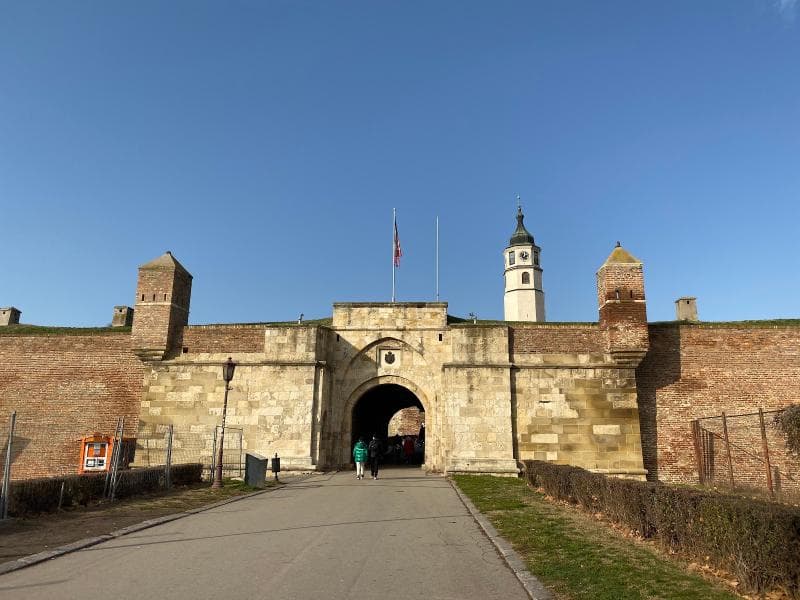
Discover Sahat Gate and Sahat Tower, the iconic Baroque entrance to Belgrade Fortress in Belgrade, Serbia. Explore its rich history, unique clock mechanism, and cultural significance.
Overview
Stepping through the Sahat Gate at Belgrade Fortress is like walking through centuries of history, a portal connecting modern Belgrade with its ancient past. This distinctive gate, crowned by the elegant Sahat Tower, serves as a primary entrance to the fortress's Upper Town, inviting visitors into one of Europe's most historically rich sites. Its striking Baroque architecture and prominent clock make it a landmark easily recognized and deeply woven into the city's identity. The complex stands as a testament to the diverse empires that shaped Belgrade, from Austrian influences to Ottoman legacies, all encapsulated within its formidable walls.
As you approach, the Sahat Gate and its accompanying tower immediately capture attention, not merely as a functional entryway but as a symbol of endurance. Positioned strategically within the magnificent Kalemegdan Park, it offers a glimpse into the fortress's architectural evolution and its enduring significance. Many visitors consider this complex a must-see, marking the effective beginning of their exploration into the Upper Town's myriad historical layers.
History & Cultural Background
The history of Sahat Gate and its towering clock, Sahat Kula, is a fascinating narrative of shifting powers and enduring craftsmanship. While the gate itself was originally built in the late 17th century by the Austrians, immediately after their conquest of the city in 1688, it ultimately gained its name from the Sahat Tower constructed above it. The tower's construction began between 1740 and 1789, with some sources indicating its completion under Turkish rule in the 18th century, despite its Austrian origins.
The gate was initially known as Kornar's Gate, after the Venetian constructor Andrea Cornaro, who played a significant role in the reconstruction efforts of the southeastern rampart. Cornaro's enigmatic career saw him working for both Austrian and later Ottoman authorities, reflecting the turbulent period when Belgrade was a contested frontier between the two empires. This dual influence is palpable in the complex's Baroque elements, which were a leading architectural movement in Europe at the time. The gate also featured casemates, used for housing guards, weapons, and other military provisions, underscoring its strategic military importance.
What Makes It Special
What truly sets Sahat Gate apart is the Sahat Tower itself—a rarity within fortress complexes. While clock towers were common features in Turkish town centers, their presence inside a fortified military structure like Belgrade Fortress was unusual, making this particular tower a unique example. Standing at an impressive 27.5 meters tall, the octagonal Baroque tower has remarkably preserved its authentic architectural and stylistic features over centuries, despite the numerous conflicts Belgrade endured.
The clock mechanism within the tower is another distinctive element. Unlike traditional clock towers that use bells, the Sahat Tower signals the time with gongs. Its central mechanism and weights allow it to operate for approximately a week on a single winding. This precision and the tower's imposing silhouette made it a crucial timekeeper for the city, visible from various points and helping to synchronize daily life within and around the fortress.
Stories, Fun Facts & Local Details
The Sahat Tower has etched its way into local lore and historical accounts. A famous anecdote, recounted by the 17th-century Turkish travel writer Evliya Celebi, highlights the tower's impact: he noted that the clock's 'bells' (likely referring to the gongs) could be heard from a distance, even a day's journey across the Sava River, emphasizing its far-reaching presence and significance.
Today, parts of the Sahat Gate complex continue to serve cultural purposes. The flanking rooms of the gate, once military casemates, now house the Belgrade Fortress Gallery, offering visitors a chance to see archaeological finds and artistic exhibitions within this historical setting. The clock mechanism, though largely original in design, underwent a modern renovation in 2002, thanks to a Swiss donation, ensuring its continued accuracy and functionality.
Visitor Perspective
For any traveler exploring Belgrade Fortress, Sahat Gate represents more than just an entry point; it's an immersion into the city's soul. It's the beginning of a journey through the Upper Town, leading to other significant attractions like the Military Museum and the Roman Well. While entry to Kalemegdan Park and the fortress grounds is generally free, there is a modest fee to enter and explore the Sahat Tower itself, providing an opportunity for a closer look at its interior and mechanism.
The gate and tower stand proudly, offering panoramic views and a powerful sense of connection to Belgrade's layered past. Visitors can appreciate the enduring architecture, imagine the changing of guards, and contemplate the countless moments in history that this structure has witnessed. It is a place where every stone seems to whisper tales of empires, battles, and the steady march of time.
Coordinates: 20.46513, 44.80401
View on Google Maps💬 How Travelers Describe This Place
Based on community votes
Photogenic
872Interesting
846Must See
201Beautiful
121Unique
87
Traveler Stories
Discover memorable experiences shared by travelers who have visited this place.
No traveler stories yet.
Be the first traveler to share what made this place memorable.

Tour
By
Spot
Discover amazing places around the world. Your journey starts here.
Explore
© 2026 TourBySpot. All rights reserved.