Roman Well
Belgrade, Serbia
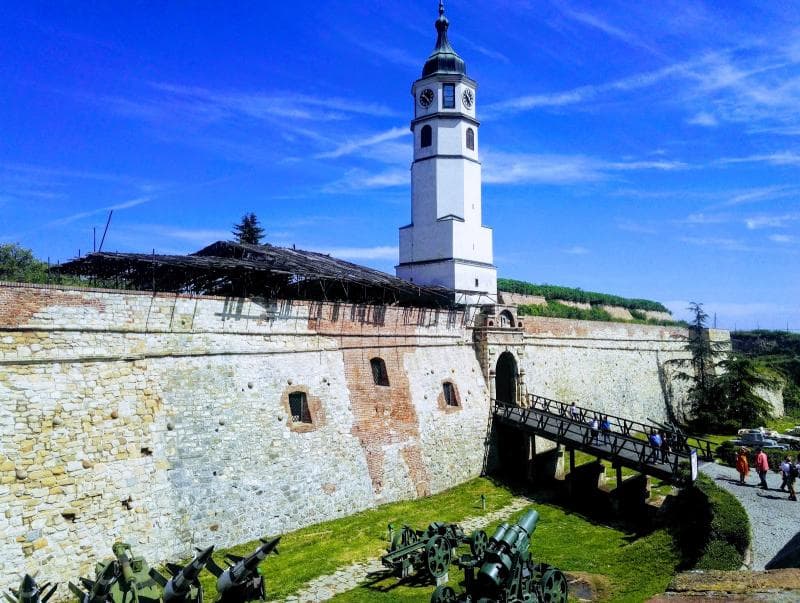
Discover the mysterious Roman Well within Belgrade Fortress, Serbia – an 18th-century Austrian marvel steeped in history and dark legends.
Overview
Deep within the historic Belgrade Fortress in Belgrade, Serbia, lies a captivating and enigmatic structure known as the Roman Well. Despite its evocative name, this intriguing site is neither Roman in origin nor a conventional well in the typical sense. It was constructed by the Austrians between 1717 and 1731 as part of a significant reconstruction of the fortress. Initially dubbed 'The Big Well,' it acquired its more famous, albeit misleading, 'Roman' designation in the 19th century, a time when many ancient structures in the region were popularly, though often inaccurately, attributed to the Romans.
Situated in the southwestern part of the Upper Town, close to the iconic Pobednik monument, the Roman Well is a remarkable feat of 18th-century engineering. It descends to an impressive depth, varying between approximately 35 to 55 meters depending on the source, and features a distinctive double spiral staircase that winds down its interior. Although its primary function was intended to be a water source for the beleaguered fortress garrison, the well ultimately served various purposes throughout its long history, from a cistern to a dungeon, accumulating layers of myth and mystery along the way.
History & Cultural Background
The story of the Roman Well is deeply intertwined with the turbulent history of Belgrade. During the Austrian occupation of Belgrade from 1717 to 1739, the city and its fortress were frequently under siege, necessitating a secure water supply. Austrian engineers, under the direction of figures like Balthasar Neumann, embarked on the ambitious project of constructing this deep shaft. The initial aim was to tap into an underground water source, possibly from the nearby Sava River.
However, the extensive digging proved largely unsuccessful in finding the desired water, leading to its conversion into a large, manually operated cistern, collecting surface water from the Upper Town. Before and after its Austrian construction, the site held other dark roles. Records from the 15th century suggest that an underground object in this location functioned as a dungeon during the Siege of Belgrade. Later, during the Ottoman period, it reportedly served as a grain silo. The well's complex history reflects Belgrade's strategic importance and the continuous efforts to fortify and sustain its defenses through centuries of conflict and change.
What Makes It Special
What truly sets the Roman Well apart is its paradoxical nature. It is a 'Roman' well that isn't Roman and a 'well' that struggled to produce water. This misnomer only adds to its mystique and charm. Architecturally, it stands as an exceptional example of 18th-century military engineering. Its most striking feature is the innovative double spiral staircase, which descends 35 meters around the central shaft. This ingenious design allowed individuals to ascend and descend simultaneously without crossing paths, a remarkable feat of Baroque engineering inspired by similar structures like the well in Orvieto, Italy.
The sheer depth and the precision of its construction for its era are astounding. Beyond its structural qualities, the Roman Well's enduring appeal lies in the shadowy narratives and local folklore that have clung to it, transforming it from a mere historical artifact into a deep reservoir of legends and dark secrets.
Stories, Fun Facts & Local Details
The Roman Well is a wellspring of eerie stories and local legends that have captivated visitors for centuries. Perhaps the most persistent tales revolve around its use as a dungeon, where prisoners were allegedly thrown into its depths and forgotten—an 'oubliette' in the true sense of the word. These grim stories are not entirely confined to ancient history; one particularly unsettling account from 1954 tells of a mentally ill man who murdered his wife and disposed of her body in the well.
Another fascinating legend speaks of secret tunnels beneath the Belgrade Fortress, with one supposedly connecting the Roman Well to the distant Gardoš Tower. During World War II, rumors circulated that the National Bank's gold reserves were hidden at the bottom of the well. German divers were reportedly sent to investigate, but legend has it that none returned. Even the master of suspense himself, Alfred Hitchcock, was drawn to its dramatic atmosphere, visiting in 1964 and reportedly expressing his admiration for its unique setting. These tales, whether fact or fiction, underscore the well's profound impact on the local imagination and its place as one of Belgrade's most mysterious landmarks.
Visitor Perspective
Today, the Roman Well is a popular and accessible point of interest within the Belgrade Fortress, offering a unique glimpse into the city's complex past. Visitors can approach the well, located near the Pobednik monument and King's Gate, and peer into its shadowy depths. While the spiral staircase is still intact, direct descent into the well is generally prohibited for safety reasons.
The site has undergone renovations, including the installation of safety railings, ensuring a secure viewing experience. Looking down into the dark abyss can be a slightly unnerving yet captivating experience, with some visitors noting the distinct sound of coins hitting the water far below. Visiting hours typically range from 10:00 to 17:00 during the off-season (October to April) and 11:00 to 19:00 during the peak season (April to October). An entrance fee, around 170 RSD for adults, is usually collected in cash, though policies can vary, and it's advisable to check current conditions. Despite its somewhat dark reputation, the Roman Well remains an essential stop for anyone exploring the rich history and intriguing legends of Belgrade.
Coordinates: 20.448056, 44.823056
View on Google Maps💬 How Travelers Describe This Place
Based on community votes
Photogenic
547Interesting
336Unique
219Beautiful
186Must See
80
Traveler Stories
Discover memorable experiences shared by travelers who have visited this place.
No traveler stories yet.
Be the first traveler to share what made this place memorable.

Tour
By
Spot
Discover amazing places around the world. Your journey starts here.
Explore
© 2026 TourBySpot. All rights reserved.