Belarusian State Museum Of The History Of The Great Patriotic War
Minsk, Belarus
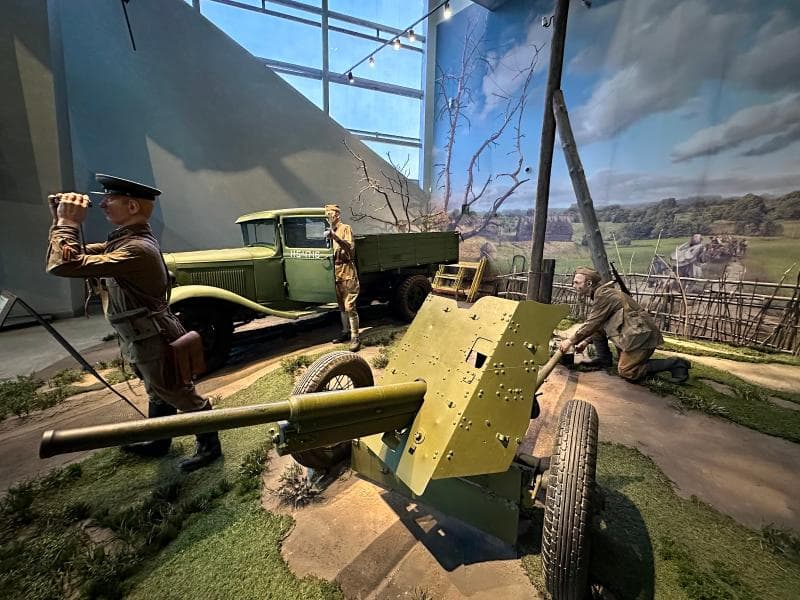
Explore the Belarusian State Museum of the History of the Great Patriotic War in Minsk, Belarus, dedicated to WWII's Eastern Front. Discover artifacts, personal stories, and the nation's profound sacrifice.
Overview
The Belarusian State Museum of the History of the Great Patriotic War, located in Minsk, Belarus, stands as a profound testament to the devastating conflict that swept across the nation during World War II. It holds the unique distinction of being the world's first museum dedicated to this war, established remarkably in October 1944, even before the war's conclusion. Its present ultra-modern home, opened in July 2014, is situated in a symbolic location next to the 'Minsk – Hero City' obelisk within the expansive Victory Park complex. This museum is not merely a collection of artifacts; it is Belarus's largest national repository of military history, offering a deep dive into the impact of the war, known locally as the Great Patriotic War, on the former Soviet Union and specifically on Belarus, which tragically lost every third resident.
History & Cultural Background
The genesis of this significant institution dates back to September 1943, with the collection process commencing in November 1942, while Belarus was still under Nazi occupation. Future exhibits, comprising documents and materials about the Great Patriotic War, were meticulously gathered from the frontlines and brought to Moscow, where an exhibition titled 'Belarus lives, Belarus is fighting, Belarus will remain Soviet' was first displayed. Following the liberation of Minsk, the museum officially opened its doors on October 22, 1944. Over the decades, it moved locations several times, including a purpose-built edifice in 1966, before settling into its current, state-of-the-art facility. The term 'Great Patriotic War' specifically refers to the Eastern Front of World War II, emphasizing the Soviet people's struggle against Nazi Germany from 1941 to 1945. Belarus played a crucial and tragic role, serving as a primary entry point for the Nazi army into Soviet territory, enduring immense suffering and heroic resistance.
What Makes It Special
The museum's current building is an architectural marvel, designed with profound symbolism reflecting the war's major milestones. The front facade features 11 sparkling rays made of stainless steel, symbolizing the 1,100 tragic days of Minsk's occupation and celebrating the Great Victory. Its composition represents four main blocks, corresponding to the four years of the war and the four army fronts involved in Belarus's liberation. Inside, the museum's ten exposition halls span 4,200 square meters, housing over 8,000 exhibition materials from a collection exceeding 150,000 items. These include an extensive array of military equipment, weapons, uniforms, personal items, and documents. A notable highlight is the glass dome at the top, adorned with a stained-glass window depicting a stork, a national symbol of Belarus. This dome also provides panoramic views of Victory Park and the city, adding to the visitor's reflective experience.
Stories, Fun Facts & Local Details
Beyond the grand scale, the museum excels in conveying personal narratives. Hundreds of photographs with brief biographies of individuals who perished during the war offer a poignant, human-centric perspective. One particularly striking exhibit includes a soldier's mangled water flask, discovered in a mass grave, with a piece of human bone embedded—a chilling relic of the war's brutality. The 'War and Peace' hall provides historical and cultural insights into the importance of global peace and the defense of the homeland. For international visitors, a significant improvement has been the introduction of trilingual labels in Belarusian, Russian, and English, making the extensive information accessible. Outside, the Heroes Square features a fountain with 170 jets, each representing one of the Belarusian populated localities liberated by the Soviet army. Interactive displays and dioramas also bring historical events to life, and the museum sometimes offers military and historical re-enactments, such as 'Tank Ramming' or 'Artillery Section Rafting across the Dnieper River'.
Visitor Perspective
A visit to the Belarusian State Museum of the History of the Great Patriotic War is an emotionally charged and deeply informative journey. The museum's curation takes you through a chronological narrative, from the pre-war period through occupation and resistance, to liberation and post-war recovery. Visitors often speak of the feeling of both greatest tragedy and an atmosphere of courage and achievement evoked by the spatial and architectural techniques. With its vast collection and detailed exhibits, it's recommended to allocate at least 2-3 hours for a general tour, though a deeper exploration could easily extend to half a day, especially with the use of audio guides or to study the numerous documents and personal stories. The museum effectively combines monumental forms with modern technological solutions, creating an engaging and thought-provoking experience for anyone seeking to understand the profound human cost and resilience displayed during this pivotal period of history.
Coordinates: 27.5380439, 53.9161493
View on Google Maps💬 How Travelers Describe This Place
Based on community votes
Beautiful
804Unique
733Must See
563Interesting
404Photogenic
336
Traveler Stories
Discover memorable experiences shared by travelers who have visited this place.
No traveler stories yet.
Be the first traveler to share what made this place memorable.
Things to see at Belarusian State Museum Of The History Of The Great Patriotic War



Tour
By
Spot
Discover amazing places around the world. Your journey starts here.
Explore
© 2026 TourBySpot. All rights reserved.