Military Vehicles
Minsk, Belarus
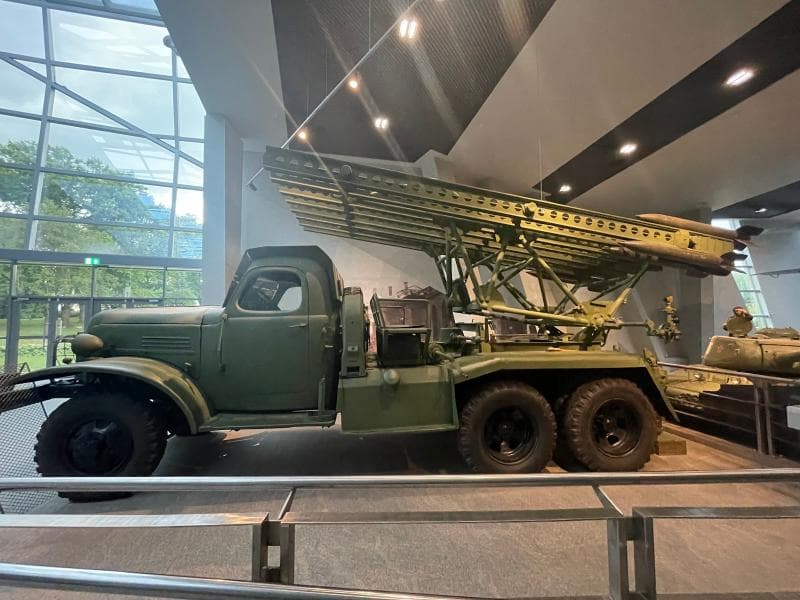
Explore the Military Vehicles exhibit at the Belarusian State Museum in Minsk, Belarus, featuring tanks, planes, and powerful WWII history.
Overview
Nestled within the grand Belarusian State Museum of the History of the Great Patriotic War in Minsk, the Military Vehicles exhibit offers a powerful glimpse into the machinery that shaped one of the most defining conflicts of the 20th century. This dedicated section showcases an impressive array of military equipment, from formidable tanks to agile fighter planes, providing visitors with a tangible connection to the technological advancements and destructive power of wartime. The museum itself is a modern architectural marvel, standing majestically near the 'Minsk – Hero City' Obelisk, and serves as Belarus's largest national repository of military history, profoundly impacting the understanding of World War II, or the Great Patriotic War as it is known in the region.
The collection of military vehicles forms a crucial part of the museum's extensive 8,000-plus exhibits, which also include arms, uniforms, and dioramas, spread across ten themed halls. While some of the larger pieces were historically displayed outdoors at previous locations, the modern museum now integrates these monumental exhibits, including suspended aircraft, within its state-of-the-art exhibition spaces, offering a more immersive experience for the curious traveler.
History & Cultural Background
The Belarusian State Museum of the History of the Great Patriotic War holds a unique place in history, having been conceived and established during the war itself, opening its doors shortly after Minsk's liberation in October 1944. This makes it the world's first museum dedicated to World War II. Belarus endured immense suffering during the conflict, losing an estimated one-third of its population, highlighting the profound cultural significance of this museum and its collections. The military vehicles on display are not merely objects of historical interest; they are poignant symbols of the immense struggle and sacrifice of the Belarusian people and the broader Soviet effort against Nazi occupation.
The museum's collection began as early as June 1942, with exhibits gathered directly from the frontlines and sent to Moscow. In 1977, at a previous location, a unique open-air exposition of military equipment was established, foreshadowing the comprehensive vehicle display seen today. The current museum building, opened in 2014 on the eve of the 70th anniversary of Belarus's liberation, was designed with profound symbolism, its architecture reflecting the war's milestones and the country's ultimate victory.
What Makes It Special
The Military Vehicles exhibit stands out not only for the rarity and historical significance of its collection but also for its presentation. Visitors can marvel at iconic machines like the legendary T-34 tank, a symbol of Soviet resilience and military prowess. The inclusion of both Soviet and German tanks, alongside fighter planes suspended from the ceiling, offers a comparative and comprehensive view of the combat technology of the era. This direct visual comparison of opposing forces' equipment helps to convey the scale and intensity of the ground and air battles.
The modern museum's design incorporates advanced multimedia technologies, such as plasma screens and holographic 3D installations, to enhance the display of these artifacts. While the vehicles themselves are silent witnesses to history, the surrounding context created by the museum's innovative exhibits allows for a deeper understanding of their role in key historical events. The sheer scale of the equipment, some of which is arranged in life-size dioramas, evokes a powerful sense of presence and the reality of war.
Stories, Fun Facts & Local Details
Among the mechanical giants, the T-34 tank holds a special place, often regarded as one of the most effective and influential tanks of World War II. Its design, combining a powerful engine, sloped armor, and a formidable gun, made it a game-changer on the Eastern Front. Seeing this 'legendary' tank up close allows visitors to appreciate the engineering and strategic thinking behind its success.
The museum's historical continuity is a 'fun fact' in itself; its origins trace back to wartime, a testament to the early and enduring commitment to preserving the memory of the Great Patriotic War. The very act of collecting artifacts from the frontlines while the war still raged underscores the profound impact the conflict had on the region and the urgent need to document its events for future generations. The outdoor element of the exhibit in its earlier incarnation, with tanks and planes displayed openly, was a pioneering approach to war commemoration.
Visitor Perspective
For visitors, the Military Vehicles section is an impactful and often sobering experience. Standing beside a colossal tank or gazing up at a suspended fighter jet, one cannot help but reflect on the immense human cost associated with such machinery. The exhibit encourages contemplation, connecting the tangible steel and iron to the intangible courage and suffering of those who operated them. It's a journey through the evolution of warfare, seen through the very tools that defined an era.
The museum's location next to the 'Minsk – Hero City' Obelisk and within the 'Pobeda' (Victory) Park complex adds to the experience, allowing for a broader understanding of Belarus's wartime narrative. The vehicles, whether inside the modern halls or potentially displayed in the surrounding park as part of a larger memorial, serve as powerful reminders of sacrifice and the ultimate triumph. It's an essential stop for anyone seeking a comprehensive and moving understanding of World War II's impact on Eastern Europe.
Coordinates: 27.5380439, 53.9161493
View on Google Maps💬 How Travelers Describe This Place
Based on community votes
Beautiful
961Photogenic
897Unique
695Interesting
605Must See
336
Traveler Stories
Discover memorable experiences shared by travelers who have visited this place.
No traveler stories yet.
Be the first traveler to share what made this place memorable.

Tour
By
Spot
Discover amazing places around the world. Your journey starts here.
Explore
© 2026 TourBySpot. All rights reserved.