Hall Of Victory
Minsk, Belarus
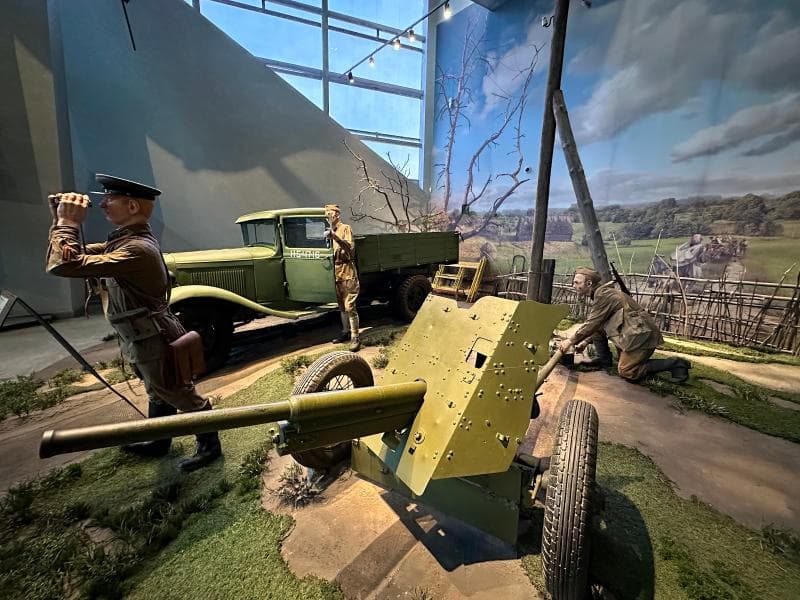
Explore the Hall of Victory at the Belarusian State Museum of the History of the Great Patriotic War in Minsk, Belarus. Discover its profound history, symbolic architecture, and emotional significance.
Overview
Deep within the Belarusian State Museum of the History of the Great Patriotic War in Minsk, Belarus, lies the solemn and inspiring Hall of Victory. This sub-spot is not merely a room; it is the powerful culmination of the museum's narrative, serving as a profound symbol of the triumph over adversity that defined the Great Patriotic War. Central to the museum's distinctive architecture, the Hall of Victory is housed within a striking dome, representing the ultimate success of the Soviet people and their allies. It stands as a testament to the immense sacrifice and heroic resilience demonstrated by millions during one of history's most devastating conflicts. Visiting this hall offers a moment of reflection on the cost of war and the enduring spirit of victory.
History & Cultural Background
The Belarusian State Museum of the History of the Great Patriotic War holds a unique place in world history, being the first museum dedicated to World War II ever established. Its collection began remarkably early, in June 1942, at the height of the conflict, driven by an unwavering belief in ultimate victory and the critical need to preserve the memory of the people's courage for future generations. The museum first opened its doors on October 22, 1944, in a Minsk freshly liberated from Nazi occupation, making it the first such institution to open its doors during the war itself. Belarus endured unimaginable suffering during the war, losing an estimated one-third of its population, totaling over three million lives, including tens of thousands of partisans and underground fighters. The Hall of Victory, therefore, is not just a commemoration of a military success but a deeply cultural space that embodies the collective memory, profound loss, and hard-won freedom of the Belarusian people. It is situated within a modern building inaugurated in 2014, on the eve of the 70th anniversary of Belarus's liberation, designed to powerfully convey both the tragedy and the eventual triumph.
What Makes It Special
The Hall of Victory is architecturally and emotionally designed to be a standout feature of the museum. Its most prominent characteristic is the immense glass dome that crowns it, symbolically representing the dome of the Reichstag Building in Berlin where Soviet soldiers famously raised the Victory Banner in 1945. Inside this transparent dome, visitors are greeted by a beautifully crafted stained-glass panel depicting a stork, a revered national symbol of Belarus. This detail adds a layer of indigenous cultural meaning to the universal theme of victory. From this vantage point, the hall offers panoramic views of Minsk, including the winding Svisloch River and the expansive Victory Park, visually connecting the museum's historical narrative with the modern city that rose from the ashes of war. The Hall also serves as a poignant memorial, commemorating the names of Heroes of the Soviet Union and the military formations that fought bravely for freedom during the devastating years of 1941-1945. Beyond WWII, the hall's exposition also highlights the involvement of Belarusians and the military in post-war conflicts, underscoring the ongoing importance of national security.
Stories, Fun Facts & Local Details
The entire museum building, housing the Hall of Victory, is a masterclass in symbolism. Its striking modern design, with sharp metallic spires and vast glass panels, is intended to evoke both the profound suffering and the ultimate triumph of the Belarusian people. The structure comprises four distinct blocks, a deliberate architectural choice mirroring the four arduous years of the war and the number of fronts that contributed to Belarus's liberation. The facade itself is designed to resemble fireworks, an 'architectural salute' celebrating the hard-won Victory. The museum's strategic placement within the Heroes' Square, adjacent to the iconic 'Minsk – Hero City' Obelisk and as part of the larger 'Pobeda' (Victory) Museum and Park Complex, further amplifies its symbolic weight. This integration creates a holistic memorial landscape that extends beyond the museum's walls, allowing visitors to feel surrounded by the echoes of history and heroism. The museum's very inception, collecting artifacts amidst the chaos of war, speaks to an extraordinary foresight and an unshakeable belief in the future.
Visitor Perspective
Stepping into the Hall of Victory is often described as an intensely moving experience for visitors. It represents the emotional climax of a journey through the harrowing exhibitions of the museum, transitioning from the devastation of war to the joy of liberation. The combination of historical narratives, symbolic architecture, and multimedia installations creates an immersive atmosphere that allows one to grasp the scale of the conflict and the heroism of those who fought. For many, it's a place where the human spirit's capacity for endurance and hope shines brightest amidst the somber recollections of tragedy. The sweeping views from the dome serve as a powerful metaphor – looking out over the peaceful, rebuilt city of Minsk, one is reminded of the profound value of the peace secured by such immense sacrifice. It encourages visitors to connect with the past on a deeply personal level, ensuring that the memory of the Great Patriotic War and its lessons are not forgotten, reinforcing a sense of national identity and the universal plea for peace.
Coordinates: 27.5380439, 53.9161493
View on Google Maps💬 How Travelers Describe This Place
Based on community votes
Unique
912Beautiful
820Must See
718Interesting
479Photogenic
181
Traveler Stories
Discover memorable experiences shared by travelers who have visited this place.
No traveler stories yet.
Be the first traveler to share what made this place memorable.

Tour
By
Spot
Discover amazing places around the world. Your journey starts here.
Explore
© 2026 TourBySpot. All rights reserved.