Memorial Hall
Minsk, Belarus
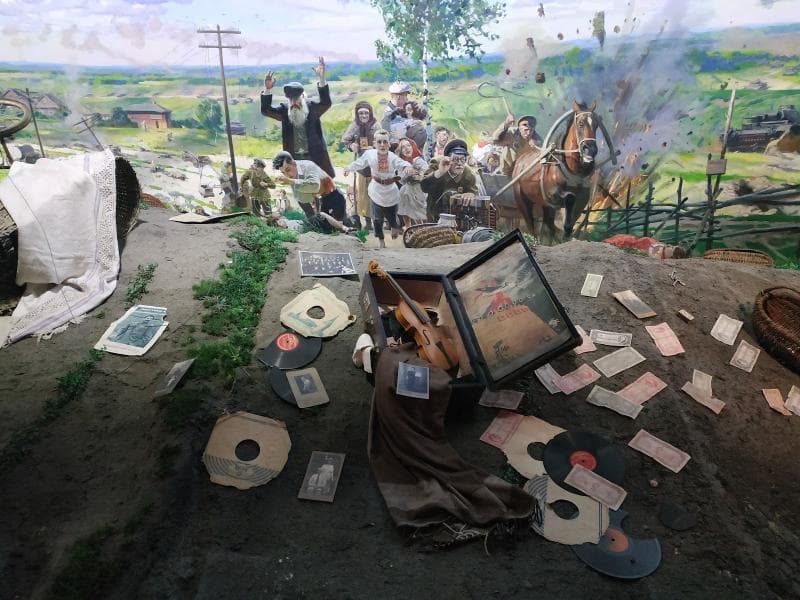
Explore the Memorial Hall (Hall of Victory) at the Belarusian State Museum of the History of the Great Patriotic War in Minsk, Belarus, honoring WWII heroes.
Overview
Deep in the heart of Minsk, Belarus, stands the Belarusian State Museum of the History of the Great Patriotic War, a profound testament to resilience and remembrance. Within its expansive halls, visitors encounter a compelling journey through one of history's most devastating conflicts. While the museum features numerous exhibition spaces, its spiritual core culminates in what can be best described as a 'Memorial Hall' – specifically, the magnificent Hall of Victory. This central area serves as a powerful commemorative space, honoring the immense sacrifices and heroism of the Belarusian people and Soviet forces during the Great Patriotic War, as World War II is known in this region. More than just a display of artifacts, this hall evokes deep emotional resonance, acting as a sacred place where memory and respect converge, inviting contemplation on the profound cost of war and the triumph of victory.
History & Cultural Background
The Belarusian State Museum of the History of the Great Patriotic War holds a unique place in history, being the world's first museum dedicated to World War II and the only one established during the war itself. Its conception dates back to November 1942, with its initial opening shortly after Minsk's liberation on October 22, 1944. This remarkable origin underscores Belarus's direct and profound experience of the conflict. The war inflicted unimaginable suffering, claiming the lives of an estimated one in three residents – over three million people, including thousands of partisans and underground fighters. The museum's existence is a direct response to this devastating period, acting as a permanent guardian of memory, preserving documentary and material evidence of the Belarusian people's struggle and sacrifice. Its various locations over the decades culminated in its current, purpose-built structure, opened in 2014, a design that itself reflects the war's timeline with its four distinct blocks symbolizing the years of conflict.
What Makes It Special
What makes the Hall of Victory, serving as the museum's central Memorial Hall, particularly special is its powerful blend of architectural symbolism and emotional depth. The hall is the grand finale of the museum's chronological narrative, situated beneath a striking glass dome said to evoke the dome of the Reichstag building in Berlin, where the Soviet Victory Banner was raised in 1945. This design choice immediately establishes a profound connection to the war's conclusion and the ultimate triumph. Within this revered space, the names of Heroes of the Soviet Union and military formations instrumental in securing victory are commemorated, transforming the hall into a roll call of valor. The architectural grandeur, combined with thoughtful exhibitions, uses modern multimedia technologies, such as plasma screens and laser lights simulating salute rays, to create an immersive and moving atmosphere. This technological integration enhances the historical narrative, allowing visitors to feel a tangible link to the past.
Stories, Fun Facts & Local Details
Beyond the grand narratives, the museum, and by extension its Memorial Hall, is rich with individual stories. The broader museum exhibits feature hundreds of photographs with brief biographies of individuals who perished, ensuring that the immense tragedy is understood through personal lenses. The sheer scale of loss in Belarus – a country where every third resident died – is a stark and deeply emotional fact that permeates the entire experience. The museum's location itself is symbolic, nestled in Victory Park adjacent to the 'Minsk – Hero City' Obelisk, a 45-meter-tall tribute built in 1985 for the 40th anniversary of victory. Surrounding the obelisk is a fountain with 170 jets, each representing a Belarusian populated locality liberated during the war. These elements collectively form a sprawling memorial complex, emphasizing the deep national significance of the Great Patriotic War in Belarus. The museum's ongoing efforts to collect thousands of new artifacts each year underscore a continuous dedication to preserving this critical history.
Visitor Perspective
A visit to the Memorial Hall, particularly the Hall of Victory, is often described as the emotional climax of the museum experience. Travelers are guided through a chronological journey of the war's events, culminating in this space of reflection and tribute. The sense of reverence is palpable, as visitors absorb the weight of history and the stories of immense sacrifice. Many find the combination of monumental architecture, symbolic design, and the enumeration of heroes deeply moving. It's a place that transcends a mere history lesson, becoming an act of homage. The museum's ability to combine the scale of a national tragedy with glimpses into individual lives ensures that the human cost is never forgotten. It leaves visitors with a profound understanding of the Great Patriotic War's impact on Belarus and a lasting appreciation for the peace achieved through such sacrifice.
Coordinates: 27.5380439, 53.9161493
View on Google Maps💬 How Travelers Describe This Place
Based on community votes
Beautiful
897Photogenic
657Must See
605Unique
498Interesting
481
Traveler Stories
Discover memorable experiences shared by travelers who have visited this place.
No traveler stories yet.
Be the first traveler to share what made this place memorable.

Tour
By
Spot
Discover amazing places around the world. Your journey starts here.
Explore
© 2026 TourBySpot. All rights reserved.