Batu Caves
Kuala Lumpur, Malaysia
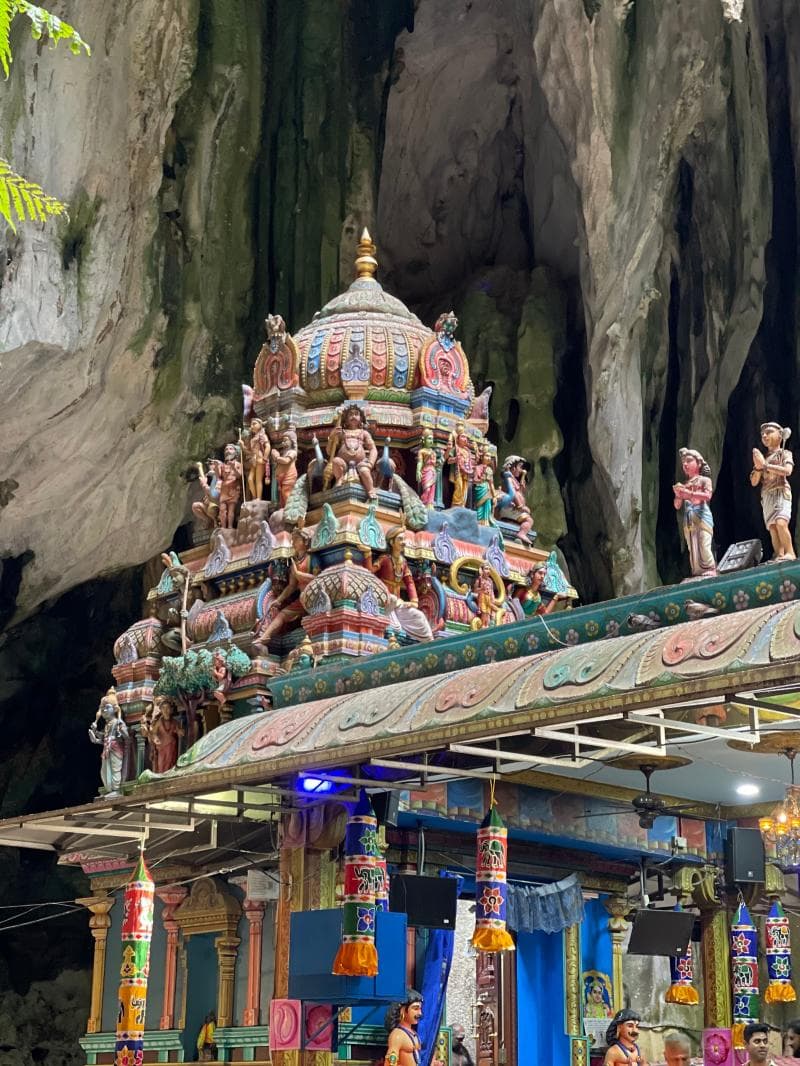
Explore Batu Caves in Kuala Lumpur, Malaysia – a majestic Hindu shrine set within ancient limestone caves, featuring a towering golden Lord Murugan statue and 272 vibrant steps. Discover its rich history and cultural significance.
Overview
The Batu Caves, nestled within a towering limestone hill just 13 kilometers north of Kuala Lumpur, Malaysia, stand as a remarkable natural wonder and a vital Hindu pilgrimage site. This iconic destination seamlessly blends impressive geological formations with profound spiritual significance. Visitors are greeted by the magnificent 42.7-meter (140-foot) golden statue of Lord Murugan, a prominent Hindu deity, which guards the entrance to the cave complex. Beyond this colossal statue, a vibrant, rainbow-colored staircase of 272 steps ascends dramatically, leading to the main Temple Cave, also known as Cathedral Cave.
Millions of visitors and devotees flock to Batu Caves annually, drawn by its breathtaking beauty and cultural resonance. It serves as one of the most significant Hindu shrines outside of India, deeply cherished by the Tamil Hindu community in Malaysia.
History & Cultural Background
The geological origins of Batu Caves are ancient, with the limestone formations themselves believed to be around 400 million years old. Historically, the caves were known to the indigenous Temuan people, a tribe of Orang Asli, who used them as shelters. Chinese settlers in the 1860s also utilized the caves for excavating guano, a natural fertilizer.
The caves gained wider recognition in 1878 when American naturalist William Hornaday documented their existence. However, it was K. Thamboosamy Pillai, an influential leader of the Tamil Hindu community, who transformed the site into a revered place of worship. In 1891, inspired by the main cave's entrance resembling the 'vel' (divine spear) of Lord Murugan, he dedicated the main cave as a shrine to the deity. The first Thaipusam festival was celebrated here in 1892, marking the beginning of its enduring religious importance. Wooden steps were initially installed in 1920 to facilitate the pilgrimage, later replaced by the concrete staircase visible today. The towering golden statue of Lord Murugan, a landmark symbol, was unveiled in January 2006.
What Makes It Special
The allure of Batu Caves lies in its unique combination of natural grandeur and spiritual devotion. The 42.7-meter (140-foot) golden statue of Lord Murugan is not only one of the tallest statues of a Hindu deity globally but also Malaysia's tallest statue, standing as a powerful beacon of faith. The ascent to the Temple Cave is a memorable experience, climbing 272 steps that were famously painted in vibrant rainbow colors in 2018, transforming them into a striking visual spectacle.
Inside the Temple Cave, also known as Cathedral Cave, visitors find a vast, high-ceilinged cavern where natural light filters through openings, illuminating Hindu shrines and intricate statues. Beyond the main cave, other significant caverns include the Ramayana Cave, which features dioramas depicting scenes from the Hindu epic, and the Dark Cave, renowned for its unique biodiversity, including rare species of fauna and impressive geological formations like stalactites and stalagmites.
Stories, Fun Facts & Local Details
The inspiration behind establishing the shrine at Batu Caves is rooted in the unique natural formation of the main cave's entrance, which K. Thamboosamy Pillai observed to resemble the 'vel', Lord Murugan's divine spear. Each year, the site becomes the focal point for the elaborate Thaipusam festival, typically held between January and February. During this vibrant celebration, hundreds of thousands of Hindu devotees undertake a procession, with many carrying 'kavadi' – ornate physical burdens, sometimes attached to the body with hooks or needles, as acts of extreme penance and devotion to Lord Murugan.
Another notable aspect of Batu Caves is its lively population of macaque monkeys. These playful creatures freely roam the area, often interacting with visitors, adding a unique, albeit sometimes cheeky, element to the experience. The painting of the 272 steps in rainbow colors in 2018 garnered significant attention. While celebrated by many for its artistic flair, it also sparked a debate regarding heritage conservation, as the renovation was carried out without prior authorization from the National Heritage Department, briefly putting its national heritage status at risk. Despite these discussions, the colorful steps remain a highly photographed feature. The caves are also a biodiversity hotspot, sheltering various rare flora and fauna, including endemic species like the trapdoor spider Liphistius batuensis in the Dark Cave.
Visitor Perspective
Visiting Batu Caves is an immersive experience that caters to both spiritual seekers and curious travelers. The main Temple Cave is free to enter, allowing everyone to explore its depths and shrines. It's advisable to allocate about two to three hours to comfortably explore the main attractions, including the climb. For those planning a visit, wearing comfortable walking shoes is highly recommended due to the 272 steps. Dressing modestly, with shoulders and knees covered, is also appropriate as it is a sacred religious site. It's also wise to bring water, especially on hot days, and to refrain from carrying visible snacks, as the monkeys are known to be bold and may attempt to snatch food.
Batu Caves is easily accessible from Kuala Lumpur, located approximately 13 kilometers north of the city center. Public transport, such as the KTM Komuter train, provides a direct and convenient way to reach the site. The best time to visit is typically earlier in the morning to avoid the peak heat and larger crowds. While the Temple Cave is free, separate tickets may be required for entry into other caves like the Ramayana Cave or for guided tours of the Dark Cave.
Coordinates: 101.6840385, 3.2378844
View on Google Maps💬 How Travelers Describe This Place
Based on community votes
Photogenic
836Must See
287Interesting
255Beautiful
231Unique
86
Traveler Stories
Discover memorable experiences shared by travelers who have visited this place.
No traveler stories yet.
Be the first traveler to share what made this place memorable.
Things to see at Batu Caves



Tour
By
Spot
Discover amazing places around the world. Your journey starts here.
Explore
© 2026 TourBySpot. All rights reserved.