Dark Cave
Kuala Lumpur, Malaysia
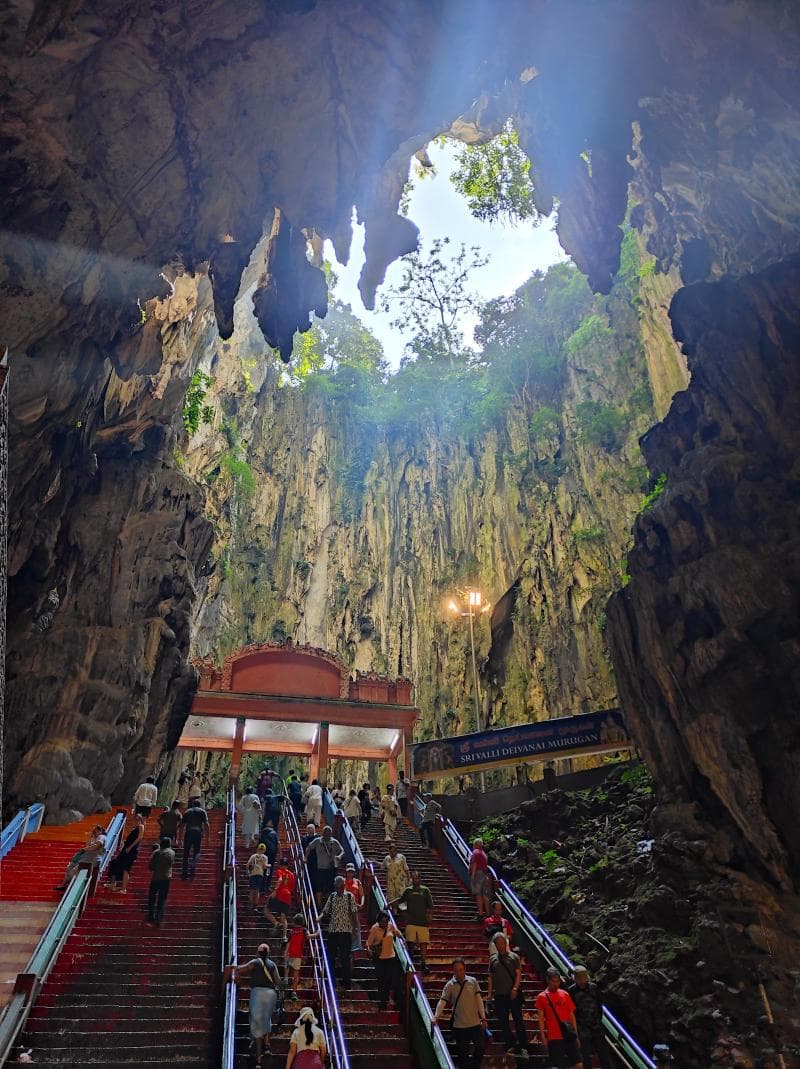
Explore Dark Cave, a protected ecological wonder within Batu Caves, Kuala Lumpur, Malaysia. Discover ancient geology and rare wildlife, including the unique trapdoor spider.
Overview
Deep within the majestic limestone karsts of Batu Caves, just a short distance north of Kuala Lumpur, Malaysia, lies the extraordinary Dark Cave. Unlike its more illuminated neighbor, the Temple Cave, Dark Cave is a protected ecological site that plunges visitors into a world of profound darkness and unparalleled biodiversity. This ancient subterranean labyrinth, formed over 100 million years ago, offers a unique opportunity to explore a delicate ecosystem shaped by millennia of geological processes and evolutionary adaptation. It stands as a testament to nature's enduring power and the intricate web of life that thrives far from sunlight.
Accessed approximately 75% up the iconic 272 rainbow-colored steps of the Batu Caves complex, the entrance to Dark Cave beckons curious travelers seeking an immersive adventure. Visitors are equipped with headlamps and helmets, venturing into passages that stretch over two kilometers, with specific sections designated for educational and adventure tours. The experience here is less about grand religious iconography and more about connecting with the raw, untamed beauty of the Earth's interior and its unique inhabitants. Dark Cave is a sanctuary for rare species and an active research site, underscoring its significant role in conservation and scientific understanding.
History & Cultural Background
The broader Batu Caves complex itself holds deep historical and cultural significance, particularly for the Tamil Hindu community in Malaysia. While indigenous Temuan people knew of the caves for centuries, American naturalist William Hornaday brought them to wider attention in 1878. Subsequently, in 1891, K. Thamboosamy Pillai, an influential Tamil leader, dedicated the main cave as a shrine to Lord Murugan, inspired by the cave entrance's resemblance to Murugan's divine spear, the 'vel'. This marked the beginning of Batu Caves' transformation into one of the most important Hindu shrines outside India, a vibrant center for spiritual pilgrimage, especially during the annual Thaipusam festival.
The Dark Cave, however, holds a different kind of history, one primarily etched in geological time and scientific discovery. Its history is interwoven with the scientific exploration of cave biology in Southeast Asia, with researchers studying its unique fauna since the late 19th century. The emphasis here has always been on its natural heritage, specifically its role as a living laboratory for subterranean ecosystems. The cave's undisturbed environment has preserved conditions crucial for the survival of species found nowhere else, making it a focal point for conservation efforts long before eco-tourism became a global trend.
What Makes It Special
Dark Cave's true marvel lies in its pristine natural state and its role as a living biological treasure trove. Unlike many developed show caves, it lacks artificial lighting, plunging visitors into an authentic cave experience where darkness reigns and sensory perception sharpens. This deliberate choice enhances its conservation value, protecting light-sensitive species and allowing the natural behaviors of its inhabitants to continue undisturbed.
Geologically, the cave showcases an array of breathtaking formations: towering stalactites, rising stalagmites, intricate cave curtains, flowstones, and delicate helictites, all sculpted over millions of years by dripping water and mineral deposits. Scientifically, it's a biodiversity hotspot of global significance. It harbors seven unique ecosystems and over 200 animal species, many of which are troglobites – creatures whose entire life cycles unfold within the cave's perpetual darkness.
The most famous resident is arguably the Liphistius batuensis, an ancient species of trapdoor spider considered a 'living fossil', endemic solely to Dark Cave. The cave is also home to an estimated 200,000 bats, whose guano forms the very foundation of the cave's food web, supporting a complex community of cave crickets, centipedes, flatworms, and other unique invertebrates. This guano-driven ecosystem is a perfect example of nature's ingenious adaptations to extreme environments.
Stories, Fun Facts & Local Details
One fascinating aspect of Dark Cave is the sheer scale of the time it represents. The limestone hill itself is over 400 million years old, while the cave system, with its impressive formations, has been evolving for more than 100 million years. Imagine a stalagmite growing an inch every hundred years; some formations within Dark Cave have been quietly growing for unfathomable lengths of time, witnessing the rise and fall of countless species and civilizations outside its dark embrace.
The intensive research conducted in Dark Cave since the late 1800s has made it the most thoroughly studied cave in Southeast Asia for its zoological diversity. Despite this long history of scientific inquiry, new species are still being discovered, highlighting just how much remains unknown about this subterranean world. The various species of bats inhabiting the cave, including insect-eating and fruit bats, play a crucial role as pollinators for tropical fruit crops outside the cave, making them vital to the local ecosystem and agriculture.
While the larger Batu Caves complex is famous for its mischievous long-tailed macaque monkeys, Dark Cave offers a different kind of wildlife encounter – one that is often quieter and more focused on the unique creatures adapted to eternal darkness. Guides often share stories of past expeditions and the continuous efforts required to protect this fragile habitat, making each visit an educational journey into both natural history and modern conservation challenges.
Visitor Perspective
A visit to Dark Cave provides a stark contrast to the vibrant, bustling atmosphere of the main Temple Cave at Batu Caves. It's a journey into quiet contemplation and scientific wonder, offering an authentic eco-adventure that appeals to nature lovers, geology enthusiasts, and those seeking a deeper understanding of subterranean ecosystems.
Because Dark Cave is a protected conservation site, access is strictly controlled through guided tours. These tours are designed to be educational, providing insights into the cave's geology, biology, and the critical importance of its preservation. Visitors are typically provided with essential gear like headlamps and helmets, preparing them for an experience where natural darkness is embraced.
It's important to note that the Dark Cave has experienced periods of closure for conservation and maintenance, with its reopening status sometimes varying. Prospective visitors are strongly advised to check the latest operational status and booking information through official channels before planning their trip. When accessible, tours often require advance booking due to limited group sizes, ensuring minimal impact on the delicate environment. The experience offers an unparalleled opportunity to witness a 'living fossil' ecosystem firsthand and contribute to its continued protection through responsible tourism.
Coordinates: 101.6800003052, 3.2300000191
View on Google Maps💬 How Travelers Describe This Place
Based on community votes
Interesting
953Beautiful
695Photogenic
658Must See
396Unique
22
Traveler Stories
Discover memorable experiences shared by travelers who have visited this place.
No traveler stories yet.
Be the first traveler to share what made this place memorable.

Tour
By
Spot
Discover amazing places around the world. Your journey starts here.
Explore
© 2026 TourBySpot. All rights reserved.