Temple Cave
Kuala Lumpur, Malaysia
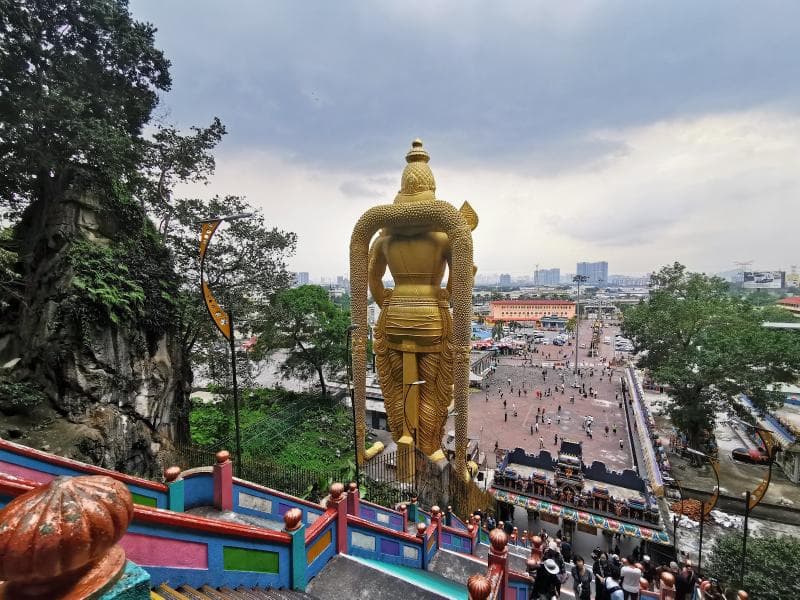
Explore Temple Cave, also known as Cathedral Cave, a significant Hindu shrine within Batu Caves, Kuala Lumpur, Malaysia. Discover its history, vibrant culture, and the iconic Lord Murugan statue.
Overview
Deep within the majestic limestone hills of Batu Caves, just a short distance north of Kuala Lumpur, Malaysia, lies the revered Temple Cave, also known as Cathedral Cave. This awe-inspiring natural wonder and significant Hindu pilgrimage site captivates visitors with its immense scale and profound spiritual ambiance. Ascending 272 vibrant steps, flanked by the colossal golden statue of Lord Murugan, pilgrims and travelers alike embark on a journey into a cavernous sanctuary where devotion and nature intertwine. The Temple Cave serves as the primary focal point of the Batu Caves complex, offering a unique blend of geological marvel and sacred worship.
History & Cultural Background
The history of Batu Caves, and by extension the Temple Cave, stretches back millions of years, with its limestone formations dating approximately 400 million years. Originally, these caves provided shelter to the indigenous Temuan people and later saw Chinese settlers excavating guano in the 1860s. However, its prominence as a Hindu sacred site began in earnest after American naturalist William Temple Hornaday documented its existence in 1878. The true transformation came in 1891 when K. Thamboosamy Pillay, an influential leader of the Tamil Hindu community in Malaya, was inspired by the main cave's entrance, which strikingly resembled the 'vel' or spear traditionally wielded by Lord Murugan. He dedicated the cave as a shrine to Lord Murugan, thus establishing it as a crucial center for Hindu worship outside India. The annual Thaipusam festival, a grand celebration dedicated to Lord Murugan, was first observed here in 1892 and has since become a major event drawing hundreds of thousands of devotees and visitors annually.
What Makes It Special
The Temple Cave's uniqueness stems from its harmonious blend of natural grandeur and spiritual significance. The journey to the cave itself is an experience, marked by the iconic 42.7-meter (140-foot) tall golden statue of Lord Murugan at the base of the hill, a magnificent tribute unveiled in 2006. This impressive statue is Malaysia's tallest and one of the world's tallest Murugan statues. The climb up the 272 brightly painted steps, each representing a step closer to spiritual enlightenment, builds anticipation for the vast cavern within. Inside, the Temple Cave is an expansive, open chamber, naturally lit by shafts of sunlight piercing through openings high above, illuminating the various shrines and deities housed within. The sheer scale of the cavern, combined with the intricate Hindu temples and the palpable sense of devotion, creates an atmosphere that is both humbling and uplifting.
Stories, Fun Facts & Local Details
Beyond its impressive facade, the Temple Cave holds rich cultural narratives. The inspiration of K. Thamboosamy Pillay, seeing the 'vel' shape in the cave's entrance, connects the natural formation directly to the mythology of Lord Murugan, the Hindu god of war and victory. The Thaipusam festival, central to the cave's spiritual life, is a spectacular display of faith where devotees undertake acts of extreme devotion, often carrying 'kavadi' – elaborate, often self-mortifying, burdens – up the 272 steps as an offering. Another notable local detail, and a memorable part of the visitor experience, is the presence of numerous long-tailed macaques. These mischievous monkeys are ubiquitous around the steps and the cave entrance, often interacting with visitors in their quest for food. While captivating, visitors are advised to secure their belongings and avoid feeding them.
Visitor Perspective
Visiting the Temple Cave is an immersive experience for any curious traveler. The climb up the 272 steps, while challenging due to the tropical humidity, offers panoramic views and a continuous visual spectacle as you ascend towards the cave's mouth. Entry to the Temple Cave itself is free, making it an accessible cultural landmark. Due to its status as an active place of worship, visitors are encouraged to dress modestly, ensuring shoulders and knees are covered. Sarongs are available for those who need them. For the most serene experience and to avoid the midday heat and larger crowds, arriving early in the morning is highly recommended. The Temple Cave is a place where one can observe fervent devotion, admire natural geological formations, and appreciate the vibrant cultural tapestry of Malaysia's Hindu community, all within one breathtaking setting.
Coordinates: 101.6839, 3.2374
View on Google Maps💬 How Travelers Describe This Place
Based on community votes
Must See
836Beautiful
797Photogenic
695Interesting
396Unique
286
Traveler Stories
Discover memorable experiences shared by travelers who have visited this place.
No traveler stories yet.
Be the first traveler to share what made this place memorable.

Tour
By
Spot
Discover amazing places around the world. Your journey starts here.
Explore
© 2026 TourBySpot. All rights reserved.