Azerbaijan Carpet Museum
Baku, Azerbaijan
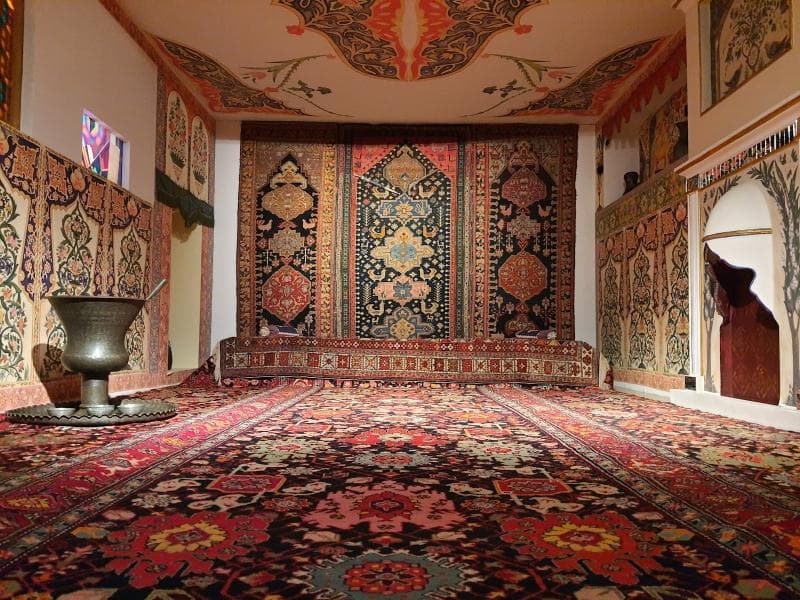
Explore the Azerbaijan Carpet Museum in Baku, Azerbaijan, home to the world's largest collection of Azerbaijani carpets and a testament to an ancient art form.
Overview
Nestled on the picturesque Seaside Boulevard in Baku, Azerbaijan, the Azerbaijan Carpet Museum stands as a vibrant tribute to the nation's rich weaving heritage. This architectural marvel, designed to resemble a gigantic rolled carpet, immediately captures the imagination, signifying the cultural treasures held within. As the world's first specialized museum dedicated exclusively to the art of carpet weaving, it serves as a crucial repository and research center for Azerbaijani carpets and related folk applied arts. It is a place where history, artistry, and tradition are intricately woven together, offering visitors a deep dive into an art form recognized globally for its beauty and complexity.
The museum’s mission extends beyond mere display; it actively works to preserve, study, and popularize unique examples of carpet weaving, which form a vital part of Azerbaijan's national identity. Its comprehensive collection showcases a wide array of carpets, from ancient flat-weaves to intricate pile carpets, alongside other fascinating artifacts that speak to the country's centuries-old cultural legacy.
History & Cultural Background
The Azerbaijan Carpet Museum's journey began on March 13, 1967, established under a decree by the Council of Ministers of the Azerbaijan SSR. Initially known as the Azerbaijan State Museum of Carpet and Folk Applied Arts, it was the pioneering institution globally dedicated to carpet weaving art. The museum's inception was largely driven by the vision of Latif Karimov, an outstanding scientist, artist, and carpet weaver, considered the founder of the science of Azerbaijani carpet weaving art.
The first exhibition opened its doors in 1972 within the historic Juma Mosque in Baku's Old City, Icherisheher. Over the years, the museum relocated several times, moving to the former Lenin Museum in 1992 after the collapse of the USSR. Its current iconic home on the Seaside Boulevard, designed by Austrian architect Franz Janz, was inaugurated in 2014, marking a significant new chapter for the institution.
Azerbaijani carpet weaving holds immense cultural significance, earning its inscription on UNESCO's Representative List of the Intangible Cultural Heritage of Humanity in 2010. This recognition underscores the deep-rooted tradition and the continuous efforts to pass down this intricate craft through generations.
What Makes It Special
The most striking feature of the Azerbaijan Carpet Museum is undoubtedly its architecture. The building itself is an art object, avant-garde and instantly recognizable, shaped like a partially unrolled carpet. This bold design, a collaboration between Austrian architect Franz Janz and the Heydar Aliyev Foundation, was specifically intended to reflect the museum's unique focus.
Inside, the museum boasts the largest collection of Azerbaijani carpets in the world, with over 10,000 exhibits. Beyond carpets, the collection includes diverse artifacts such as artistic metalwork from the 14th century, Bronze Age jewelry, ceramics, glass, wood, textiles, costumes, and embroidery. The exhibits are thoughtfully arranged, often by style and region, allowing visitors to explore the distinct characteristics of Azerbaijan's seven regional carpet weaving schools.
The museum is not merely a static display; it serves as a dynamic research, training, and educational center. It actively revives ancient weaving techniques and hosts international symposiums and conferences, bringing together artists and scholars from around the globe to further the study and popularization of carpet art.
Stories, Fun Facts & Local Details
Each carpet within the museum tells a story, reflecting local culture, nature, and beliefs through its intricate designs and motifs. One widely used motif, the 'buta,' often found in Azerbaijani carpets, is linked to divine fire, a nod to the ancient Zoroastrian traditions prevalent in the region.
Among the most poignant exhibits is the 'Burned Culture' collection, which features carpets rescued from the Shusha Museum of History. These 600 carpets were moved out of the Shusha museum before its capture in 1992, preserving a crucial piece of cultural heritage. This display highlights the resilience and enduring spirit of Azerbaijani culture in the face of conflict.
Notable pieces in the museum's collection include historically significant rugs like the 17th-century 'Ajdahali' (Dragon) carpet from Karabakh, the magnificent 'Ovchulug' Tabriz rug, and the 18th-century 'Khila Afshan' carpet. These artifacts not only demonstrate exceptional craftsmanship but also embody centuries of oral tradition, where weaving techniques and patterns were passed down through families.
Visitor Perspective
A visit to the Azerbaijan Carpet Museum is an immersive cultural experience, inviting travelers to explore the intricate world of Azerbaijani weaving. Visitors can explore multiple floors showcasing the evolution of carpet weaving, from simple woven mats to sophisticated artistic forms. Interactive displays provide detailed information, enriching the understanding of each piece's history and craftsmanship.
The museum offers live demonstrations of traditional carpet weaving, allowing guests to witness the skill and dedication involved in creating these masterpieces firsthand. To ensure accessibility, the museum has pioneered inclusive programs, with texts in the permanent exhibition duplicated in Braille and virtual tours available with sign language interpretation. It's recommended to allocate 1-2 hours to fully appreciate the exhibits, and for those seeking souvenirs, the museum shop offers authentic Azerbaijani carpet art.
Coordinates: 49.83556, 40.35972
View on Google Maps💬 How Travelers Describe This Place
Based on community votes
Must See
673Photogenic
336Interesting
219Unique
186Beautiful
80
Traveler Stories
Discover memorable experiences shared by travelers who have visited this place.
No traveler stories yet.
Be the first traveler to share what made this place memorable.
Things to see at Azerbaijan Carpet Museum



Tour
By
Spot
Discover amazing places around the world. Your journey starts here.
Explore
© 2026 TourBySpot. All rights reserved.