Alexander Nevsky Cathedral
Tallinn, Estonia
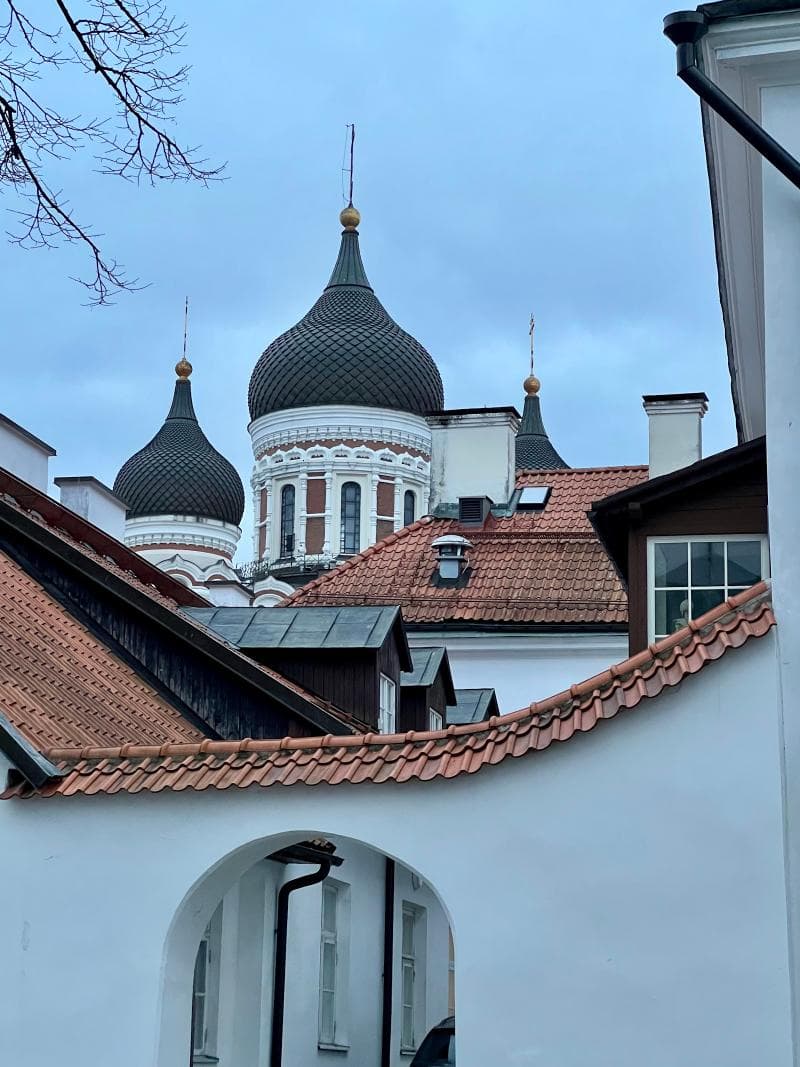
Explore Tallinn's Alexander Nevsky Cathedral, a stunning Russian Orthodox landmark on Toompea Hill, Estonia. Discover its rich history, unique architecture, and cultural significance.
Overview
Perched majestically atop Toompea Hill in Tallinn, Estonia, the Alexander Nevsky Cathedral stands as a striking beacon of Russian Orthodox architecture. Completed in 1900, this grand edifice with its distinctive onion domes and ornate facade is the city's largest cupola church and serves as the primary cathedral for the Estonian Orthodox Church of the Moscow Patriarchate. Its imposing presence makes it one of Tallinn's most recognizable landmarks, drawing visitors from across the globe to admire its beauty and explore its rich, albeit complex, history.
The cathedral is a prime example of the Russian Revival architectural style, characterized by its elaborate detailing, colorful mosaics, and prominent gilded domes that punctuate the city's skyline. It's not just an architectural marvel; it remains an active place of worship, offering a unique glimpse into Orthodox traditions and spiritual life.
History & Cultural Background
The Alexander Nevsky Cathedral's origins are deeply intertwined with the political landscape of late 19th-century Estonia. Constructed between 1894 and 1900, during a period when Estonia was part of the Russian Empire, the cathedral was a deliberate architectural statement. Designed by the prominent Russian architect Mikhail Preobrazhensky, its construction was part of a broader Russification policy aimed at asserting imperial power and the Orthodox faith in a predominantly Lutheran region.
The strategic choice of its location, directly opposite Toompea Castle – the seat of the Estonian Parliament – was no accident. It symbolized Russian Orthodox dominance over the local culture, marking a site where a statue of Martin Luther had previously been considered. Throughout its history, the cathedral has been a focal point of both religious and political significance. Following Estonia's independence in 1918, and again after regaining independence in 1991, there were serious discussions and proposals to demolish the cathedral due to its association with Russian rule. However, strong opposition from the Orthodox community and the sheer political complexity of demolishing an active place of worship ensured its survival. After 1991, the cathedral underwent extensive restoration work, preserving its architectural and historical integrity.
What Makes It Special
The Alexander Nevsky Cathedral is a treasure trove of artistic and architectural wonders. Its distinctive Russian Revival style immediately sets it apart from Tallinn's predominantly medieval and Hanseatic architecture. The cathedral features five prominent onion domes, with the central dome being the largest, often glinting gold in the sunlight. These domes are symbolically rich, representing Christ and the four Evangelists.
Step inside, and you are greeted by a breathtaking interior equally as impressive as its exterior. The nave is adorned with richly decorated icons, frescoes, and stained-glass windows depicting various saints and biblical scenes. A masterpiece of craftsmanship, the iconostasis – a screen decorated with icons separating the sanctuary from the nave – features intricate carvings and gilded details. The mosaic panels above the entrances also hold significant historical value.
A truly unique feature is its powerful ensemble of eleven bells, all cast in Saint Petersburg. The largest bell alone weighs approximately 16 tons, more than the other ten combined. When rung, especially during church holidays, their solemn and powerful sound carries far across the city, creating a unique auditory experience. If conditions allow, visitors can sometimes climb the bell tower for panoramic views of Tallinn.
Stories, Fun Facts & Local Details
The cathedral is dedicated to Saint Alexander Nevsky, a revered 13th-century Russian prince and military leader known for winning the Battle of the Ice on Lake Peipus in 1242. Interestingly, its construction also served to commemorate Tsar Alexander III's miraculous escape from a train crash in 1888. The choice to build it directly opposite Toompea Castle, on a site once considered for a monument to Martin Luther, highlights the deliberate symbolic assertion of Russian Orthodox presence.
While the cathedral's past is controversial, it has a unique place in local history. During the Soviet era, despite atheist policies, it continued to function as a place of worship. There were even plans in the 1960s to convert it into a planetarium, which fortunately never materialized. Many icons within the cathedral are the work of Alexander Novoskoltsev, one of the most talented architects and icon painters of the 20th century.
Today, the Alexander Nevsky Cathedral is known for its exceptional acoustics, making it a venue for beautiful Orthodox choral performances. Services are conducted in Church Slavonic and some Estonian, creating a deeply spiritual atmosphere. The late Patriarch Alexy II of Moscow (1929-2008) notably began his priestly ministry in this very cathedral.
Visitor Perspective
Visiting the Alexander Nevsky Cathedral offers a profound experience for any traveler exploring Tallinn. Located conveniently on Toompea Hill, it's easily accessible and often included in walking tours of the Old Town, a UNESCO World Heritage site. Entry to the cathedral is free, and it is generally open daily from approximately 08:00 to 19:00, though visitors should verify current opening hours.
When entering, modest dress is required, meaning shoulders and knees should be covered, a common courtesy in places of worship. While photography inside might be restricted, especially during services, the interior's mosaics, gilded iconostases, and colored marble are well worth seeing. The air inside often carries the faint scent of incense and beeswax, contributing to a tranquil and contemplative atmosphere. Attending a service can be a moving experience, characterized by rich Orthodox choral music. However, if you prefer to explore without crowds, early morning or late afternoon visits are recommended, outside of service times.
Beyond the cathedral itself, its location on Toompea Hill provides panoramic views of Tallinn's Old Town and the Baltic Sea, making it an ideal spot for sightseeing and reflection. Whether you are a history enthusiast, an architecture aficionado, or simply seeking a moment of spiritual tranquility, the Alexander Nevsky Cathedral is an unmissable destination that offers a captivating glimpse into Estonia's rich cultural tapestry.
Coordinates: 24.73944, 59.43583
View on Google Maps💬 How Travelers Describe This Place
Based on community votes
Interesting
791Photogenic
514Unique
457Beautiful
252Must See
19
Traveler Stories
Discover memorable experiences shared by travelers who have visited this place.
No traveler stories yet.
Be the first traveler to share what made this place memorable.
Things to see at Alexander Nevsky Cathedral



Tour
By
Spot
Discover amazing places around the world. Your journey starts here.
Explore
© 2026 TourBySpot. All rights reserved.