Cathedral Interior
Tallinn, Estonia
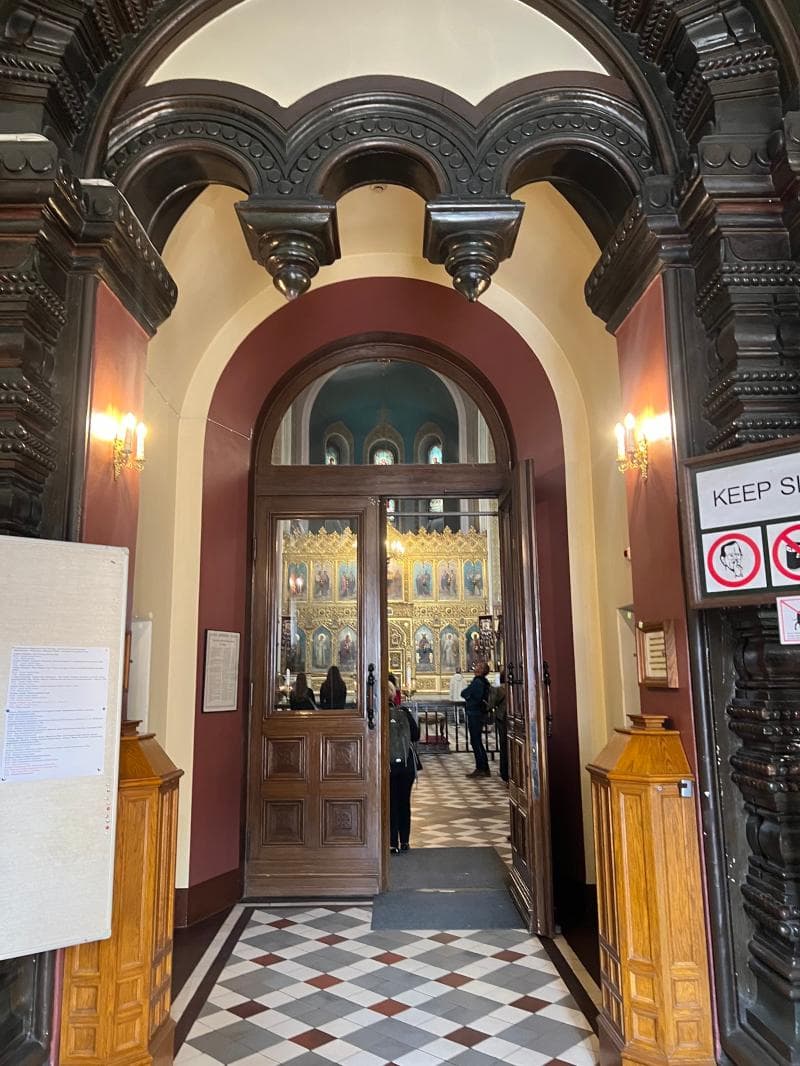
Explore the opulent interior of Alexander Nevsky Cathedral in Tallinn, Estonia. Discover stunning mosaics, iconic altars, and rich Orthodox heritage.
Overview
Stepping inside the Alexander Nevsky Cathedral in Tallinn, Estonia, offers a profound journey into the heart of Russian Orthodox artistry and spiritual tradition. This grand Eastern Orthodox cathedral, perched majestically on Toompea Hill, immediately envelops visitors in an atmosphere of opulent design and devout reverence. Its interior is a vibrant tapestry of intricate decorations, gilded elements, and sacred imagery, presenting a striking contrast to Tallinn's medieval urban landscape. As an active place of worship, the cathedral maintains a solemn yet welcoming ambiance, inviting reflection and appreciation for its rich cultural heritage.
History & Cultural Background
The Alexander Nevsky Cathedral's construction began in 1894 and concluded in 1900, a period when Estonia was under the rule of the Russian Empire. Designed by the prominent Russian architect Mikhail Preobrazhensky, the cathedral exemplifies the Russian Revival style, drawing inspiration from medieval Russian church architecture. It was dedicated to the 13th-century Russian saint and national hero, Alexander Nevsky. The cathedral's placement was strategically chosen directly opposite Toompea Castle, the seat of the Estonian Parliament, serving as a symbol of imperial power and the Orthodox faith in a predominantly Lutheran region. This origin, as an emblem of Russification, made the cathedral a controversial landmark, with discussions about its demolition arising after Estonia gained independence in 1918. Despite its contentious past, it remained a functioning place of worship even during Soviet occupation and has since undergone meticulous restoration after Estonia regained its full independence in 1991.
What Makes It Special
The interior of the Alexander Nevsky Cathedral is a breathtaking showcase of Orthodox ecclesiastical art. A central feature is the ornate iconostasis, a richly decorated wall of icons that separates the nave from the sanctuary, acting as a gateway to the holiest part of the church. The walls and ceilings are adorned with intricate mosaics and elaborate frescoes, depicting religious scenes and saints in vivid colors that captivate the eye. Gilded chandeliers illuminate the vast space, casting a warm glow on the intricately carved wooden furnishings and icon boxes, which house valuable religious artifacts. The cathedral also features three altars, dedicated to Vladimir I, St. Sergius of Radonezh, and the main altar to Alexander Nevsky. A distinctive auditory experience is provided by the cathedral's eleven bells, cast in Saint Petersburg, including the largest in Tallinn, weighing approximately 16 tons. Their solemn and powerful sound can be heard across the city during services and church holidays.
Stories, Fun Facts & Local Details
Every element within the cathedral carries deep religious symbolism. For instance, its cross-shaped floor plan represents Christ's crucifixion, while the central dome symbolizes heaven. The five main domes, visible from afar with their gleaming golden surfaces, symbolize Christ and the four evangelists. The historical context of its construction reveals a fascinating layer of cultural tension; it was deliberately built on Toompea Hill, a site that had previously been considered for a statue of Martin Luther, asserting Orthodox dominance over the local Lutheran culture. Interestingly, the late Patriarch Alexy II of Moscow, a significant figure in the Russian Orthodox Church, began his priestly ministry within these very walls. Despite its origins and initial local opposition, the cathedral today serves not only as a spiritual center for the Estonian Orthodox Church of the Moscow Patriarchate but also as a testament to Tallinn's diverse historical layers, attracting visitors who marvel at its architectural grandeur and intricate details.
Visitor Perspective
For the curious traveler, visiting the interior of the Alexander Nevsky Cathedral is an immersive experience. The aroma of incense often subtly perfumes the air, and on special occasions, the soft glow of candlelight adds to the mystical atmosphere. Observing congregants in prayer or listening to the powerful chime of the bells before services provides a glimpse into living Orthodox traditions. While photography may not always be permitted inside, encouraging visitors to absorb the beauty without distraction, the sheer scale and richness of the decorations, from the detailed mosaics to the gilded icons, offer ample visual wonder. It's a place that transcends its controversial history for many, becoming a site where architectural splendor, religious devotion, and historical narrative converge, leaving a lasting impression of Tallinn's complex and captivating identity.
Coordinates: 24.73932, 59.43574
View on Google Maps💬 How Travelers Describe This Place
Based on community votes
Unique
953Must See
695Interesting
658Photogenic
69Beautiful
22
Traveler Stories
Discover memorable experiences shared by travelers who have visited this place.
No traveler stories yet.
Be the first traveler to share what made this place memorable.

Tour
By
Spot
Discover amazing places around the world. Your journey starts here.
Explore
© 2026 TourBySpot. All rights reserved.