Main Sanctuary
Tallinn, Estonia
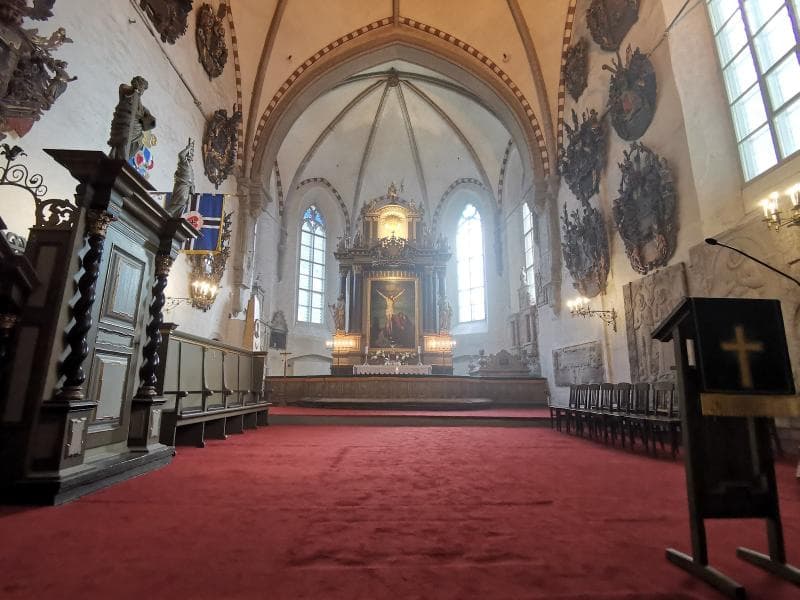
Explore the Main Sanctuary of Alexander Nevsky Cathedral in Tallinn, Estonia. Discover its rich history, stunning Russian Revival architecture, and opulent interior.
Overview
Perched majestically atop Toompea Hill in Tallinn, Estonia, the Alexander Nevsky Cathedral stands as a striking beacon of Russian Orthodox architecture. With its distinctive onion domes, each crowned with a gilded cross, this grand edifice is Tallinn's largest and most opulent cupola church. It functions as an active center for Orthodox worship and remains a prominent landmark, inviting travelers to delve into its rich history and captivating interior.
As you approach, the cathedral's intricate mosaics and vibrant exterior immediately draw the eye, offering a stark contrast to the medieval aesthetic of Tallinn's Old Town. Inside, the spiritual heart of the cathedral, often perceived by visitors as the Main Sanctuary, is revealed through its elaborate iconography and sacred space, particularly behind the ornate iconostasis. This impressive structure serves not only as a place of active worship but also as a testament to centuries of cultural and historical layers that have shaped Estonia's capital.
History & Cultural Background
The Alexander Nevsky Cathedral was constructed between 1894 and 1900, a period when Estonia was under the rule of the Russian Empire. Commissioned as a symbol of imperial power and the Orthodox faith, its strategic location directly opposite Toompea Castle, the seat of the Estonian Parliament, was a deliberate statement of Russian dominance during a time of Russification. Designed by the renowned Russian architect Mikhail Preobrazhensky, the cathedral was dedicated to Saint Alexander Nevsky, a revered 13th-century Russian prince and military leader.
Following Estonia's independence in 1918, the cathedral became a contentious symbol for many Estonians, viewed as a reminder of foreign oppression. There were serious discussions and even proposals for its demolition throughout the 1920s and 1930s. However, due to its significant architectural value and strong opposition from the Orthodox community, these plans were never realized. During the Soviet era, despite atheist policies, the cathedral continued to function, albeit facing challenges, and notably, the late Patriarch Alexy II of Moscow began his priestly ministry within its walls. After Estonia regained full independence in 1991, the cathedral underwent extensive and meticulous restoration, revitalizing its architectural and historical integrity. Today, it proudly serves as the main cathedral for the Estonian Orthodox Church of the Moscow Patriarchate, embracing its complex past as an integral part of Tallinn's cultural tapestry.
What Makes It Special
Stepping inside the Alexander Nevsky Cathedral is an immersive experience into the grandeur of Orthodox Christian artistry. The interior, particularly the area leading to and encompassing what is considered the Main Sanctuary, is a breathtaking display of opulent design. Visitors are greeted by a vibrant array of intricate mosaics and frescoes that adorn the walls and ceilings, depicting religious scenes and saints with rich colors and meticulous detail.
The focal point of the interior, and the gateway to the Main Sanctuary, is the magnificent iconostasis. There are three gilded, intricately carved wooden iconostases within the cathedral, with the main one dramatically separating the nave (where the congregation stands) from the altar area, which is the holiest part of the church—the actual sanctuary. Behind this central iconostasis lie the three altars: the principal altar, and two side altars dedicated to Saint Vladimir I and Saint Sergius of Radonezh. Gilded chandeliers illuminate the space, casting a warm glow upon the exquisitely carved wooden furnishings and the detailed mosaic floor patterns, creating an atmosphere of deep reverence and spiritual beauty. This rich interior, filled with valuable religious artifacts and icons, underscores the cathedral's immense religious importance as a center of Orthodox worship.
Stories, Fun Facts & Local Details
One of the most captivating features of the Alexander Nevsky Cathedral is its impressive ensemble of eleven church bells, cast in Saint Petersburg. The largest of these weighs an astounding 15 to 16 tons, making it the most powerful bell in Tallinn. When rung, especially during church holidays or before services, their solemn and powerful chimes resonate across the city, a sound so profound it's often referred to as 'Scripture in Sound'. Imagine the effort it took to raise this colossal bell into the tower – historical accounts suggest it required the might of 500 soldiers!
The cathedral's controversial origins also lend to its unique story. Intended to assert Russian Orthodox dominance, its very existence sparked intense debates and calls for its demolition after Estonia gained independence. Yet, its architectural splendor and the unwavering faith of the Orthodox community ensured its preservation, transforming it from a symbol of occupation into a recognized landmark. The late Patriarch Alexy II of Moscow, a significant figure in the Orthodox Church, began his priestly ministry here, adding another layer of historical and spiritual importance to this remarkable place.
Visitor Perspective
For the curious traveler, visiting the Alexander Nevsky Cathedral offers a profound glimpse into Estonia's spiritual and cultural heritage. Located conveniently in the heart of Tallinn's Old Town on Toompea Hill, its prominent domes are visible from many vantage points, making it an easy and rewarding destination to reach.
The cathedral is open to the public daily, allowing ample opportunity to explore its magnificent interior. When visiting, it is important to remember that it is an active place of worship. Guests are encouraged to observe appropriate etiquette, such as dressing modestly and maintaining a respectful quiet demeanor. While you may not enter the sanctuary itself (the area behind the iconostasis), the visual splendor of the iconostasis, the rich mosaics, and the overall spiritual ambiance provide a deeply moving experience. Attending a service, often conducted in Church Slavonic, offers a unique opportunity to witness Orthodox traditions firsthand and truly feel the 'Scripture in Sound' as the bells peal. Beyond the cathedral, the surrounding area of Toompea Hill provides panoramic views of Tallinn's charming Old Town and the Baltic Sea, inviting moments of reflection after your visit.
Coordinates: 24.7393, 59.4357
View on Google Maps💬 How Travelers Describe This Place
Based on community votes
Interesting
989Unique
613Photogenic
581Must See
514Beautiful
207
Traveler Stories
Discover memorable experiences shared by travelers who have visited this place.
No traveler stories yet.
Be the first traveler to share what made this place memorable.

Tour
By
Spot
Discover amazing places around the world. Your journey starts here.
Explore
© 2026 TourBySpot. All rights reserved.