Abbaye Saint-Victor
Marseille, France
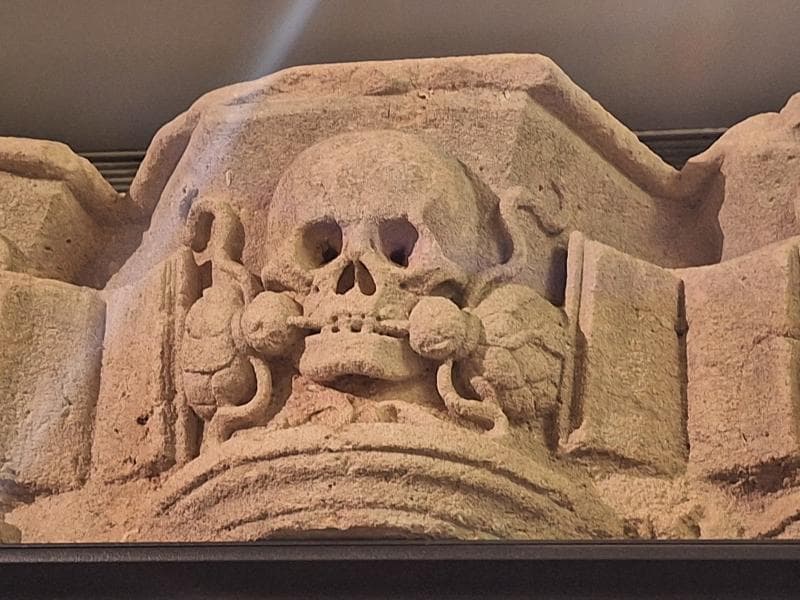
Explore Abbaye Saint-Victor in Marseille, France, a historic fortress-abbey from the 5th century with ancient crypts, sarcophagi, and rich Christian history.
Overview
Perched majestically above Marseille's vibrant Old Port, the Abbaye Saint-Victor stands as a formidable testament to over 1,500 years of history and spiritual devotion. This ancient abbey, with its distinctive fortress-like architecture, offers a compelling journey into the origins of Christianity in Provence. More than just a church, it is a significant cultural landmark, drawing visitors into a world of early Christian art, Romanesque grandeur, and intriguing local traditions. Its enduring presence has shaped the city's identity, making it a pivotal site for anyone seeking to understand Marseille's rich past.
Visitors to the Abbaye Saint-Victor are greeted by its imposing stone walls and crenellated towers, hinting at its dual role as a place of worship and a defensive structure throughout the centuries. While the main church offers a sense of solemn history, the true treasures lie beneath, in its extensive crypts. These subterranean chambers house a remarkable collection of sarcophagi and relics, making the abbey a unique museum of early Christian art in the region.
History & Cultural Background
The origins of Abbaye Saint-Victor trace back to the 5th century, when John Cassian, a monk who had studied monastic life in Egypt, founded a monastery on this site with the support of Proculus, the Bishop of Marseille. However, the spiritual significance of the location predates even this foundation. The area was originally an open-cast quarry, providing stone for the ancient port, and later became a necropolis outside the city walls from the 2nd century BCE.
Tradition holds that the abbey is named after Saint Victor of Marseille, a 4th-century Roman soldier martyred for his Christian faith. His tomb became a venerated site, attracting pilgrims and inspiring a desire for many locals to be buried alongside him. The 5th-century basilica built over his tomb forms the earliest layers of what would become the abbey's impressive crypts.
Over the centuries, the abbey faced numerous challenges, including destruction by Saracen fleets in the 9th and 10th centuries. Monastic life was restored under the Rule of Saint Benedict in 977, and significant rebuilding efforts began in the 11th century under Abbot Isarn, laying the foundation for the Romanesque church we see today. The monastery was further fortified in the 14th century by Urban V, a former abbot of Saint-Victor who later became Pope. This fortification integrated the abbey into Marseille's port defenses. Although it suffered decline and was stripped of its treasures during the French Revolution, serving as a warehouse and prison, it was restored in the 19th century and designated a minor basilica by Pope Pius XI in 1934.
What Makes It Special
The Abbaye Saint-Victor distinguishes itself through its unique blend of austere medieval architecture and its profound historical depth. Its fortress-like exterior, with massive stone walls and crenellated towers, speaks to a past where spiritual havens also needed to be bastions of defense. Inside, the architecture showcases a fascinating interplay of Romanesque art in the central nave and Gothic influences in the aisles, transept, and choir, a result of centuries of construction and adaptation.
However, the true heart of Saint-Victor's uniqueness lies beneath the main church. Its extensive crypts are an extraordinary archaeological treasure, housing some of the most significant early Christian and late pagan sarcophagi in Provence, second only to those in Arles. These subterranean chapels and burial chambers provide an unparalleled glimpse into early Christian funerary practices and artistic expression. The crypts contain the alleged relics of Saint Victor and other saints, including John Cassian himself, offering a tangible connection to the abbey's founding figures.
Its strategic location, offering panoramic views of the Old Port, further enhances its special appeal, serving as a historical anchor in Marseille's dynamic urban landscape. The abbey is not merely a static museum; it remains an active place of worship, contributing to the city's living spiritual heritage.
Stories, Fun Facts & Local Details
One of the most captivating aspects of Abbaye Saint-Victor is the legend of its namesake, Saint Victor. He was a Roman soldier who, refusing to renounce his Christian faith, was subjected to brutal torture, including being crushed by a millstone, before his body was cast into the Old Port. His steadfast martyrdom inspired early Christians in Marseille, turning his burial site into a focal point of veneration.
The abbey is also deeply intertwined with a cherished local tradition: the Fête de la Chandeleur, or Candlemas, celebrated annually on February 2nd. On this morning, a vibrant procession sets off from the Old Port, making its way to the abbey. Here, the 'Black Madonna'—a venerated statue kept in the crypts—is cloaked in green and presented to the faithful. The archbishop blesses both the Madonna and the city. Following the religious ceremony, the procession moves to the Four des Navettes, a nearby bakery renowned for making Marseille's traditional boat-shaped biscuits, known as 'navettes'. These biscuits, said to symbolize the boat that brought Saint Martha, Mary Magdalene, and Lazarus to Provence, are also blessed, signifying prosperity for the year ahead. This tradition beautifully merges spiritual devotion with local culinary heritage.
Interestingly, some areas within the crypts are incorrectly referred to as 'the crypts of Saint Victor,' but they are, in fact, the exceptional remains of the 5th-century basilica and the ancient quarry, offering a fascinating historical layering.
Visitor Perspective
Visiting Abbaye Saint-Victor offers a profound historical and spiritual experience. Upon arrival, travelers are immediately struck by its imposing facade, a visual representation of centuries of history. The main church, with its Romanesque and Gothic elements, invites quiet contemplation, featuring relics, a grand 17th-century pipe organ, and a 5th-century carved stone altar in the Chapel of the Holy Sacrament.
The highlight for many is the exploration of the crypts. Descending into these ancient chambers is like stepping back in time, surrounded by early Christian sarcophagi and the very foundations of Marseille's Christian heritage. The crypts also house the revered Black Madonna, an integral part of the Candlemas celebrations. While admission to the main abbey church is generally free, there is typically a small fee to access the crypts and their exhibition of sarcophagi, which many find to be a worthwhile investment for the depth of history unveiled.
Beyond the architectural and historical wonders within, the abbey's location provides a magnificent panoramic view of the Old Port, making it an excellent spot for photographers and those who wish to appreciate Marseille's scenic beauty. It's a place that caters to both the deeply curious historian and the casual traveler seeking a meaningful connection to the city's soul.
Coordinates: 5.36557, 43.29035
View on Google Maps💬 How Travelers Describe This Place
Based on community votes
Unique
791Interesting
514Beautiful
457Must See
252Photogenic
207
Traveler Stories
Discover memorable experiences shared by travelers who have visited this place.
No traveler stories yet.
Be the first traveler to share what made this place memorable.
Things to see at Abbaye Saint-Victor



Tour
By
Spot
Discover amazing places around the world. Your journey starts here.
Explore
© 2026 TourBySpot. All rights reserved.