Relics
Marseille, France
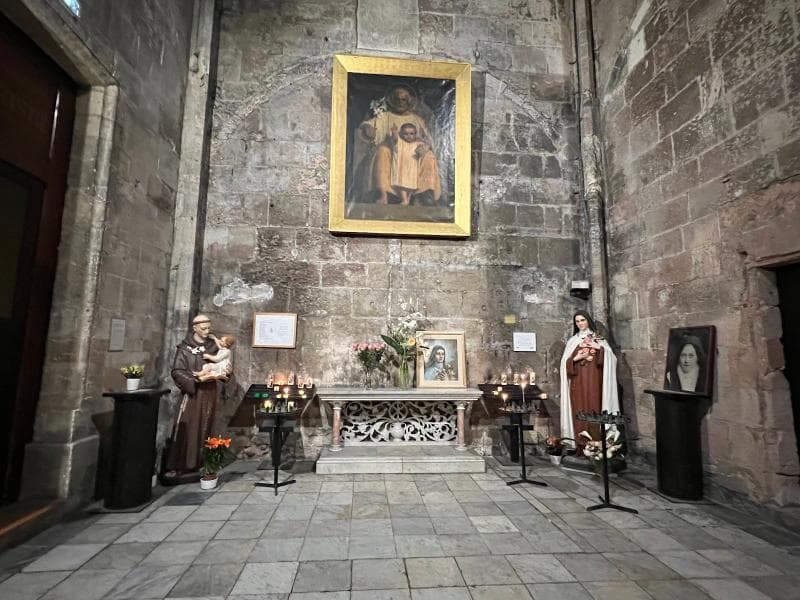
Explore the ancient relics and crypts of Abbaye Saint-Victor in Marseille, France, a site steeped in early Christian history and cultural narratives.
Overview
Deep within the ancient walls of Abbaye Saint-Victor in Marseille, France, lies a sacred and historical treasure trove known as its Relics. This subterranean area, primarily composed of crypts, holds a profound significance for both religious pilgrims and history enthusiasts. It serves as a tangible link to the early Christian era of Marseille, a time when faith was often practiced in secret and under threat. The abbey itself, a formidable fortified structure overlooking the Old Port, is named after Saint Victor, a 4th-century martyr whose story is central to the site's identity. Visiting the Relics offers a unique opportunity to explore centuries of devotion and the architectural layers of one of France's oldest and most historically rich monastic foundations.
History & Cultural Background
The history of the Relics at Abbaye Saint-Victor is intrinsically tied to the very foundations of Christianity in Marseille. The site was originally an ancient quarry, dating back to the Greek period, which later transformed into a vast necropolis starting around 2 BC. It was here, within this burial ground, that the body of Saint Victor, a Roman soldier martyred in the 4th century for his Christian faith, was laid to rest. Following his death, pilgrimages quickly formed around his tomb, leading to the construction of a basilica in the 5th century. This early Christian site was further developed by Saint John Cassian, who founded two monasteries in Marseille, including the one at Saint-Victor, around 415 AD.
Over the centuries, the abbey faced periods of destruction, notably by Saracen invaders in the 8th and 9th centuries, but was continually rebuilt and fortified. Its crypts became the resting place for numerous revered figures. During the French Revolution in 1794, the abbey suffered greatly; its treasures were stripped, and many of the relics, along with precious gold and silver objects, were tragically burned or melted down. Despite this devastation, the site's profound history and the enduring devotion it inspired led to its restoration in the 19th century, allowing its remaining sacred artifacts and the deep sense of its past to be preserved.
What Makes It Special
What truly makes the Relics at Abbaye Saint-Victor special is their direct connection to the foundational narratives of Christianity in Provence. Unlike many later religious sites, the crypts here are not merely a decorative addition but represent the very ground upon which the abbey was built – a necropolis that predates much of organized Christian architecture in the region. The presence of early Christian sarcophagi and marble tombstones, some adorned with Roman motifs, offers a rare glimpse into the funerary practices and artistic styles of the 4th and 5th centuries. These artifacts form one of the largest collections of early Christian art in France.
Moreover, the tradition that the tomb of Saint Victor himself resides within these crypts imbues the space with an almost palpable sense of sanctity and history. The remains of Saint John Cassian, the monastery's founder, along with those of other saints like Maurice, Marcellinus, and Peter, further solidify its status as a reliquary of immense spiritual value, even if some relics were lost to history. The crypts also house the revered Black Madonna, an ancient statue that plays a central role in the annual Candlemas procession, attracting thousands of pilgrims and adding a unique cultural layer to the site.
Stories, Fun Facts & Local Details
The story of Saint Victor is particularly compelling. As a Roman soldier, he defied an imperial order to sacrifice to pagan idols, choosing instead to remain steadfast in his Christian faith. His refusal led to severe torture and ultimately martyrdom, with tradition stating he was quartered and crushed under a millstone before his body was thrown into the Old Port. Legend says that his dungeon, where he was comforted by angels, still exists within the abbey's crypts and is venerated as his tomb. This dramatic narrative highlights the intense persecution faced by early Christians and the courage of figures like Victor. The abbey's fortified appearance, with its massive stone walls and crenellated towers, is a testament to its long history of defending itself, once even forming part of Marseille's port defenses.
A charming local detail associated with the abbey is the annual Candlemas celebration on February 2nd. This involves a traditional procession from the Old Port to the abbey, where the Black Madonna is unveiled, blessed by the archbishop, and then taken to a nearby bakery to bless the famous 'navettes' – small, boat-shaped biscuits unique to Marseille. These 'navettes' are said to symbolize the arrival of Saint Lazarus and the 'Maries' (Mary Magdalene and Martha) to Provence, who evangelized Massilia.
Visitor Perspective
For visitors, exploring the Relics of Abbaye Saint-Victor is an immersive journey into Marseille's deep past. The crypts, with their atmospheric lighting and ancient stonework, evoke a sense of quiet reverence and historical depth. Walking among the sarcophagi and early Christian tombs provides a tangible connection to the individuals who lived and died in this ancient city thousands of years ago. The raw, unfiltered nature of the underground chambers, contrasting with the more refined architecture of the upper church, offers a powerful experience. It's a place where you can almost hear the echoes of early pilgrims and feel the weight of centuries of spiritual devotion. The site is accessible, allowing curious travelers to delve into this profound historical and spiritual heart of Marseille and gain a deeper appreciation for the city's unique heritage.
Coordinates: 5.36557, 43.29035
View on Google Maps💬 How Travelers Describe This Place
Based on community votes
Interesting
989Unique
613Photogenic
581Must See
514Beautiful
207
Traveler Stories
Discover memorable experiences shared by travelers who have visited this place.
No traveler stories yet.
Be the first traveler to share what made this place memorable.

Tour
By
Spot
Discover amazing places around the world. Your journey starts here.
Explore
© 2026 TourBySpot. All rights reserved.