Towers
Marseille, France
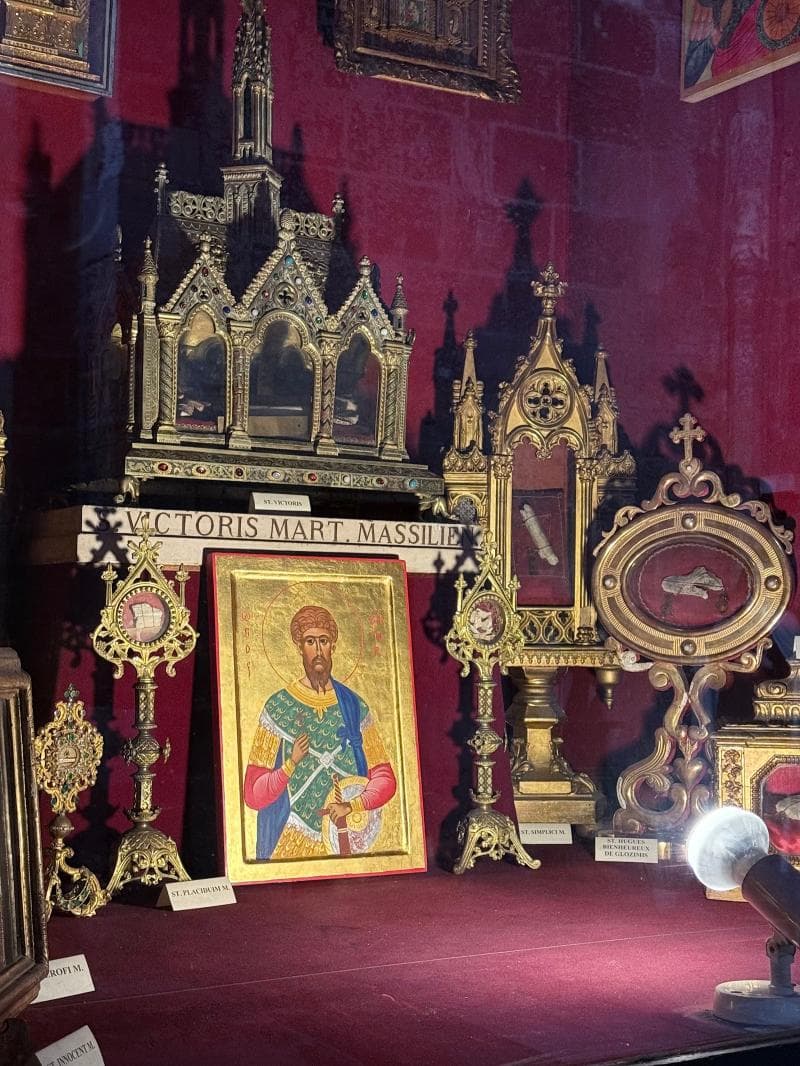
Explore the historic Towers of Abbaye Saint-Victor in Marseille, France, a fortified abbey with centuries of spiritual and architectural heritage.
Overview
Perched majestically overlooking Marseille's Old Port, the Abbaye Saint-Victor stands as a formidable testament to centuries of history and faith. Within its ancient walls, the prominent ‘Towers’ – notably the historic Isarn Tower – are not merely architectural features but iconic symbols of the abbey's enduring presence and its strategic importance to the city. These towering structures, integrated into the abbey's robust fortifications, beckon curious travelers to delve into a past rich with monastic life, military defense, and profound spiritual significance. As one of Marseille's oldest and most revered monuments, the abbey, with its distinctive towers, offers a unique window into the early Christian era and the architectural evolution of this vibrant French port city.
History & Cultural Background
The story of Abbaye Saint-Victor begins long before its monastic foundation, on a site that was originally an open-air quarry supplying stone for Marseille's ancient port. This area later transformed into a significant necropolis, a burial ground outside the city walls. The abbey itself was founded in the 5th century by John Cassian, an influential monk who introduced monasticism to Marseille, establishing it near the venerated tomb of Saint Victor, a 4th-century martyr who gives the abbey its name. This initial foundation faced turbulent times, suffering destruction from Saracen invasions in the 8th and 9th centuries.
A pivotal period arrived in 977 when monastic life was revitalized under the Rule of Saint Benedict. Significant construction began in 1020 under Abbot Isarn, a Catalan monk, who oversaw the building of the first upper church and the original 'Isarn Tower.' This tower, consecrated in 1040, swiftly became a recognizable landmark in Marseille’s skyline. The abbey was largely rebuilt in the Romanesque style between the late 12th and 13th centuries, gaining the formidable, fortress-like appearance we see today, characterized by its massive stone walls and crenellated towers. Further fortification efforts were led by Guillaume de Grimoard, a former abbot who later became Pope Urban V in the 14th century, solidifying the abbey's role in the city's defensive system.
What Makes It Special
What truly sets the Abbaye Saint-Victor, and specifically its towers, apart is its dual identity as both a spiritual sanctuary and a military stronghold. The imposing towers and fortified walls are not merely decorative but speak to centuries of protection against invasions, particularly from the sea. Beyond their defensive purpose, these structures house an incredible subterranean complex of crypts, which are among the most significant collections of early Christian art in Provence, second only to Arles. These crypts contain ancient sarcophagi and the remains of the 5th-century basilica upon which the current abbey stands. The architectural blend of Romanesque and Gothic elements further contributes to its unique character, showcasing different historical layers of construction.
Stories, Fun Facts & Local Details
The Abbaye Saint-Victor is woven into the very fabric of Marseille's cultural traditions. One of the most cherished is the annual Candlemas celebration on February 2nd. A vibrant procession makes its way from the Old Port to the abbey, where the 'Black Madonna,' housed in the crypts, is presented. Following a blessing by the archbishop, a unique local custom takes place: the blessing of 'navettes,' boat-shaped biscuits baked at a nearby historic bakery. These treats symbolize the arrival of Saint Lazarus and the 'Maries' (Saint Mary Magdalene and Saint Martha) in Provence. Legend also speaks of the 'cave of Saint Lazarus and Saint Mary Magdalene' within the crypts, adding another layer of mystique to this ancient site. Historically, during the French Revolution, the abbey temporarily served unusual purposes, including a hay warehouse, a prison, and barracks, which inadvertently helped it avoid demolition.
Visitor Perspective
Visiting the Towers at Abbaye Saint-Victor is an immersive journey through time. From the vantage point near the abbey, the towers offer a stunning panoramic view of the Old Port and the bustling city beyond, a perspective that has been admired for centuries. While the main church is generally free to enter, access to the crypts, which hold the most remarkable archaeological treasures, may require a small admission fee. Exploring the cool, echoing chambers of the crypts, with their ancient sarcophagi and subtle Byzantine influences in the vaulting, provides a profound connection to Marseille's deep Christian roots. For those seeking to understand the enduring spirit of Marseille, a visit to this fortified abbey, with its commanding towers and hidden histories, is an essential experience.
Coordinates: 5.36557, 43.29035
View on Google Maps💬 How Travelers Describe This Place
Based on community votes
Must See
540Photogenic
252Unique
147Beautiful
114Interesting
19
Traveler Stories
Discover memorable experiences shared by travelers who have visited this place.
No traveler stories yet.
Be the first traveler to share what made this place memorable.

Tour
By
Spot
Discover amazing places around the world. Your journey starts here.
Explore
© 2026 TourBySpot. All rights reserved.