Basilica Interior
Marseille, France
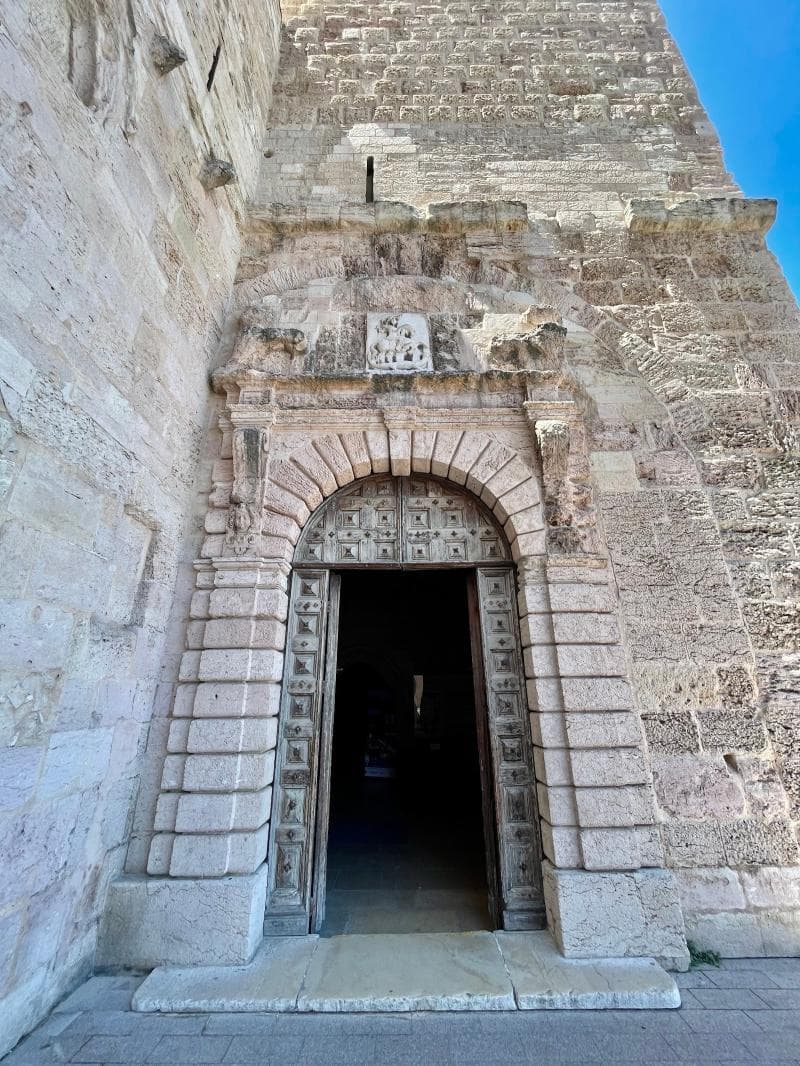
Discover the profound history and sacred artifacts within the Basilica Interior of Abbaye Saint-Victor in Marseille, France, including its ancient crypts and Black Madonna. A journey into Christian heritage.
Overview
Perched majestically overlooking Marseille's Old Port, the interior of Abbaye Saint-Victor offers a profound journey through layers of history and spiritual devotion. This formidable, fortress-like structure, recognized as a minor basilica since 1934, is far more than just a church; it is a repository of nearly fifteen centuries of continuous Christian heritage. Its robust Romanesque architecture, characterized by massive stone walls and crenellated towers, hints at a turbulent past where monasteries often served dual roles as sanctuaries and defensive strongholds.
Stepping inside, visitors are greeted by an austere yet powerful grey stone interior, a stark contrast to more ornate religious edifices. While the upper church provides a glimpse into centuries of worship, it is the extraordinary underground complex – the crypts – that truly captivates, revealing some of France's oldest and most significant Christian archaeological treasures.
History & Cultural Background
The origins of Abbaye Saint-Victor trace back to the 5th century, founded on the site of an ancient necropolis that once occupied a Greek quarry. This sacred ground became particularly significant following the burial of Saint Victor, a Roman soldier martyred for his Christian faith in the 4th century, who became the abbey's namesake and Marseille's patron saint.
Monastic life flourished here, possibly initiated by the renowned theologian John Cassian, who founded two monasteries in Marseille. However, the abbey faced immense challenges, suffering destruction by Saracen invasions in the 8th and 9th centuries. Yet, it rose from its ashes, undergoing significant rebuilding and expansion, particularly during the 11th to 14th centuries, which established much of its current Romanesque form. Its strategic importance led to its fortification in the 14th century by Abbot Guillaume Grimoard, who would later ascend to become Pope Urban V.
From the 11th to the 18th century, Saint-Victor held considerable influence over Christianity in the Mediterranean region. The French Revolution, however, brought a period of severe decline; the abbey was stripped of its treasures, its relics destroyed or melted down, and the building repurposed as a warehouse, prison, and barracks. Fortunately, this utilitarian role spared it from demolition. The 19th century saw its restoration and return to religious use, culminating in its elevation to a minor basilica in 1934 by Pope Pius XI.
What Makes It Special
The interior of Abbaye Saint-Victor is a compelling tapestry of devotion and antiquity. The upper church showcases a blend of Romanesque art in its central nave with broken barrel arches, and Gothic elements in the aisles, transept, and choir. Visitors can admire a grand 17th-century pipe organ and modern stained-glass windows, installed after the originals were damaged during WWII.
Undoubtedly, the most extraordinary feature lies beneath the main basilica: the crypt. This sprawling underground network houses a remarkable collection of early Christian sarcophagi, ancient burial chambers, and valuable artifacts, forming one of France's most significant museums of early Christian art. Within these crypts, you'll discover a 5th-century carved stone altar in the Chapel of the Holy Sacrament and various recessed reliquaries. A focal point is the revered Black Madonna statue, made of polychrome wood adorned with gold, located in the Chapel of Our Lady of Confession.
Stories, Fun Facts & Local Details
The history of Saint-Victor is rich with engaging narratives. The very site began as a Greek quarry and later a Hellenistic necropolis dating back to the 2nd century BCE, before becoming a Christian burial ground. Legend holds that the crypt contains the 'cave of Saint Lazarus and Saint Mary Magdalene,' along with a rock-carved seat where Lazarus supposedly preached.
Every year, the abbey is central to Marseille's vibrant Candlemas celebration on February 2nd. A procession departs from the Old Port, culminating at the abbey where the Black Madonna is adorned in a green cloak and presented to the public, followed by a blessing by the archbishop. This tradition also involves the blessing of local 'navettes' – boat-shaped biscuits from Marseille's oldest bakery, symbolizing the arrival of saints in Provence.
Among the many relics preserved are those of Saint Victor himself, and the head and right hand of John Cassian, whose other remains lie within the crypts alongside other revered saints. It is said that Saint Victor is the patron saint of sailors, a fitting role given the abbey's commanding position over the city's port.
Visitor Perspective
Exploring the interior of Abbaye Saint-Victor offers a uniquely serene and reflective experience. Its ancient stone walls exude a sense of profound history, inviting visitors to ponder the countless generations who have sought solace and spiritual connection within its confines. Many find the austerity of the upper church a powerful testament to early Christian devotion, contrasting with the vibrant spiritual narratives held within. The highlight for most is undoubtedly the opportunity to descend into the crypts.
Here, the tangible presence of antiquity through the sarcophagi and ancient chambers creates an immersive journey back in time, offering a deep appreciation for Marseille's enduring Christian roots. A small entrance fee typically applies for access to the crypts, allowing for the preservation of these invaluable historical treasures. Whether you opt for a self-guided exploration or join a guided tour, the Abbaye Saint-Victor provides a meaningful glimpse into the spiritual heart of Marseille, a place where history whispers from every stone.
Coordinates: 5.36557, 43.29035
View on Google Maps💬 How Travelers Describe This Place
Based on community votes
Interesting
879Photogenic
741Beautiful
482Unique
396Must See
274
Traveler Stories
Discover memorable experiences shared by travelers who have visited this place.
No traveler stories yet.
Be the first traveler to share what made this place memorable.

Tour
By
Spot
Discover amazing places around the world. Your journey starts here.
Explore
© 2026 TourBySpot. All rights reserved.