Crypt
Marseille, France
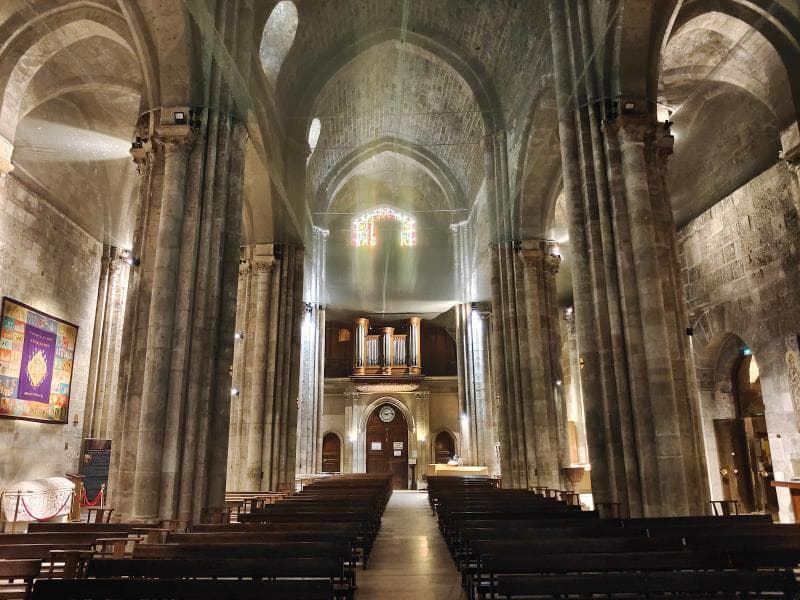
Explore the ancient Crypt of Abbaye Saint-Victor in Marseille, France, a treasure trove of early Christian art and history, featuring sarcophagi and relics.
Overview
Deep beneath the fortified walls of Abbaye Saint-Victor in Marseille, France, lies the Crypt, an archaeological treasure trove that offers a profound journey into the city's ancient past and early Christian heritage. Often considered the heart of the abbey's historical and religious significance, this underground complex is far more than just a crypt; it is a layered testament to millennia of human activity, from an ancient quarry to a revered necropolis and monastic sanctuary.
Visitors stepping into this subterranean world are greeted by a palpable sense of history, surrounded by exceptional remains that include sarcophagi dating back to the early centuries of Christianity. The Crypt provides a unique window into the spiritual and artistic expressions of bygone eras, making it an indispensable stop for anyone eager to understand Marseille's foundational roots.
History & Cultural Background
The story of the Crypt begins long before the abbey itself. Its site was originally an open-cast quarry during the Greek period, providing stone for the ancient port of Marseille. Later, it transformed into a necropolis from around the 2nd century BC, a burial ground used extensively up until Christian times, located strategically outside the city walls where burials were permitted.
This ancient cemetery became particularly significant with the burial of Saint Victor, a Roman soldier martyred in the 4th century for refusing to sacrifice to idols. His tomb became a pilgrimage site, and many early Christians wished to be interred alongside him, viewing him as an intercessor for salvation.
In the 5th century, the prominent Christian monk and theologian John Cassian founded a monastery on this very spot, building a basilica over the burial site. This established the foundation for what would become Abbaye Saint-Victor. Over centuries, the abbey experienced periods of destruction, notably by Saracen invasions in the 9th and 10th centuries, and subsequent rebuilding, including significant Romanesque architectural phases in the 11th and 12th centuries. The current crypts largely encompass the remains of this 5th-century basilica and the ancient quarry.
What Makes It Special
What truly sets the Crypt of Abbaye Saint-Victor apart is its remarkable collection of sarcophagi. These include invaluable examples of early Christian art from the 4th and 5th centuries, some of which have never been opened and are stacked several levels high within the underground chambers. Beyond Christian artifacts, the crypt also displays late pagan sarcophagi, showcasing the diverse burial practices of the ancient world.
The Crypt is a 'treasure trove' of early Christian art, offering a rare opportunity to explore an undisturbed glimpse into antiquity. It also contains relics of various saints, including the founder John Cassian, Saint Maurice, Marcellinus, Peter, and Bishop Saint Maurontius, further cementing its spiritual significance. One particularly evocative detail is the presence of the Black Madonna, which is stored in the crypts and plays a central role in the annual Candlemas procession.
Stories, Fun Facts & Local Details
Among the compelling tales associated with the Crypt is the 'cave of Saint Lazarus and Saint Mary Magdalene,' said to contain a seat carved into the rock where Saint Lazarus purportedly preached. This adds a layer of legendary mystique to the site, connecting it to foundational figures of early Christianity in Provence.
A vibrant tradition deeply tied to the abbey, and indirectly the Crypt, is the annual Candlemas celebration on February 2nd. A procession from the Old Port culminates at the abbey, where the Black Madonna, retrieved from the crypts, is presented to the faithful and blessed. This event is followed by the blessing of the famous 'navettes,' boat-shaped biscuits symbolizing the arrival of saints in Provence.
Visitor Perspective
A visit to the Crypt of Abbaye Saint-Victor is an immersive historical experience. Descending into its cool, stone-hewn chambers, travelers can explore the ancient quarry, the early Christian basilica remains, and the impressive display of sarcophagi. The atmosphere is one of profound tranquility and deep reverence, allowing for quiet contemplation of the centuries that have shaped this sacred space.
The raw, unadorned interior, characterized by powerful stone columns and vaults, stands in stark contrast to more ornate churches, emphasizing its ancient origins and solemn purpose. It offers a tangible connection to the spiritual and historical continuity of Marseille, promising an unforgettable journey through time for any curious traveler.
Coordinates: 5.3593, 43.2875
View on Google Maps💬 How Travelers Describe This Place
Based on community votes
Beautiful
963Unique
723Photogenic
482Must See
463Interesting
274
Traveler Stories
Discover memorable experiences shared by travelers who have visited this place.
No traveler stories yet.
Be the first traveler to share what made this place memorable.

Tour
By
Spot
Discover amazing places around the world. Your journey starts here.
Explore
© 2026 TourBySpot. All rights reserved.