Yivli Minaret Mosque
Antalya, Turkey
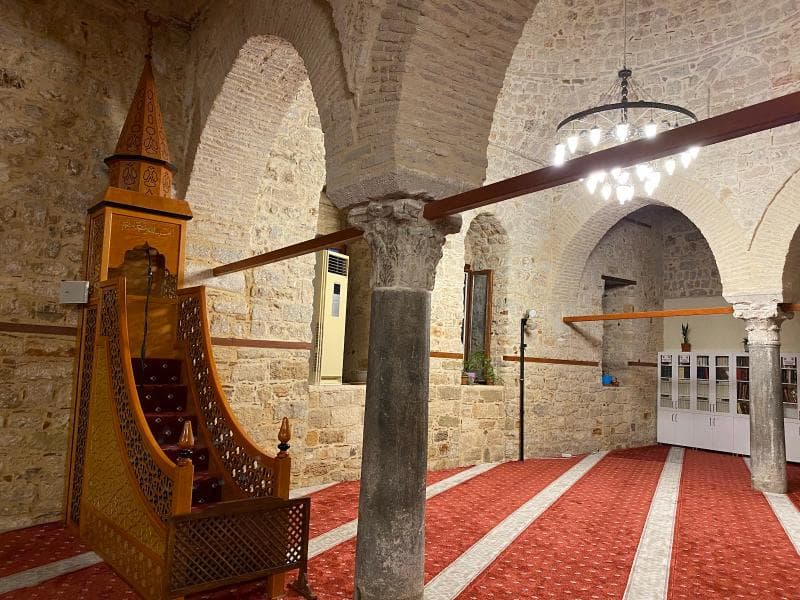

Discover the Yivli Minaret Mosque in Antalya, Turkey – an iconic Seljuk landmark with a distinctive fluted minaret, rich history, and unique architecture.
Overview
Perched majestically in the heart of Antalya's historic Kaleiçi district, the Yivli Minaret Mosque stands as an enduring symbol of the city's rich past. Its distinctive fluted minaret, visible from almost every corner of Antalya, is an iconic landmark that has graced the skyline for centuries. This architectural marvel is more than just a mosque; it is the focal point of a larger Seljuk-era complex, known as a külliye, which also encompasses madrasas, tombs, a bathhouse, and a mevlevihane, or Whirling Dervish Lodge. Recognised for its significant cultural value, the entire historic architectural ensemble has been featured on UNESCO's Tentative World Heritage List since 2016.
Known also as the Alaaddin Mosque or Antalya Ulu Mosque, this site represents one of the earliest Islamic monuments in the region and offers a profound glimpse into Anatolian Seljuk artistry and religious heritage. Its unique design and historical depth make it an essential stop for any curious traveler exploring the Mediterranean coast of Turkey.
History & Cultural Background
The origins of the Yivli Minaret Mosque trace back to the 13th century, a period marked by significant Seljuk influence in Anatolia. The minaret itself was commissioned by the Seljuk Sultan Alaaddin Keykubad I, who reigned between 1220 and 1237, around the year 1230. Interestingly, the original mosque structure was constructed upon the foundations and using the walls of a previously ruined Byzantine church, showcasing a historical continuity of sacred spaces in the region.
While the minaret has largely stood the test of time, the original prayer hall of the mosque was unfortunately destroyed. It was later rebuilt in 1373 under the patronage of Mehmet Bey, a notable figure from the Hamidoğulları dynasty. This reconstruction resulted in the six-domed mosque visible today. Over its long history, the Yivli Minaret Mosque has undergone numerous restorations and repairs, ensuring its preservation for future generations, with significant works occurring in the mid-20th century and more recently between 2007 and 2010.
What Makes It Special
The most striking feature, and the one that gives the mosque its name, is undoubtedly the Yivli Minaret. Standing at an impressive 38 meters, this minaret is distinguished by its eight semi-cylindrical flutes, crafted from red brick. The Turkish word 'Yivli' directly translates to 'fluted' or 'grooved,' aptly describing its unique vertical ribbed appearance. Originally, the minaret was adorned with decorative dark blue and turquoise-colored tiles, fragments of which can still be observed today, hinting at its past vibrant glory.
Beyond the minaret, the mosque building itself is an architectural marvel, representing one of the oldest surviving examples of the multi-domed mosque type in Anatolian Turkish architecture. Its rectangular prayer hall is covered by six hemispherical domes, supported by twelve columns. Some of these columns incorporate ancient capitals, a testament to the Seljuk practice of reusing materials from earlier civilizations. During recent restoration work, an ancient water system was discovered beneath the prayer hall, which can now be viewed through a glass floor section, offering a fascinating glimpse into the site's deeper history.
Stories, Fun Facts & Local Details
The Yivli Minaret is more than just a historical structure; it is deeply woven into the identity of Antalya. It stands as a powerful symbol of Seljuk power, architectural innovation, and artistic flair, reflecting the sophistication of the Seljuk Sultanate. Its iconic image is so deeply ingrained in the city's consciousness that it is often featured in local tourism materials and even serves as the logo for Antalya's football team.
Within the broader külliye complex, visitors can explore other historically significant structures. The Mevlevihane, or Whirling Dervish Lodge, once a spiritual center, has been thoughtfully repurposed and now functions as a cultural center or museum, providing insights into Sufi culture and traditional arts. The complex also houses the tombs of notable figures such as Nigar Hatun and Zincirkıran Mehmet Bey, whose name 'Zincirkıran' evocatively translates to 'chain-breaker.' Inside the mosque, one can admire Seljuk-era tilework and intricate wood carvings, particularly visible in the mihrab, the prayer niche, and the minbar, or pulpit, showcasing the fine craftsmanship of the period.
Visitor Perspective
Visiting the Yivli Minaret Mosque offers a serene and enriching experience for any traveler. Conveniently located within Antalya's charming Kaleiçi district, it is easily accessible whether you are exploring the old town on foot or arriving by public transport. As it remains an active place of worship, visitors are kindly requested to observe local customs by dressing modestly, ensuring shoulders and knees are covered, and removing shoes before entering the prayer hall.
Entry to both the mosque and the adjacent Mevlevihane Museum is free of charge, encouraging all to experience this historical gem. To best appreciate the tranquility and architectural details, consider visiting in the early morning or late afternoon, outside of daily prayer times, when the light beautifully illuminates the red brickwork and any remaining turquoise tiles. After immersing yourself in the mosque's history, the surrounding Kaleiçi offers a labyrinth of narrow streets, historic Ottoman houses, and other nearby attractions like Hadrian's Gate and the Old Harbor, making it a perfect cultural excursion.
Coordinates: 30.704533, 36.886594
View on Google Maps💬 How Travelers Describe This Place
Based on community votes
Beautiful
944Unique
638Photogenic
409Must See
396Interesting
363
Traveler Stories
Discover memorable experiences shared by travelers who have visited this place.
No traveler stories yet.
Be the first traveler to share what made this place memorable.
Things to see at Yivli Minaret Mosque



Tour
By
Spot
Discover amazing places around the world. Your journey starts here.
Explore
© 2026 TourBySpot. All rights reserved.