Yivli Minaret
Antalya, Turkey
Discover the iconic Yivli Minaret, a unique 13th-century fluted minaret and a symbol of Antalya, Turkey. Explore its rich Seljuk history and distinctive architecture.
Overview
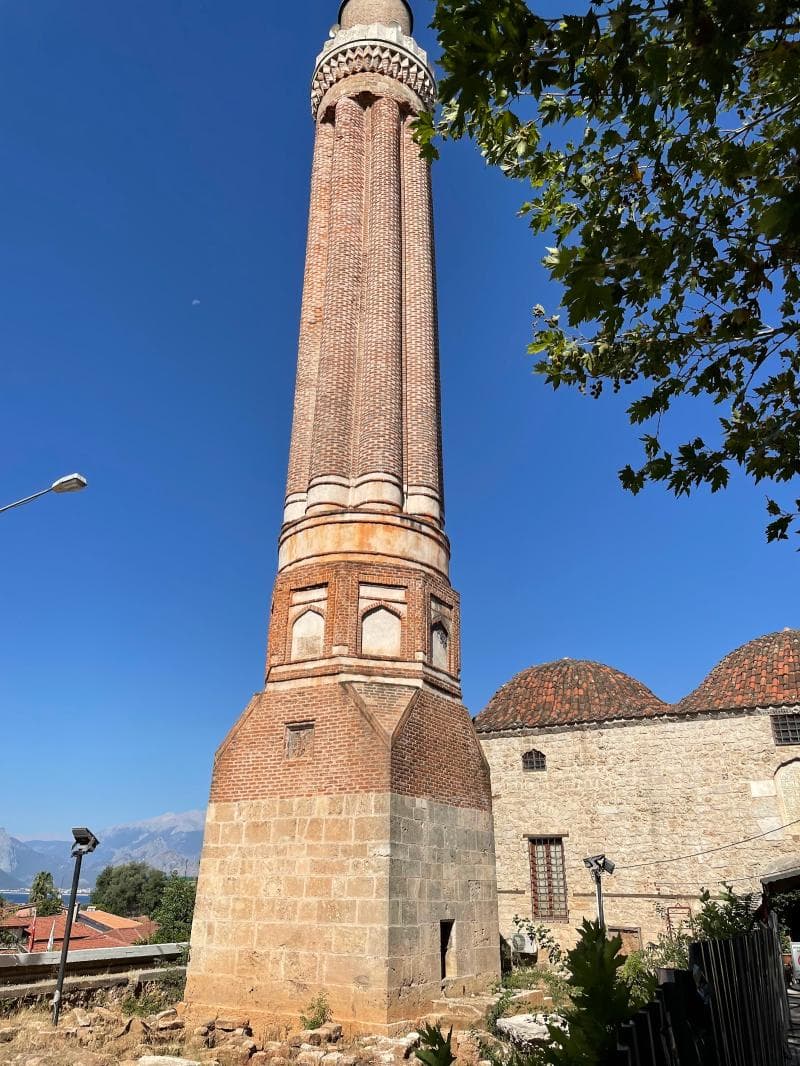
The Yivli Minaret, often called the Fluted Minaret, stands as an unmistakable symbol and landmark of Antalya, Turkey. Its distinctive silhouette, rising high above the historic Kaleiçi district, instantly captures the eye. The minaret is a striking example of Seljuk architecture, known for its unique eight-fluted shaft constructed from deep red brick, adorned with remnants of turquoise and dark blue tiles. It is an integral part of the larger Yivli Minaret Mosque complex, which represents one of the earliest Islamic structures in Antalya.
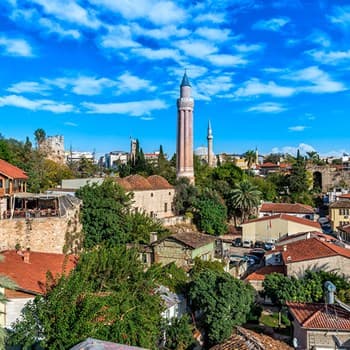
Standing approximately 38 meters (124.7 feet) tall, the Yivli Minaret’s prominent position has made it a historical beacon for centuries, visible from nearly every corner of the city, including the Mediterranean coastline. The Turkish word 'Yivli' literally means 'fluted' or 'grooved', precisely describing the architectural marvel that defines this historical monument.
History & Cultural Background
The origins of the Yivli Minaret and its mosque date back to the early 13th century, a period marked by the Seljuk conquest of Antalya. Seljuk Sultan Alaeddin Keykubad I, a ruler renowned for his extensive architectural patronage across Anatolia, commissioned the minaret and the original mosque around 1230.
Interestingly, the mosque was constructed on the site of a ruined Byzantine church, reflecting the Seljuk practice of integrating earlier architectural elements into new Islamic buildings. The initial prayer hall was either destroyed or fell into disrepair during the 14th century. It was subsequently rebuilt in 1373 by Mehmet Bey, a member of the Hamidids dynasty. This reconstruction introduced a six-domed prayer hall supported by twelve columns, some of which feature reused ancient capitals, showcasing the layers of history embedded within the structure.
The Yivli Minaret Mosque is celebrated as one of the oldest multi-domed examples of Islamic architecture in Anatolia and is sometimes referred to as the Alaeddin Keykubad Mosque or Ulu Camii (Grand Mosque). Its historical and architectural significance is recognized globally, having been added to UNESCO's Tentative List of World Heritage Sites in 2016, a testament to its enduring cultural value.
What Makes It Special
The most distinguishing feature of the Yivli Minaret is its remarkable eight-fluted design. Unlike many other minarets that are circular or polygonal, the Yivli Minaret's shaft is divided into eight semi-circular grooves, giving it a ribbed, almost organic profile. This unique fluted form is crafted from deep red bricks laid in tight horizontal courses, with traces of original turquoise and dark blue tiles still visible, creating a visually captivating vertical striping effect.
Rising from a massive square stone base that transitions into an octagonal zone, the minaret's intricate construction highlights the sophisticated craftsmanship of Seljuk artistry. Its height, combined with this innovative design, made it a prominent and unique structure in its time. During restoration work between 2007 and 2010, an ancient water system was discovered underneath the prayer hall, which can now be seen through a glass floor section, adding another fascinating layer to its history.
Stories, Fun Facts & Local Details
The name 'Yivli Minare' itself is a direct description of its appearance; 'Yivli' in Turkish means 'fluted' or 'grooved'. This architectural detail is so central to its identity that it has become synonymous with the minaret. It is not merely a historical building; it is a living symbol of Antalya, frequently featured in photographs and even serving as a logo for the city and its football team, Antalyaspor.
The minaret is part of a larger complex, or külliye, which historically included other structures like a madrasa (theological college), a dervish lodge, and tombs. These surrounding buildings further enrich the historical tapestry of the area. For instance, the 13th-century madrasa, also commissioned by Sultan Alaeddin Keykubad I, features a grand portal that has been partly restored. The complex once housed the Antalya Museum and today the Ethnographic Museum is located in some of the surrounding buildings, displaying local artifacts.
Visitor Perspective
Visiting the Yivli Minaret offers a journey back in time, providing a tangible connection to Antalya's rich Seljuk past. Located in the heart of Kaleiçi, the old town, it's easily accessible and often forms a central point for exploring other historical sites nearby, such as Hadrian's Gate and the Old Harbor.
As an active place of worship, visitors are asked to observe local customs by dressing modestly, ensuring shoulders and knees are covered. Entry to the mosque is generally free, but it's advisable to check local prayer schedules to avoid visiting during longer closure times, especially around midday and afternoon. The quiet of early morning provides a serene experience, allowing for peaceful contemplation of the architecture, while late afternoon offers beautiful lighting as the sun sets, making the brickwork and tiles shimmer. Walking through the narrow, charming streets of Kaleiçi to reach the minaret adds to the authentic experience, immersing you in the historical ambiance of Antalya.
Coordinates: 30.70444, 36.88639
View on Google Maps💬 How Travelers Describe This Place
Based on community votes
Unique
683Interesting
642Photogenic
300Must See
251Beautiful
88
Traveler Stories
Discover memorable experiences shared by travelers who have visited this place.
No traveler stories yet.
Be the first traveler to share what made this place memorable.

Tour
By
Spot
Discover amazing places around the world. Your journey starts here.
Explore
© 2026 TourBySpot. All rights reserved.