Yellow Fortress
Sarajevo, Bosnia and Herzegovina
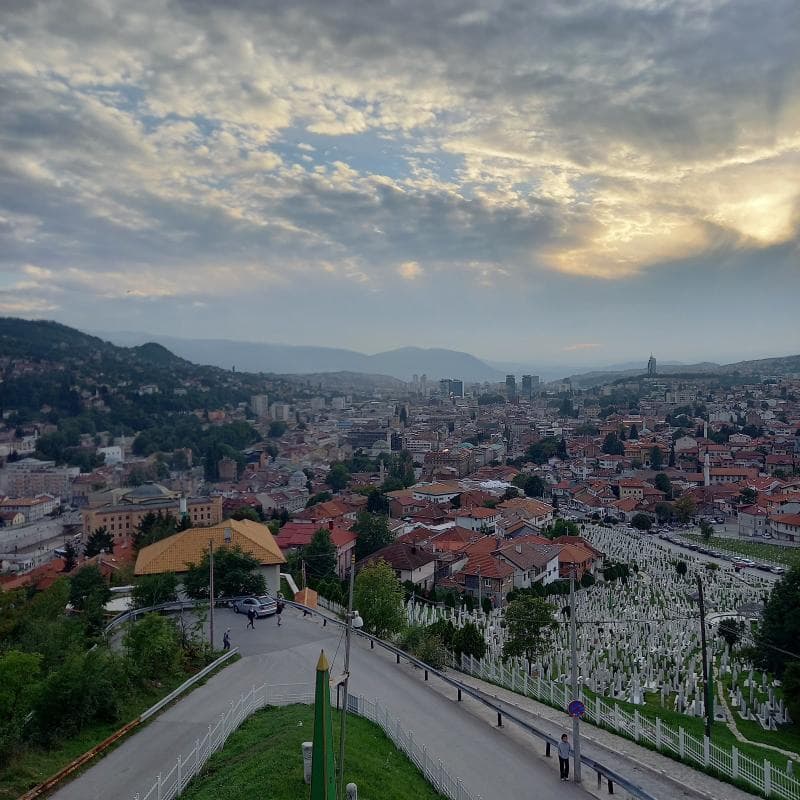
Discover the Yellow Fortress (Žuta Tabija) in Sarajevo, Bosnia and Herzegovina, offering panoramic city views and rich Ottoman history.
Overview
Perched majestically on Jekovac Hill, overlooking the vibrant cityscape of Sarajevo, Bosnia and Herzegovina, stands the iconic Yellow Fortress, locally known as Žuta Tabija. This eighteenth-century cannon fortress, a crucial component of the historical Vratnik fortification complex, has transcended its original military purpose to become one of the city's most cherished landmarks. Today, it offers an unparalleled panoramic vantage point, drawing both locals and travelers seeking breathtaking views of Sarajevo's red-roofed houses, the winding Miljacka River, and the picturesque hills that embrace the capital. While its historical significance as a defensive stronghold remains palpable, the Yellow Fortress is now celebrated primarily as a gathering place, a 'balcony of Sarajevo,' especially revered for its spectacular sunset vistas.
Its name, Žuta Tabija, literally meaning 'Yellow Bastion,' is derived from the distinctive yellowish stone used in its construction. The fortress is freely accessible and has become a focal point for cultural traditions, particularly during the holy month of Ramadan, when it plays a unique role in signaling the breaking of the fast. A visit here is more than just sightseeing; it's an immersive experience into the heart and soul of Sarajevo, blending history with a vibrant living culture.
History & Cultural Background
The origins of the Yellow Fortress trace back to the early 18th century, a period marked by the urgent need to bolster Sarajevo's defenses. Following the devastating invasion by Prince Eugene of Savoy in 1697, which left much of the city in ruins, Bosnian vizier Gazi Ahmed-paša Rustempašić Skopljak initiated the construction of comprehensive ramparts around the Vratnik district. The Yellow Fortress was built between 1727 and 1739 as an integral part of this new, extensive defensive system. Designed primarily as a cannon fort and lookout, it guarded the eastern approach to the walled city of Vratnik, alongside four other bastions, three gate towers, and formidable walls.
Throughout its history, the fortress witnessed pivotal moments. It served as a critical defense point against Austro-Hungarian troops during their occupation of Sarajevo in 1878, a period during which it sustained damage but also showcased its resilience. The fortress has undergone several renovations, with a significant restoration taking place in 1998, ensuring its preservation for future generations. While its military strategic importance waned with time, its cultural significance only grew, especially through a timeless tradition that continues to this day.
What Makes It Special
What truly sets the Yellow Fortress apart is its dual identity: a historical relic and a living cultural hub. Firstly, its commanding position on Jekovac Hill provides what many consider the finest panoramic views of Sarajevo. From this elevated perspective, visitors can absorb the city's unique tapestry—where Ottoman-era architecture blends seamlessly with Austro-Hungarian influences, all framed by the dramatic Dinaric Alps. This sweeping vista has earned it the affectionate nickname 'Sarajevo's balcony.'
Secondly, the fortress is inextricably linked with a cherished Ramadan tradition. For centuries, a ceremonial cannon has been fired from its grounds at sunset every evening during the holy month. This powerful boom signals the precise moment for breaking the daily fast, known as iftar. This practice, temporarily banned during the Yugoslav era but joyously reintroduced in 1992, transforms the fortress into a vibrant community gathering spot, deeply connecting past and present. It's a unique opportunity for visitors to witness a profound spiritual and cultural event firsthand.
Stories, Fun Facts & Local Details
The Yellow Fortress is a place where stories reside in every stone. Legend has it that the yellowish hue of its construction material, a local sandstone, inspired its name, giving it a warm, inviting glow, especially under the golden hour sun. While its exact architect remains unknown, its construction was a testament to the Ottoman military's pragmatic and adaptable approach to urban defense.
Beyond its military past, the fortress has woven itself into the fabric of daily Sarajevan life. It's often cited by locals as the most romantic spot in the city, a place where countless first dates have unfolded, proposals have been whispered, and memories have been made against the backdrop of the twinkling city lights. During Ramadan, families and friends gather here, sharing dates and water as they await the cannon's roar, transforming a historical site into a scene of communal joy and reflection. It's not just a monument; it's a living part of Sarajevo's identity, a place that embodies both resilience and celebration.
Visitor Perspective
For any traveler to Sarajevo, the Yellow Fortress offers an essential experience. The journey to the fortress is part of the charm; it's typically a 10 to 15-minute uphill walk from the old town district of Baščaršija. While the path can be steep and uneven in places, comfortable shoes are recommended, and the reward is truly spectacular. As you ascend through charming residential streets, you get a glimpse into local life before the grand reveal of the panoramic views.
The best time to visit is just before sunset, when the sky transforms into a canvas of oranges, reds, and purples, and the city below begins to sparkle with lights. This makes for incredible photographic opportunities and a memorable experience. While it can get busy, the atmosphere is generally convivial, with visitors and locals alike sharing in the magic. Although the fortress itself is an open viewpoint with free admission, visitors should note there are typically no public restrooms directly on site, though a small cafe provides refreshments. It's a perfect spot to unwind, reflect, and capture the timeless beauty of Sarajevo.
Coordinates: 18.437741, 43.86148
View on Google Maps💬 How Travelers Describe This Place
Based on community votes
Unique
897Must See
695Beautiful
605Interesting
498Photogenic
481
Traveler Stories
Discover memorable experiences shared by travelers who have visited this place.
No traveler stories yet.
Be the first traveler to share what made this place memorable.
Things to see at Yellow Fortress



Tour
By
Spot
Discover amazing places around the world. Your journey starts here.
Explore
© 2026 TourBySpot. All rights reserved.