Fortress Walls
Sarajevo, Bosnia and Herzegovina
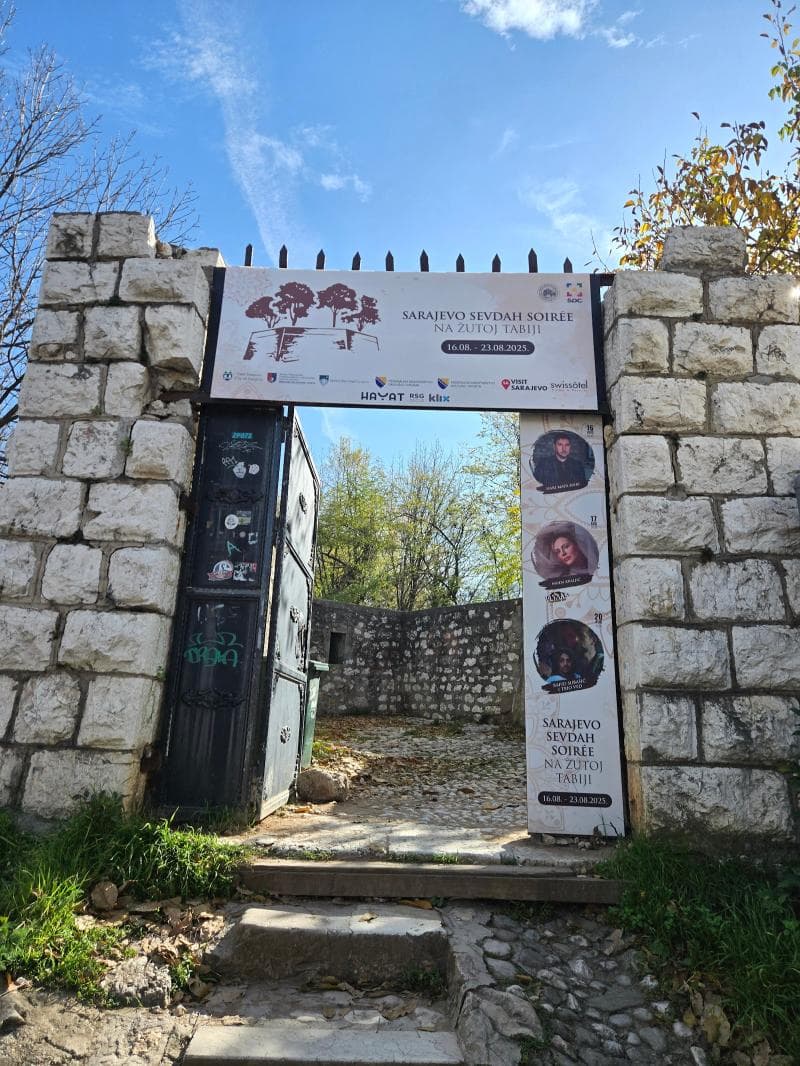
Explore the historic Fortress Walls of Yellow Fortress (Žuta Tabija) in Sarajevo, Bosnia and Herzegovina. Discover panoramic city views and rich Ottoman history.
Overview
Perched majestically above Sarajevo's historic Old Town, the Fortress Walls, an integral part of the larger Yellow Fortress or Žuta Tabija, stand as a testament to centuries of resilience and strategic importance in Bosnia and Herzegovina. This 18th-century bastion, often referred to as the Yellow Bastion, offers more than just a historical glimpse; it provides some of the most awe-inspiring panoramic views of the city. From its elevated position, visitors can survey Sarajevo's distinctive red-tiled rooftops, the winding Miljacka River, towering minarets, and the embrace of the surrounding hills.
Known locally as Žuta Tabija, these fortress walls are a beloved landmark, drawing both locals and international travelers seeking to connect with Sarajevo's rich past and enjoy its captivating present. It is an open viewpoint, free for all to explore, inviting contemplation and providing a unique vantage point to understand the city's geographical layout and historical layers.
History & Cultural Background
The construction of the Yellow Fortress and its defensive walls was a direct response to a pivotal moment in Sarajevo's history. After Prince Eugene of Savoy's devastating burning of the city in 1697, the need for a robust defensive system became paramount.
Initiated by Bosnian viceroy Gazi Ahmed-paša Rustempašić Skopljak, the ramparts around the Vratnik district, including the iconic Yellow Fortress, were built between 1727 and 1739. This fortification system was designed to protect the eastern entrance of the Walled City of Vratnik, serving as a crucial cannon fort. The name 'Žuta Tabija' or 'Yellow Fortress' comes from the distinctive yellowish tint of the sandstone used in its construction.
For centuries, the fortress walls faithfully performed their defensive function, notably playing a role against the Austro-Hungarian troops in 1878. Although it lost its primary military significance after the Austro-Hungarian conquest, the Yellow Fortress remained an important architectural monument and a symbol of the city's enduring spirit.
What Makes It Special
The Fortress Walls of Yellow Fortress are special primarily for their unparalleled panoramic views. They offer a breathtaking canvas where the historical core of Baščaršija, with its Ottoman-era architecture, seamlessly blends into the modern cityscape, all set against a dramatic backdrop of mountains.
It is a place where history feels tangible; standing on the very walls that once guarded the city, one can almost hear the echoes of past centuries. Unlike many historical sites, the Yellow Fortress is an open, accessible space, allowing for an intimate connection with its heritage without the confines of a museum. The surviving stonework, while historically significant for its military past, is today cherished just as much for its scenic setting, making it a favorite for photographers, history enthusiasts, and those simply seeking a moment of tranquility away from the bustling streets below.
- Unrivaled Vistas: The expansive views capture Sarajevo's unique geography and architectural diversity.
- Historical Immersion: Visitors can walk along the remnants of 18th-century defensive architecture.
- Accessible Beauty: As an open viewpoint, it offers a refreshing break and a chance to experience Sarajevo's beauty without entry fees.
Stories, Fun Facts & Local Details
One of the most heartwarming traditions associated with the Yellow Fortress Walls is the ceremonial firing of a cannon at sunset during the holy month of Ramadan. This centuries-old custom, once banned during the Yugoslav era but revived in the 1990s, signals the end of the daily fast (iftar) and calls the faithful to break their fast.
During Ramadan, the fortress transforms into a vibrant community gathering spot, where locals and tourists alike converge to witness the cannon blast, share in the collective experience, and enjoy iftar in the open air with the city lights twinkling below. It is a moment that beautifully bridges religious observance with communal joy and cultural heritage. The sound of the cannon, traditionally timed with the call to prayer from the Bey's Mosque, is a cherished signal, even in an age of modern timekeeping.
Beyond Ramadan, the Yellow Fortress is a popular spot for picnickers, couples, and friends to gather, particularly at sunset, to watch the sky ignite with color over Sarajevo. Its informal, welcoming atmosphere makes it a true local gem.
Visitor Perspective
Visiting the Fortress Walls of Yellow Fortress is an experience that combines a pleasant physical journey with profound historical and visual rewards. The approach from Baščaršija, though steep and featuring uneven pavement and steps, is manageable and takes approximately 15-20 minutes. Wear comfortable, grippy shoes, especially if planning a sunset visit, as the descent can be challenging in fading light.
The late afternoon, leading up to sunset, is often considered the best time to visit, offering spectacular views as the city lights begin to emerge. While it can be busy during these peak hours, an early morning visit can offer a quieter, equally beautiful perspective. The Yellow Fortress is not a ticketed museum, but an open space for exploration and enjoyment. It is a place to linger, to breathe in the fresh air, and to reflect on Sarajevo's layered past while admiring its vibrant present. The sense of peace and the sheer grandeur of the vista make the climb utterly worthwhile.
Coordinates: 18.437741, 43.86148
View on Google Maps💬 How Travelers Describe This Place
Based on community votes
Photogenic
817Beautiful
657Must See
481Unique
299Interesting
19
Traveler Stories
Discover memorable experiences shared by travelers who have visited this place.
No traveler stories yet.
Be the first traveler to share what made this place memorable.

Tour
By
Spot
Discover amazing places around the world. Your journey starts here.
Explore
© 2026 TourBySpot. All rights reserved.