Wat Phnom
Phnom Penh, Cambodia
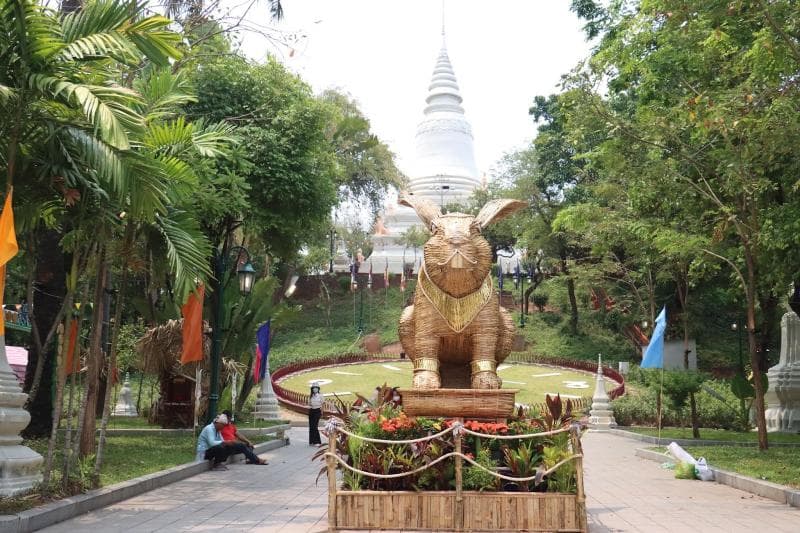
Discover Wat Phnom, the historic hilltop temple in Phnom Penh, Cambodia, renowned for its founding legend, sacred statues, and serene atmosphere.
Overview
Wat Phnom, a revered Buddhist temple, proudly stands atop the sole hill in Cambodia's capital, Phnom Penh. This significant landmark, whose name literally translates to 'Hill Temple,' is deeply intertwined with the very identity of the city it overlooks. At approximately 27 meters (88 feet) high, this tree-covered knoll is not only a natural anomaly in the flat landscape but also home to the tallest religious structure in the city. More than just a spiritual site, Wat Phnom is a symbol of Phnom Penh's rich history, cultural heritage, and enduring spiritual heart, drawing both local worshippers and curious travelers.
Its prominent location and historical significance make it a central point of interest, a place where the city's past and present converge. It offers a tranquil escape from the bustling urban environment, inviting visitors to delve into its legends, admire its architecture, and observe local spiritual practices.
History & Cultural Background
The origins of Wat Phnom are steeped in a captivating legend dating back to 1372. The story tells of a wealthy widow named Daun Penh, or Lady Penh, who lived near the confluence of the Tonle Sap and Mekong rivers. After a heavy rainstorm, she discovered a koki tree floating in the river. Inside the hollow trunk, she found four bronze Buddha statues, and in some accounts, a stone statue of Vishnu.
Considering this a divine omen, Lady Penh enlisted her community to raise a small, artificial hill and construct a shrine atop it to house these sacred images. This humble sanctuary became the foundation of Wat Phnom, and the hill itself became known as 'Phnom Penh,' meaning 'Penh's Hill,' thus giving the capital city its enduring name. Roughly 60 years later, King Ponhea Yat, the last king of the Khmer Empire, moved his capital to the area. He further elevated the hill and ordered the construction of a more substantial temple, marking Phnom Penh as a significant center. The ashes of King Ponhea Yat are now enshrined within a large stupa located behind the main temple.
Over the centuries, the temple has undergone several reconstructions and renovations, notably in 1434, 1806, 1894, and its current form dating to 1926. These rebuilds have ensured its preservation, reflecting a blend of traditional Khmer and subtle colonial architectural influences.
What Makes It Special
Wat Phnom holds a unique place as the birthplace of the Cambodian capital's name, cementing its status as a foundational landmark. Beyond its mythical origins, the temple complex itself is a repository of artistic and spiritual treasures. The grand eastern staircase, a primary entry point, is a visual spectacle, flanked by intricate Naga (mythical serpent) balustrades and guardian lion statues, which symbolize protection and power.
Inside the main vihear, or prayer hall, visitors are greeted by a prominent bronze seated Buddha. The walls and ceilings are adorned with vibrant murals that beautifully illustrate the Jataka tales, recounting the Buddha's past lives, and stories from the Reamker, the Khmer version of the Indian epic Ramayana. Surrounding the central temple are various smaller shrines, including one dedicated to Lady Penh herself, where devotees offer flowers and prayers, particularly women seeking blessings. The presence of the stupa housing King Ponhea Yat's ashes further connects the site to the kingdom's royal history, making it a powerful testament to Cambodia's spiritual and political evolution.
Stories, Fun Facts & Local Details
Wat Phnom is a vibrant center for local spiritual life. It's common to see Cambodians visiting the temple to pray for good fortune, success in exams, or prosperous business ventures. When their wishes are granted, many return to offer gratitude, often with jasmine garlands or bananas, which are believed to be favored by the spirits. The serene grounds are also a place where fortune-tellers offer predictions, adding a layer of mystical intrigue to the atmosphere.
Visitors might also encounter playful monkeys roaming the temple grounds, a delightful natural element within the urban setting. A notable, albeit debated, local practice involves vendors selling caged birds for tourists to release, symbolizing good luck. However, some suggest these birds are trained to return to their cages, a curious detail that adds to the site's unique character. Wat Phnom has even gained international recognition, having been featured in the Travel Channel's '1,000 Places to See Before You Die' and as a Pit Stop for 'The Amazing Race' television series.
Visitor Perspective
Visiting Wat Phnom offers a distinct experience, a blend of historical reverence and daily life. It provides a peaceful, green oasis amidst the city's hustle and bustle, allowing for moments of quiet contemplation and reflection. The temple is generally open daily, with a modest entrance fee of around $1 USD for foreign visitors, making it accessible for exploration. To fully appreciate the site and avoid the midday heat and larger crowds, it's often recommended to visit in the early morning or late afternoon.
As an active place of worship, visitors are encouraged to dress respectfully, covering their shoulders and knees, and to remove their shoes before entering the main prayer areas. While the atmosphere is generally welcoming, it's advisable to be mindful of local worshippers and maintain a respectful demeanor. Climbing the steps to the summit rewards you with not only spiritual insights but also panoramic views of the surrounding city. Whether reached by a leisurely walk or a short tuk-tuk ride, Wat Phnom stands as an essential stop for anyone seeking to understand the heart and soul of Phnom Penh.
Coordinates: 104.9205, 11.5723
View on Google Maps💬 How Travelers Describe This Place
Based on community votes
Beautiful
894Unique
862Interesting
443Must See
304Photogenic
184
Traveler Stories
Discover memorable experiences shared by travelers who have visited this place.
No traveler stories yet.
Be the first traveler to share what made this place memorable.
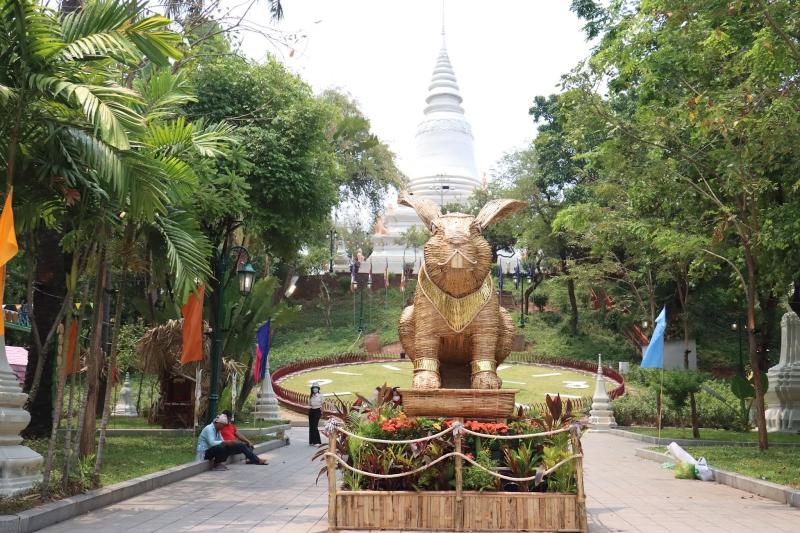
Things to see at Wat Phnom





Tour
By
Spot
Discover amazing places around the world. Your journey starts here.
Explore
© 2026 TourBySpot. All rights reserved.