Monkey Area
Phnom Penh, Cambodia
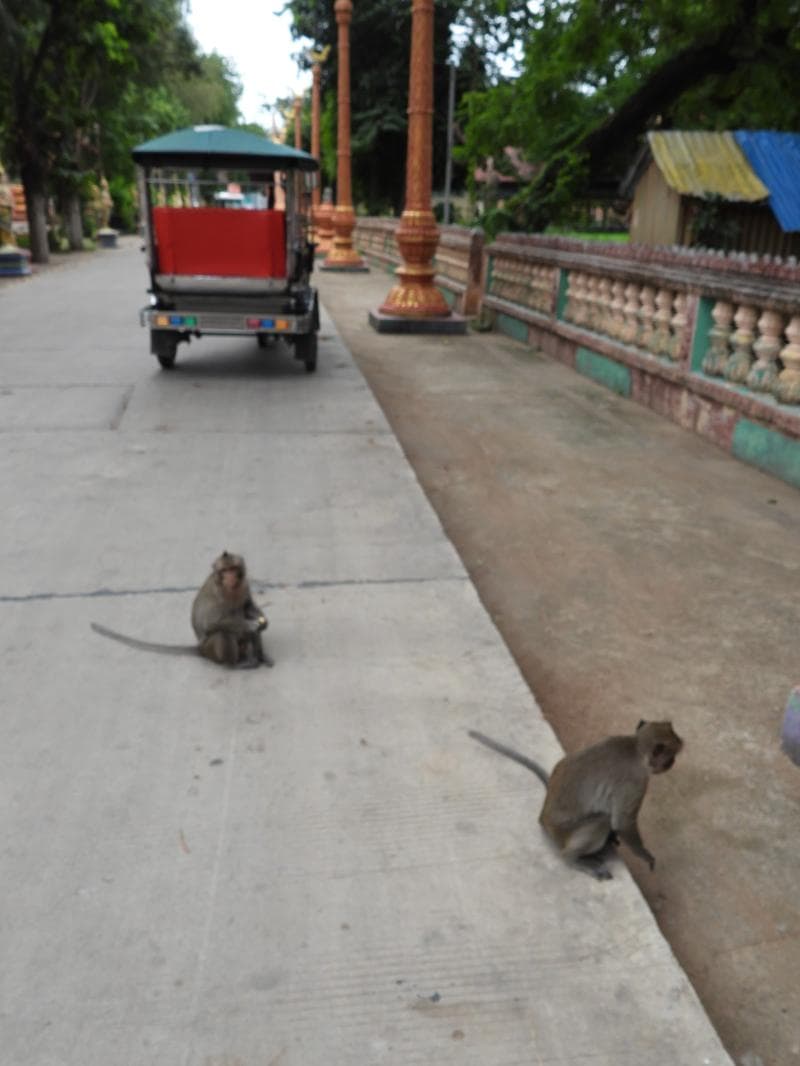
Discover the historic Wat Phnom in Phnom Penh, Cambodia, and its famous 'Monkey Area'. Explore ancient temples, cultural legends, and playful long-tailed macaques.
Overview
Wat Phnom, meaning 'Hill Temple', stands majestically atop a 27-meter-high artificial hill in the heart of Phnom Penh, Cambodia, marking the legendary birthplace of the city itself. This revered Buddhist temple is not merely a religious site but a vibrant cultural landmark, offering a peaceful retreat from the bustling city below. As you ascend its grand eastern staircase, guarded by imposing lions and naga balustrades, you step into a tranquil space where history, spirituality, and nature intertwine. Beyond its ancient pagodas and stupas, Wat Phnom is also well-known for its playful residents: the long-tailed macaques that often roam the temple grounds and surrounding trees, adding a lively dimension to the spiritual atmosphere.
Visitors come to Wat Phnom for a multitude of reasons—to admire its intricate Khmer architecture, to seek blessings and good fortune, to explore its lush gardens, or simply to enjoy panoramic views of the capital city. The presence of the monkeys, while enchanting, also adds a layer of natural interaction that has become a unique aspect of the Wat Phnom experience.
History & Cultural Background
The origins of Wat Phnom are steeped in a captivating legend dating back to 1372. According to folklore, a wealthy widow named Lady Penh discovered four bronze Buddha statues and one stone statue of Vishnu inside a floating koki tree trunk along the Mekong River. Believing this to be a sacred sign, she ordered the construction of a small shrine on a nearby hill to house these precious relics. This act of devotion gave birth to what would become Wat Phnom, and subsequently, the city of Phnom Penh, which literally translates to 'Penh's Hill'.
Over the centuries, the temple complex underwent numerous renovations and expansions, blending traditional Khmer architectural styles with influences from French colonial periods. The main stupa contains the ashes of King Ponhea Yat, who established Phnom Penh as his capital in the 15th century, further solidifying the site's historical significance. Wat Phnom remains a crucial center for Theravada Buddhist worship, attracting locals who come to pray for luck, success, and to make offerings, especially during major festivals like Khmer New Year.
What Makes It Special
The unique charm of Wat Phnom lies not only in its foundational legend and spiritual importance but also in its dynamic environment. It stands as the tallest religious structure in Phnom Penh, offering a rare elevated perspective of the city. The temple grounds are a mosaic of smaller shrines, vibrant murals depicting Jataka tales (stories of Buddha's past lives), and lush gardens.
A distinctive feature that often captivates travelers is the presence of its resident long-tailed macaques. These free-roaming monkeys are an integral part of the park's ecosystem and a source of both entertainment and caution for visitors. Their antics, from climbing trees to interacting with each other, create a lively and memorable experience that sets Wat Phnom apart from other temples.
Stories, Fun Facts & Local Details
Locally, Wat Phnom is revered as a place where wishes are granted. Many Cambodians visit to make requests and, upon their fulfillment, return to offer gratitude with items like jasmine garlands or bananas. This tradition highlights a deep-seated spiritual connection to the site.
The monkeys of Wat Phnom, while often seen as amusing, have a complex relationship with both locals and the authorities. Historically, there have been periods where certain aggressive individuals within the monkey troops caused concerns for residents, leading to some relocations to wildlife centers to ensure harmony. However, many 'gentle' monkeys are allowed to remain, cherished for the character they bring to the temple grounds, and sometimes even fed by curious tourists, though visitors are advised to keep a respectful distance and secure their belongings.
Beyond the monkeys, the site also features a small shrine dedicated to Lady Penh, adorned with flowers by devotees, and a shrine to the genie Preah Chau, showcasing a blend of Buddhist and Hindu iconography, and even influences from Chinese sages.
Visitor Perspective
Visiting Wat Phnom offers a rich, multi-sensory experience. As you explore, you'll encounter locals engaging in their daily rituals, lighting incense, offering prayers, and tying blessing strings. The atmosphere is generally serene, providing a stark contrast to the city's hustle. It's recommended to dress modestly, covering shoulders and knees, out of respect for the religious site.
The monkeys are undoubtedly a highlight for many, providing amusing photo opportunities. However, it's crucial to exercise caution. These are wild animals, and while some are accustomed to human presence, they can be bold and may attempt to snatch food or unsecured items. Observing them from a distance is the best approach to ensure a safe and enjoyable encounter. The best times to visit are early mornings or late afternoons to avoid the midday heat and larger crowds, allowing for a more peaceful exploration of this iconic symbol of Phnom Penh.
Coordinates: 104.92306, 11.57611
View on Google Maps💬 How Travelers Describe This Place
Based on community votes
Must See
569Unique
476Interesting
465Photogenic
276Beautiful
128
Traveler Stories
Discover memorable experiences shared by travelers who have visited this place.
No traveler stories yet.
Be the first traveler to share what made this place memorable.

Tour
By
Spot
Discover amazing places around the world. Your journey starts here.
Explore
© 2026 TourBySpot. All rights reserved.