Stupa Complex
Phnom Penh, Cambodia
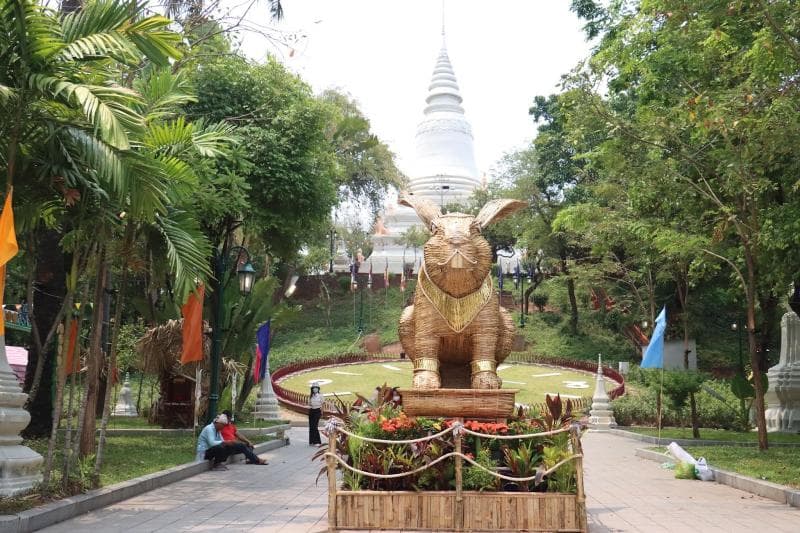
Explore the historic Stupa Complex at Wat Phnom in Phnom Penh, Cambodia. Discover its rich history, cultural significance, and the legends behind this sacred hilltop temple.
Overview
Perched atop the only hill in Phnom Penh, Cambodia, the Stupa Complex within Wat Phnom is far more than just a religious monument; it is the spiritual and historical heart of the city itself. Wat Phnom, meaning 'Hill Temple' or 'Mountain Pagoda', is the namesake for Cambodia's bustling capital, and its Stupa Complex stands as a serene and significant landmark, offering a peaceful retreat amidst the urban landscape. This sacred site, with its central stupa and surrounding shrines, embodies centuries of Cambodian history, Buddhist tradition, and enduring legends.
The Stupa Complex is a prominent feature at the summit, commanding attention with its architectural elegance and deep cultural resonance. Visitors ascend the hill to find not only a place of worship but also a window into the origins and spiritual foundations of Phnom Penh, providing a unique blend of historical insight and quiet contemplation. It is a testament to the city's past, present, and the beliefs that continue to shape its identity.
History & Cultural Background
The story of Wat Phnom, and by extension its Stupa Complex, begins with a captivating legend dating back to 1372. According to local lore, a wealthy widow named Lady Penh (or Daun Penh) discovered four bronze Buddha statues, and possibly a stone statue of Vishnu, inside a floating Koki tree trunk on the Mekong River. Believing this to be a divine omen, Lady Penh gathered her neighbors to build a small shrine atop the only natural hill in the area to house these sacred images. This humble beginning marked the genesis of what would become Wat Phnom, and the city itself, 'Phnom Penh,' literally meaning 'Penh's Hill,' was named in her honor.
Approximately six decades later, around 1434, King Ponhea Yat, who relocated the Khmer capital from Angkor to Phnom Penh, significantly expanded the site. He ordered the enlargement of the hill and the construction of a more substantial temple. The most profound historical element within the Stupa Complex is that it enshrines the ashes of King Ponhea Yat, making it a royal tomb and a critical link to the city's early leadership and founding. Over the centuries, the temple complex has undergone numerous renovations and rebuilds, notably in 1434, 1806, 1894, and 1926, each contributing to its evolving architectural and spiritual landscape.
What Makes It Special
The Stupa Complex at Wat Phnom holds a unique distinction as the final resting place of King Ponhea Yat, the king who established Phnom Penh as the capital. This makes the stupa a direct, tangible connection to the city's foundational history and the Khmer royal family. Its bell-shaped design, set upon a multi-layered square platform, showcases intricate Cambodian craftsmanship.
The approach to the complex is equally striking, featuring a grand staircase flanked by mythical Naga (serpent) balustrades and lion statues, iconic elements of Khmer architecture. The entire complex reflects a fascinating blend of Khmer and colonial architectural influences, telling a visual story of Cambodia's layered past. Beyond its historical and architectural value, the Stupa Complex is a vibrant center for Theravada Buddhist worship, where devotees gather to make offerings and pray for blessings, health, and success, imbuing the site with a profound spiritual energy that has persisted for centuries.
Stories, Fun Facts & Local Details
The origin story of Wat Phnom, centered around Lady Penh's miraculous discovery of Buddha statues in a Koki tree, is deeply ingrained in the local consciousness. It is a charming tale that directly explains the very name of Phnom Penh and highlights the role of an ordinary woman in shaping the capital's destiny. A small shrine dedicated to Lady Penh at the southwest corner of the temple is often frequented by locals who bring offerings and prayers, viewing her as a protective spirit of the city.
Adding to the site's lively atmosphere are the resident monkeys that roam the grounds. While they provide a playful touch and are believed by some to bring good fortune, visitors are advised to be mindful of their belongings. Observing the local rituals offers a glimpse into Cambodian spiritual practices; you might see devotees lighting incense, offering lotus flowers, and leaving small monetary offerings at Buddha statues, all gestures of hope and devotion. The surrounding park also features fortune tellers, adding another layer of local flavor and cultural interaction for curious travelers.
Visitor Perspective
Visiting the Stupa Complex at Wat Phnom provides a richly authentic Cambodian experience. As you climb the steps, perhaps guarded by the iconic Naga, you'll feel a sense of ascending to a sacred space removed from the city's hustle and bustle below. The atmosphere is generally serene, especially in the early mornings or late afternoons, which are recommended times to avoid the heat and larger crowds. From the summit, panoramic views of Phnom Penh unfold, offering a unique perspective of the city.
It is important to remember that Wat Phnom is an active place of worship. Visitors should dress modestly and remove their shoes when entering the primary worship areas as a sign of respect. The small entrance fee, typically around $1 USD for foreigners, contributes to the upkeep of this historic site. Beyond the main stupa and temple, take time to explore the shaded gardens, observe the local devotees, and immerse yourself in the sensory experience of sights, sounds, and smells that make this cultural landmark so vibrant and meaningful.
Coordinates: 104.9205, 11.5723
View on Google Maps💬 How Travelers Describe This Place
Based on community votes
Interesting
722Unique
698Must See
276Beautiful
126Photogenic
19
Traveler Stories
Discover memorable experiences shared by travelers who have visited this place.
No traveler stories yet.
Be the first traveler to share what made this place memorable.

Tour
By
Spot
Discover amazing places around the world. Your journey starts here.
Explore
© 2026 TourBySpot. All rights reserved.