Shrine Altars
Phnom Penh, Cambodia
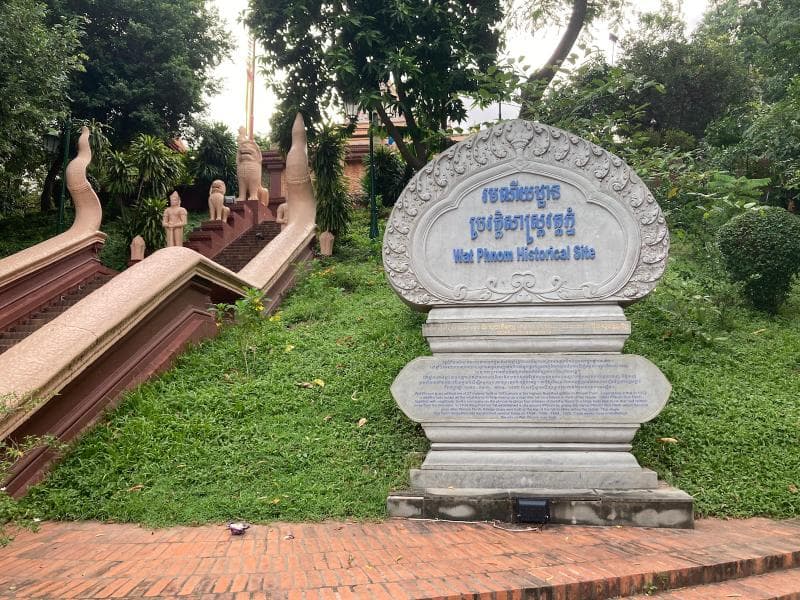
Discover the sacred Shrine Altars of Wat Phnom in Phnom Penh, Cambodia. Explore its rich history, cultural significance, and spiritual devotion.
Overview
Perched atop a verdant, artificial hill, Wat Phnom stands as a serene and profoundly significant Buddhist temple in the heart of Phnom Penh, Cambodia. More than just a religious site, it is considered the birthplace of the city itself, lending its name, 'Phnom Penh,' which translates to 'Penh's Hill.' This revered landmark invites travelers to step away from the city's hustle and immerse themselves in centuries of history, spirituality, and culture. The 'Shrine Altars' within Wat Phnom refer to a collection of sacred spaces, each holding unique significance and offering a glimpse into Cambodia's spiritual tapestry.
The entire complex is a testament to Cambodian heritage, featuring not only the central vihara (sanctuary) with its impressive altar, but also various smaller shrines dedicated to different deities and figures of cultural importance. From the grand staircase guarded by mythical Naga serpents to the intricate murals depicting ancient tales, Wat Phnom provides a holistic experience for anyone seeking to understand the spiritual pulse of the Cambodian capital.
History & Cultural Background
The story of Wat Phnom begins in 1372, rooted in a captivating legend. According to local lore, a wealthy widow named Daun Penh (Grandmother Penh) discovered four bronze Buddha statues and one stone statue of a goddess (or Vishnu) inside a floating koki tree trunk after a heavy rainstorm. Viewing this as a divine omen, she gathered her neighbors to construct a modest shrine atop a nearby artificial hill to safeguard these sacred images. This humble act marked the genesis of Wat Phnom and subsequently, the city of Phnom Penh.
While Daun Penh's legend is central, another historical account suggests that King Ponhea Yat played a significant role, possibly building the sanctuary when he relocated the Khmer capital from Angkor to Phnom Penh in the 15th century (around 1422 or 1434). His ashes are enshrined within a prominent stupa located within the temple grounds, further cementing the site's royal and historical importance. Over the centuries, the temple has undergone numerous renovations, with significant restorations noted in 1434, 1806, 1894, and 1926, each adding layers to its architectural and spiritual grandeur.
What Makes It Special
The Shrine Altars of Wat Phnom are a mosaic of devotion and artistry. At the heart of the main vihara lies a central altar complex dominated by a large bronze seated Buddha, flanked by other statues, vibrant flowers, and offerings of candles and incense. The interior walls are adorned with elaborate murals, vividly depicting the Jataka tales – stories recounting the past lives of the Buddha – and narratives from the Reamker, the Cambodian rendition of the Indian epic Ramayana.
Beyond the main sanctuary, visitors will discover a smaller, yet deeply significant, shrine dedicated to Lady Penh herself. Located in the southwest corner of the complex, this shrine is frequently bustling with devotees offering prayers and food, believing she offers particular assistance to women. Another unique altar is found within a pavilion dedicated to Preah Chau, a genie especially revered by the Vietnamese community, highlighting the diverse cultural influences present in Cambodia. Moreover, a chamber to the right of the main altar features drawings of Confucius and figures of Chinese sages, further illustrating the syncretic nature of worship at Wat Phnom.
Stories, Fun Facts & Local Details
The legend of Daun Penh and her discovery is more than just a founding myth; it is a living narrative that connects every Cambodian to the origins of their capital city. Locals often visit Wat Phnom to seek blessings for important life events, such as success in exams or business ventures. It is a common and heartwarming sight to witness people lighting incense sticks, placing offerings, and even releasing caged birds – a symbolic act believed to generate good merit and bring good fortune.
Interestingly, some of the older murals within the main vihara have been darkened and are slowly disintegrating due to the constant burning of incense over centuries, a poignant testament to the continuous devotion shown at the temple. During major festivals like Khmer New Year and Pchum Ben (Ancestors' Day), Wat Phnom transforms into a vibrant hub of celebration, offering visitors a unique opportunity to witness Cambodia's spiritual practices in full fervor. The very name of the city, Phnom Penh, literally means 'Penh's Hill', a direct tribute to the legendary founder and the hill upon which the first shrine was built.
Visitor Perspective
For the curious traveler, visiting the Shrine Altars at Wat Phnom offers a profound cultural immersion. As you approach, the grand eastern staircase, flanked by majestic Naga balustrades and lion figures, sets an impressive tone. It is important to remember that this is an active place of worship. Visitors are encouraged to dress respectfully, ensuring shoulders and knees are covered, and to remove shoes before entering the main pagoda sanctuary. Maintaining a quiet and respectful demeanor, especially around worshippers, enhances the experience for everyone.
The serene atmosphere on the hilltop provides a peaceful escape from the bustling city below, offering panoramic views of Phnom Penh. To fully appreciate the tranquility and avoid the midday heat and crowds, an early morning or late afternoon visit is highly recommended. While photography is generally allowed, it is crucial to be discreet and avoid being intrusive, particularly when people are praying. A small entrance fee, typically around $1 for foreigners, grants access to this significant historical and spiritual site.
Coordinates: 104.92306, 11.57611
View on Google Maps💬 How Travelers Describe This Place
Based on community votes
Must See
898Photogenic
853Beautiful
667Interesting
190Unique
32
Traveler Stories
Discover memorable experiences shared by travelers who have visited this place.
No traveler stories yet.
Be the first traveler to share what made this place memorable.

Tour
By
Spot
Discover amazing places around the world. Your journey starts here.
Explore
© 2026 TourBySpot. All rights reserved.