Vigeland Sculpture Park
Oslo, Norway
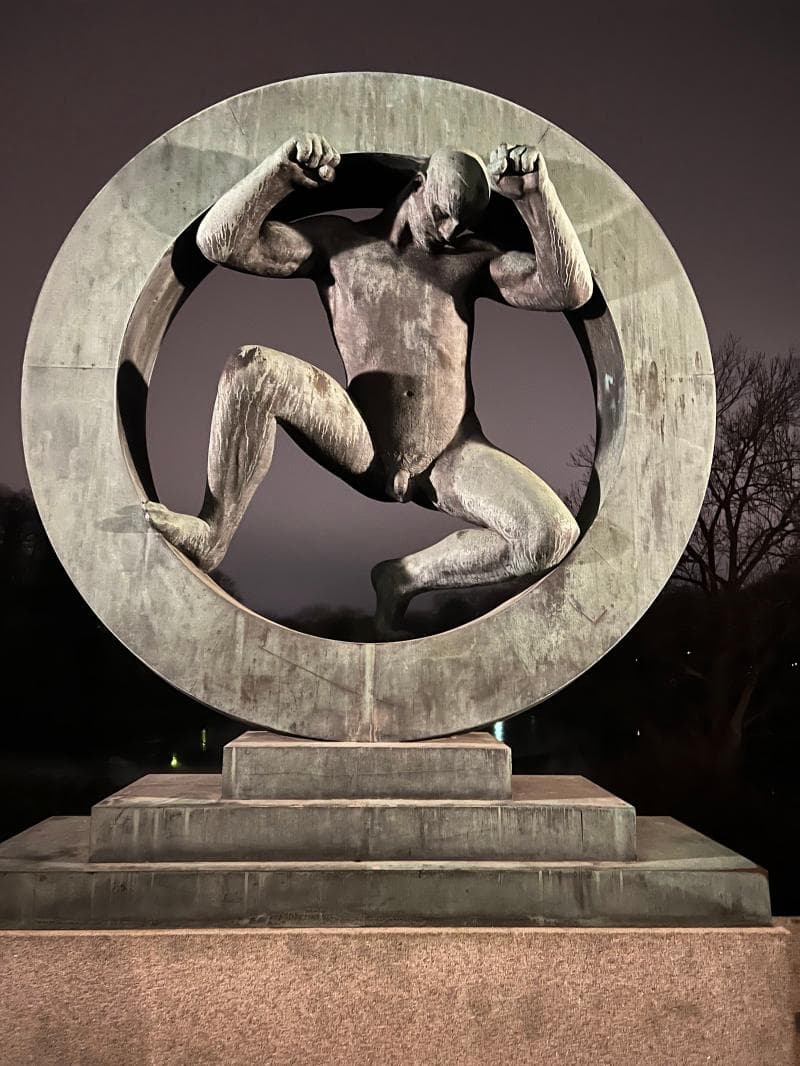
Explore Vigeland Sculpture Park in Oslo, Norway – the world's largest sculpture park by a single artist, Gustav Vigeland, depicting the cycle of human life.
Overview
Nestled within Oslo's expansive Frogner Park lies the Vigeland Sculpture Park, a truly unique open-air museum and Norway's most visited attraction. This extraordinary park showcases the life's work of a single artist, Gustav Vigeland (1869–1943), featuring over 200 sculptures in bronze, granite, and wrought iron. More than just a collection of statues, the entire park, including its architectural layout, pathways, and green spaces, was designed by Vigeland himself, reflecting his singular vision.
Visitors can freely explore this impressive installation year-round, marveling at the artistry and the profound themes embedded within each creation. The park serves as a contemplative journey through the human experience, depicting the full spectrum of emotions, relationships, and the inexorable cycle of life.
History & Cultural Background
The realization of the Vigeland Sculpture Park was a monumental undertaking, spanning decades of Gustav Vigeland's career. In 1921, Vigeland struck an unprecedented agreement with the City of Oslo: he would donate all his future works to the city in exchange for a studio, living quarters, and financial support, along with complete artistic freedom. This agreement paved the way for the creation of what would become the world's largest sculpture park by one artist.
Vigeland devoted over 40 years to his artistic vision, with the sculptures primarily installed between 1940 and 1949. Sadly, Vigeland passed away in 1943, before the park's full completion, but his legacy lives on through the millions who visit annually. The installation is a testament to Norway's early 20th-century ambition to establish its cultural identity as a newly independent nation, with Vigeland recognized as one of its leading artistic voices.
What Makes It Special
The Vigeland Sculpture Park stands out globally because every single sculpture, along with the park's overall design, is the product of one man's mind. The unified artistic language allows for a cohesive narrative, inviting visitors to immerse themselves in Vigeland's interpretation of humanity. The sculptures are predominantly nude, a deliberate choice by Vigeland to render them timeless, stripped of fashion and societal markers, making their universal messages accessible across generations and cultures.
Key installations like the Bridge with its 58 bronze figures, the magnificent Fountain, and the awe-inspiring Monolith form a thematic axis. The 17-meter-tall Monolith, carved from a single block of granite and featuring 121 intertwined human figures, is a powerful representation of humanity's collective striving and yearning. Surrounding it are 36 sculptural groups further exploring the complexities of human relationships and existence.
Stories, Fun Facts & Local Details
Among the park's most iconic figures is 'Sinnataggen', or The Angry Boy, a small bronze statue on the Bridge clenching his fists in a furious tantrum. His left hand shines brightly, a result of countless visitors touching it over the years in the belief that it brings good luck. While touching is generally discouraged to preserve the art, this particular sculpture has become an unofficial good luck charm. Vigeland himself is the only clothed figure in the entire park, represented by a statue just inside the main gates.
Interestingly, the Fountain, one of the park's centerpieces, was originally intended for a different, more prominent downtown location, highlighting the evolving scope of Vigeland's grand vision. The park's central axis also includes The Wheel of Life, a poignant granite sculpture at the very end, which symbolizes eternity through its circular arrangement of intertwined human figures, completing the narrative of life's perpetual motion. Look for two circles marked in the paving near the Monolith Plateau, step inside one and speak, sing or stomp, your sound will echo back to you, an unexpected sensory detail within the artistic landscape.
Visitor Perspective
Visiting Vigeland Sculpture Park is an experience that transcends a typical art exhibition; it's a stroll through a philosophical landscape. The park is integrated into Frogner Park, a beloved green space where locals come to relax, picnic, and play. This blend of world-class art and everyday life creates a vibrant, approachable atmosphere. The wide, accessible paths make it easy to navigate, inviting leisurely exploration and quiet contemplation. Whether you spend an hour focusing on the major installations or a full afternoon soaking in the artistry and ambiance, the park offers a profound and memorable encounter with the human condition, inviting personal reflection on life's journey.
Coordinates: 10.700865, 59.927029
View on Google Maps💬 How Travelers Describe This Place
Based on community votes
Beautiful
953Unique
658Photogenic
585Interesting
69Must See
22
Traveler Stories
Discover memorable experiences shared by travelers who have visited this place.
No traveler stories yet.
Be the first traveler to share what made this place memorable.
Things to see at Vigeland Sculpture Park



Tour
By
Spot
Discover amazing places around the world. Your journey starts here.
Explore
© 2026 TourBySpot. All rights reserved.