Monolith Plateau
Oslo, Norway
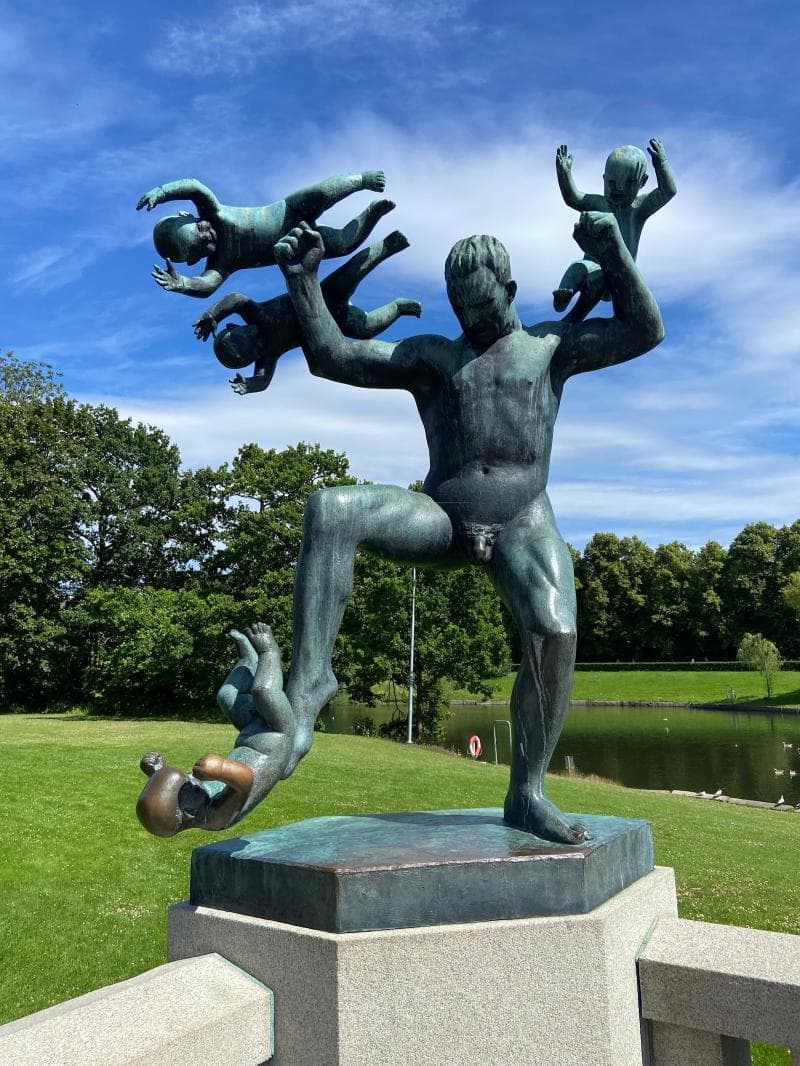
Explore the Monolith Plateau in Vigeland Sculpture Park, Oslo, Norway. Discover the towering Monolith, a masterpiece carved from a single stone, depicting 121 human figures and embodying universal themes of life and spirituality.
Overview
The Monolith Plateau stands as the undisputed pinnacle and spiritual heart of Vigeland Sculpture Park in Oslo, Norway. This elevated section of the park is dominated by the awe-inspiring Monolith, a towering granite sculpture that serves as the park's central masterpiece. Carved from a single, colossal block of stone, the Monolith reaches 17 meters (approximately 56 feet) into the sky and depicts an intricate tangle of 121 human figures striving upwards. The plateau itself is encircled by a circular staircase and features 36 additional granite groups, each contributing to the park's profound exploration of human existence.
History & Cultural Background
The vision for the Monolith and the entire Vigeland Sculpture Park originated with Gustav Vigeland, one of Norway's most prominent sculptors. In 1921, Vigeland struck a pivotal agreement with the City of Oslo, pledging all his future works to the city in exchange for a studio and state support. The idea for such a column can be traced back to Vigeland's sketchbooks from as early as 1919. The final design was meticulously modeled in clay at full scale between 1924 and 1925, a demanding task that Vigeland himself described as turning his hair from dark to grey. The monumental 280-ton granite block for the Monolith was quarried at Iddefjorden in 1922 and then transported to Frogner Park in the late 1920s. It took three dedicated stonemasons—Nils Jönsson, Karl Kjær, and Ivar Broe—an astonishing 14 years to carve the sculptor's design into the single granite block, working hidden within a wooden shed until its unveiling. Vigeland passed away in 1943, a year before the Monolith was finally revealed to the public.
What Makes It Special
The Monolith Plateau is uniquely special due to its central sculpture's extraordinary nature. The Monolith itself is an unparalleled artistic achievement, being carved entirely from one piece of granite and featuring 121 intertwined human figures. This intricate column is widely interpreted as a powerful representation of humanity's longing for spirituality, a vision of resurrection, and the universal struggle and interconnectedness of life. The figures, ranging from children at the top to adults supporting the ascent below, symbolize various stages of life and human relationships. Surrounding the Monolith are 36 granite groups, each exploring different human conditions and relationships, marking a shift in Vigeland's art towards simplified forms and monumental expression. Eight double wrought-iron gates, designed by Vigeland, also adorn the plateau, featuring human figures of different ages.
Stories, Fun Facts & Local Details
One of the most compelling stories associated with the Monolith is Gustav Vigeland's personal toil during its creation. He recounted that his hair turned grey from the sheer intensity of modeling the sculpture's full-scale clay version. The process of moving the 280-ton stone from the quarry to the park in Oslo was an engineering feat in itself. For 14 years, the Monolith was carved by stonemasons behind a protective wooden shed, shielded from public view, adding an element of mystery to its creation. When this shed was finally removed and the Monolith revealed to the public at Christmas in 1944, it drew an astounding 180,000 visitors in just the first few weeks, demonstrating its immediate and profound impact. Although Vigeland designed the Monolith, he did not physically carve the granite himself; this monumental task was executed by his skilled stonemasons, underscoring the collaborative effort behind this singular work of art.
Visitor Perspective
Ascending to the Monolith Plateau is a journey through Vigeland's artistic narrative, with each step bringing visitors closer to the park's emotional core. The approach provides a gradual reveal of the Monolith, building anticipation. Once on the plateau, visitors are enveloped by the presence of the towering sculpture, inviting contemplation on its complex themes. The sheer scale and intricate detail of the 121 figures often evoke a sense of wonder and reflection on the human condition, the cycle of life, and our collective striving. The Monolith Plateau is designed for immersion, encouraging visitors to walk around the sculpture, observe the surrounding granite groups depicting various human interactions, and experience the full scope of Vigeland's artistic philosophy. It serves as a powerful focal point within the park, leaving a lasting impression on those who visit.
Coordinates: 10.7067, 59.9275
View on Google Maps💬 How Travelers Describe This Place
Based on community votes
Beautiful
950Must See
858Unique
287Interesting
231Photogenic
86
Traveler Stories
Discover memorable experiences shared by travelers who have visited this place.
No traveler stories yet.
Be the first traveler to share what made this place memorable.

Tour
By
Spot
Discover amazing places around the world. Your journey starts here.
Explore
© 2026 TourBySpot. All rights reserved.