Vasa Museum
Stockholm, Sweden
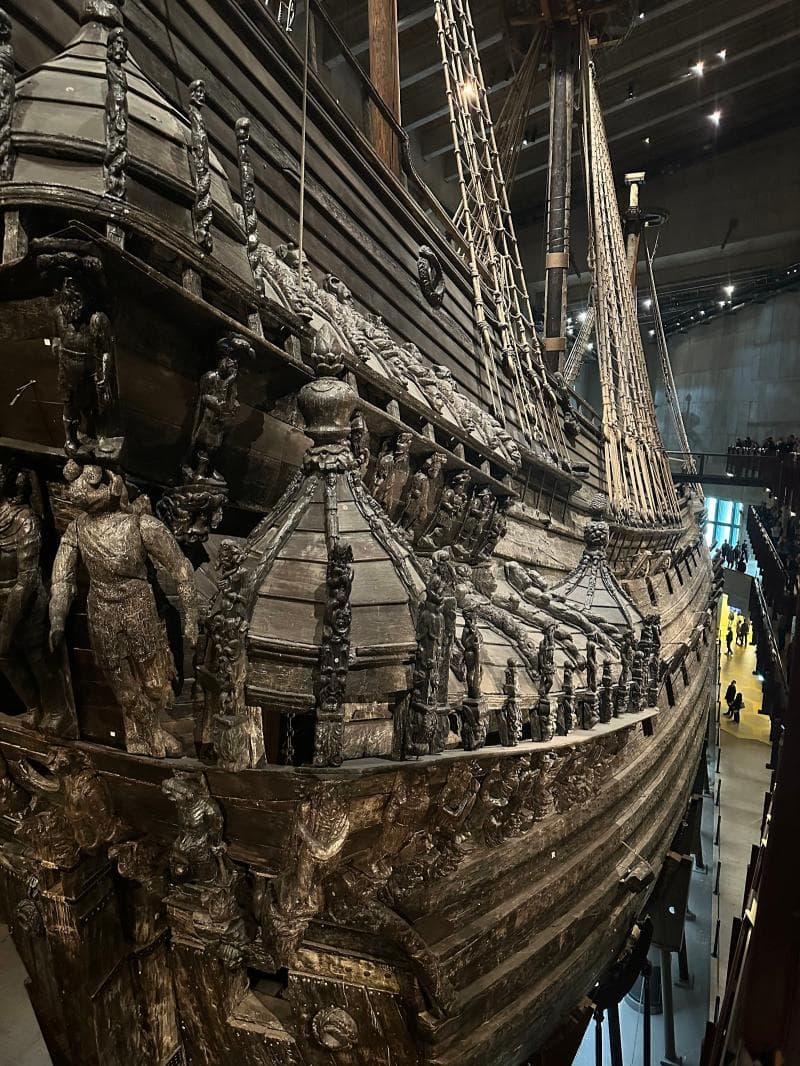
Explore the Vasa Museum in Stockholm, Sweden, home to the remarkably preserved 17th-century warship Vasa, salvaged after 333 years.
Overview
Stepping into the Vasa Museum in Stockholm, Sweden, is like entering a time capsule, offering an unparalleled glimpse into 17th-century maritime history. At its heart stands the magnificent warship Vasa, the only almost fully intact 17th-century ship ever salvaged. This impressive vessel, which dramatically sank on its maiden voyage in 1628, lay preserved in the Baltic Sea for 333 years before its recovery. Today, the museum is one of Scandinavia's most visited attractions, drawing millions with its captivating story and extraordinary centerpiece.
Located on the island of Djurgården, the Vasa Museum is dedicated entirely to this single ship and the thousands of artifacts found with it. The carefully controlled environment within the museum ensures the continued preservation of the wooden warship, allowing visitors to marvel at its intricate details and imposing size from multiple levels. It is a testament to meticulous archaeological work and conservation efforts, providing a vivid picture of life, death, and ambition from a bygone era.
History & Cultural Background
The story of the Vasa begins in the early 17th century, a period when Sweden was a rising European power under the ambitious King Gustav II Adolf. Commissioned by the king in 1625 during a war with Poland, the Vasa was intended to be a formidable warship, a symbol of Sweden's might and a flagship for its navy.
Built by shipbuilder Henrik Hybertsson, the Vasa was designed to be one of the most heavily armed ships of its time, featuring 64 guns and ornate decorations. However, despite its grandeur, the ship harbored critical design flaws. It was too tall and too narrow, making it inherently unstable. On August 10, 1628, before a crowd of spectators in Stockholm harbor, the Vasa embarked on its maiden voyage. After sailing barely 1,300 meters, a sudden gust of wind caused the top-heavy vessel to list heavily. Water rushed in through the open gunports on its lower deck, and the proud warship tragically sank within minutes, taking an estimated 30 to 50 lives.
The ship's location was eventually lost to history until it was rediscovered in 1956 by amateur archaeologist Anders Franzén. The monumental task of salvaging the Vasa began, and on April 24, 1961, the ship was slowly lifted from the seabed, an event watched by millions. The ship then underwent decades of delicate conservation using polyethylene glycol, and a purpose-built museum, the Vasamuseet, officially opened its doors on June 15, 1990.
What Makes It Special
The Vasa Museum's profound uniqueness lies in the ship itself: the Vasa is the only almost completely preserved 17th-century ship in the world. More than 98 percent of its original structure has survived, making it an extraordinary archaeological find and an invaluable cultural treasure.
Its prolonged submersion in the brackish waters of the Baltic Sea, notably aided by the heavy pollution that deterred wood-eating microorganisms, contributed to its remarkable state of preservation. This allowed for the recovery of not only the ship's hull but also thousands of artifacts, including personal belongings, tools, coins, and the remains of those who perished. These finds provide an incredibly detailed snapshot of life in 17th-century Sweden, from the daily routines of sailors to the artistic expressions of the period. The museum offers visitors the chance to see this entire historical context brought to life around the ship.
Stories, Fun Facts & Local Details
The Vasa is more than just a ship; it is a symbol of hubris and a window into the past. The ship's name, 'Vasa,' comes from 'vase,' an older word for a sheaf of grain or a bundle of twigs, which was a symbol used by the Swedish royal family.
One intriguing aspect is the reconstruction of the faces of some of the individuals found on board, providing a human connection to the tragedy. These detailed 3D reconstructions reveal sailors, some with prior injuries and poor dental hygiene, bringing their stories to life.
The ship's instability was well-known even before its launch, with early stability tests showing it was prone to capsizing. Despite warnings, pressure from the royal court led to its hurried completion. The disaster led to investigations, though ultimately no one was convicted, with the conclusion being that the ship was simply badly proportioned.
The museum building itself is designed to accommodate the ship, with masts on its roof that indicate the Vasa's original height when fully rigged. The dark, atmospheric lighting inside the museum is essential for the ship's conservation, creating a solemn and awe-inspiring environment for visitors.
Visitor Perspective
A visit to the Vasa Museum is an immersive and educational experience. Upon entering, the sheer scale of the Vasa dominates the space, its darkened wooden hull rising dramatically. Visitors can explore the ship from six different levels, offering various perspectives of its size and the intricate carvings that once adorned its exterior. While direct access onto the ship is not permitted due to its fragility, viewing platforms allow for close examination.
The museum complements the ship with numerous exhibitions detailing its construction, its unfortunate sinking, the challenging salvage operation, and the everyday life of 17th-century Sweden. A film about the Vasa's history is shown in multiple languages, and audio guides are available to enhance the experience. The museum also features a shop with unique Vasa-themed items and a restaurant overlooking the water. Children and families are catered for with special trails and educational films, ensuring an engaging visit for all ages.
Coordinates: 18.09111111, 59.32805556
View on Google Maps💬 How Travelers Describe This Place
Based on community votes
Interesting
989Unique
613Photogenic
581Must See
514Beautiful
207
Traveler Stories
Discover memorable experiences shared by travelers who have visited this place.
No traveler stories yet.
Be the first traveler to share what made this place memorable.
Things to see at Vasa Museum



Tour
By
Spot
Discover amazing places around the world. Your journey starts here.
Explore
© 2026 TourBySpot. All rights reserved.