Conservation Area
Stockholm, Sweden
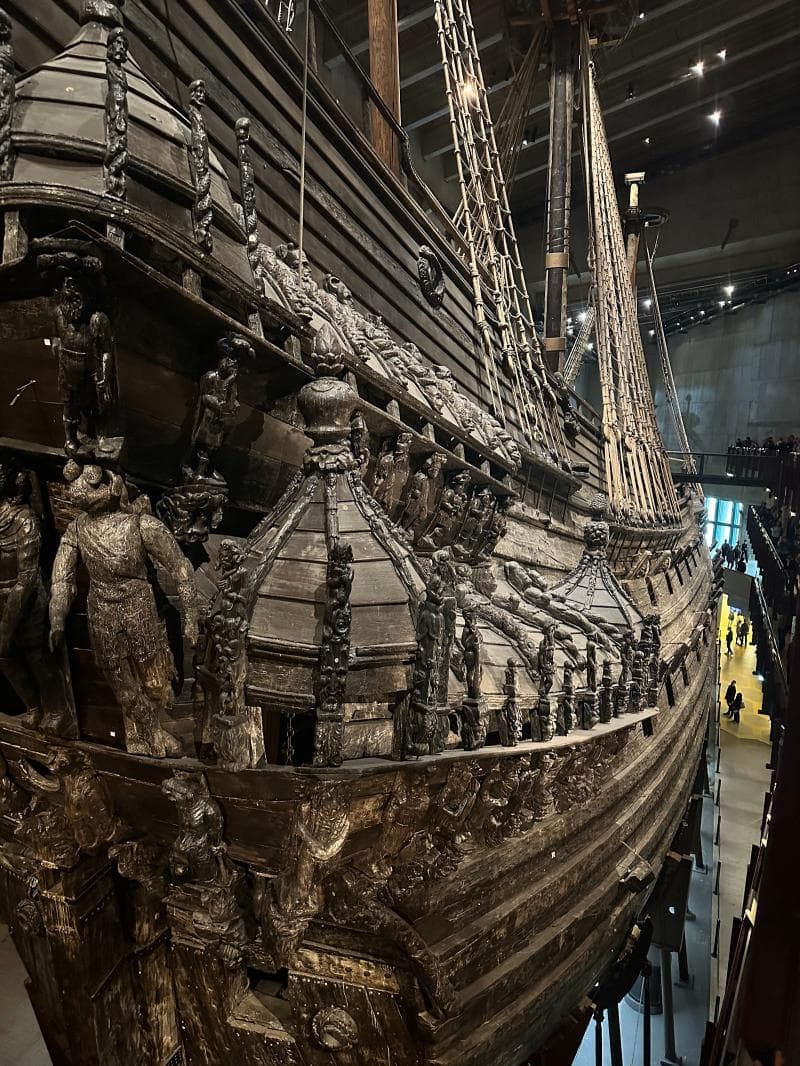
Explore the Vasa Museum's advanced Conservation Area in Stockholm, Sweden. Discover how the 17th-century Vasa warship is preserved through ongoing scientific research and cutting-edge techniques.
Overview
The Vasa Museum in Stockholm, Sweden, isn't just home to an astonishing 17th-century warship; it's also a vibrant hub for world-leading marine conservation. The 'Conservation Area' within the museum isn't a single room, but rather the collective, ongoing effort to preserve the Vasa ship and the tens of thousands of artifacts salvaged with it. This involves a complex interplay of climate control, chemical treatments, and structural support, all designed to safeguard this unique historical treasure for future generations. The ship itself, remarkably 98% original, offers an unparalleled glimpse into 17th-century naval architecture and daily life.
For 333 years, the Vasa lay forgotten at the bottom of Stockholm's harbor, her wood surprisingly well-preserved by the cold, dark, brackish, and oxygen-poor waters of the Baltic Sea. However, her salvage in 1961 marked the beginning of a new, intensive conservation journey. The museum's 'Conservation Area' represents the culmination of pioneering research and continuous adaptation to the challenges of preserving waterlogged wood, a process that continues to evolve with scientific advancements.
History & Cultural Background
The Vasa, a majestic 64-gun warship, sank just minutes into her maiden voyage on August 10, 1628, a dramatic and embarrassing event for Sweden's King Gustav II Adolf. Her rediscovery in 1956 by engineer Anders Franzén and subsequent salvage in 1961 brought this forgotten piece of history back to light. The challenge then became how to preserve such a massive, waterlogged wooden structure. Without treatment, the wood would crack and shrink severely upon drying.
The initial conservation method, which began in 1962, involved spraying the ship continuously with Polyethylene Glycol (PEG), a water-soluble wax, for 17 years. This chemical gradually replaced the water within the wood cells, preventing shrinkage and collapse. Following this extensive treatment, the ship underwent a nine-year period of slow air-drying, with the museum's climate carefully controlled to stabilize the wood. The Vasa Museum, purpose-built around the ship, officially opened in 1990, becoming an enormous, climate-controlled display case.
What Makes It Special
What makes the Vasa's conservation effort truly special is its pioneering nature and ongoing commitment to scientific research. At the time of its salvage, there was no established method for preserving a ship of this scale. The Vasa conservators essentially wrote the playbook for large-scale shipwreck preservation, influencing projects like the Mary Rose. Beyond the ship itself, over 40,000 individual artifacts, from wooden sculptures to textiles and iron objects, also required specialized conservation, many utilizing methods like freeze-drying.
However, the work didn't end in 1990. Over time, new challenges emerged, notably the formation of acidic sulfur and iron compounds within the wood, which can degrade its strength. This led to continuous research projects like 'Preserve Vasa' and 'Support Vasa,' involving international teams of scientists and conservators. The museum actively combats these issues through rigorous climate control, upgraded in 2004, and the development of new support structures.
Stories, Fun Facts & Local Details
Imagine the dedication: for 17 years, teams sprayed the Vasa by hand during the initial PEG treatment, working tirelessly to save the ship. The sheer scale of the task was immense, with an estimated 580 tons of water leaving the wood during its drying phase. The Vasa has been playfully called 'the world's largest jigsaw puzzle,' as around 13,500 pieces, salvaged separately, had to be meticulously put back into their original positions on the ship.
A major undertaking currently underway is the installation of an entirely new support structure for the ship, a process that began in 2024 and is expected to be completed by 2028, just in time for the ship's 400th anniversary. This new steel cradle will feature 27 external support elements, replacing the original 17, and an internal support system, designed to further stabilize the hull and prevent movement. These efforts highlight that the Vasa is not just a static display, but a living, breathing conservation project.
Visitor Perspective
While visitors don't directly participate in the conservation work, the museum effectively integrates this crucial aspect into the experience. The 'Preserve Vasa' exhibition, for instance, allows guests to follow the ongoing scientific battles and understand the complexities of safeguarding the ship. You can learn about the various conservation techniques, like the use of PEG or freeze-drying for artifacts, and even see how different wood samples react without proper treatment.
The entire museum is designed to maintain the precise environmental conditions necessary for the ship's preservation. Observing the immense hull in its carefully controlled environment, surrounded by the exhibits detailing its history, salvage, and ongoing care, provides a profound appreciation for both the 17th-century craftsmanship and the modern scientific dedication required to keep the Vasa intact. It's a powerful reminder of how human ingenuity, then and now, can preserve stories across centuries.
Coordinates: 18.090833, 59.328056
View on Google Maps💬 How Travelers Describe This Place
Based on community votes
Interesting
963Beautiful
897Photogenic
723Must See
481Unique
463
Traveler Stories
Discover memorable experiences shared by travelers who have visited this place.
No traveler stories yet.
Be the first traveler to share what made this place memorable.

Tour
By
Spot
Discover amazing places around the world. Your journey starts here.
Explore
© 2026 TourBySpot. All rights reserved.