Vasa Ship Hull
Stockholm, Sweden
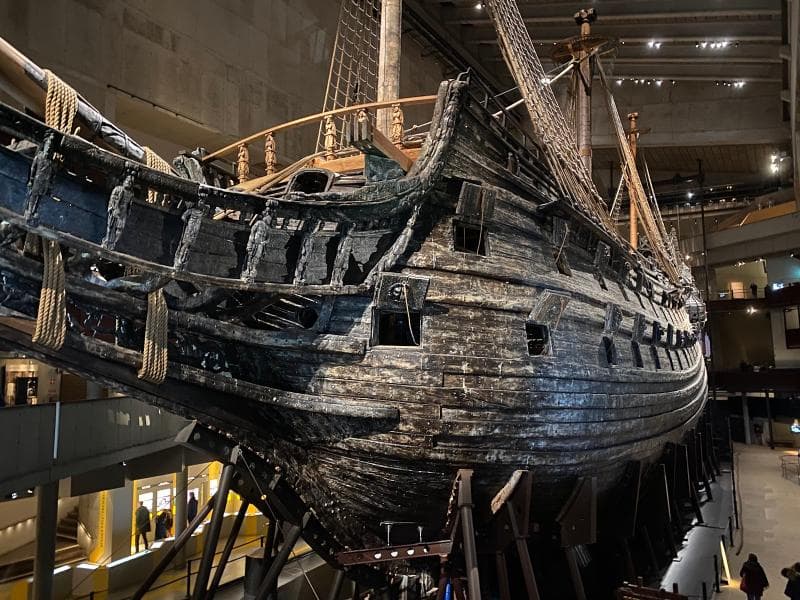
Explore the magnificent 17th-century Vasa Ship Hull at the Vasa Museum in Stockholm, Sweden. Discover its dramatic history, unique preservation, and salvaged artifacts.
Overview
The Vasa Ship Hull, majestically displayed within the Vasa Museum in Stockholm, Sweden, offers an unparalleled glimpse into 17th-century maritime history. This iconic warship, the only almost fully intact vessel from that era ever salvaged, represents a remarkable achievement in preservation and a poignant historical narrative. The Vasa sank tragically on its maiden voyage in 1628, resting on the seabed for 333 years before its recovery and subsequent conservation.
Visitors to the Vasa Museum are immediately struck by the sheer scale and preserved detail of the ship's hull. It stands as a testament to the ambition of the Swedish Empire and the perils of naval engineering in the early modern period. The museum, built specifically to house the ship, allows for multi-level viewing, providing diverse perspectives on its intricate carvings and robust structure.
History & Cultural Background
The Vasa was commissioned by King Gustavus Adolphus of Sweden in 1625, intended to be a formidable warship for his Baltic Sea campaigns during the Thirty Years' War. Construction began in 1626 at the naval shipyard in Stockholm. Despite being one of the most powerfully armed vessels of its time, its design was critically flawed. Lacking standardized shipbuilding plans and undergoing several modifications during construction, including the addition of an extra gun deck and numerous heavy bronze cannons, the ship became dangerously top-heavy and unstable.
On August 10, 1628, the Vasa embarked on its maiden voyage from Stockholm harbor. After sailing only approximately 1,300 meters, a light gust of wind caused it to heel violently to port. Water poured into the open gun ports on the lower deck, and the ship quickly capsized and sank in full view of thousands of onlookers. About 30 of the 150 people on board perished in the disaster.
For 333 years, the Vasa lay submerged in the brackish, low-oxygen waters of Stockholm harbor. This unique environment prevented shipworms from destroying the wood and significantly contributed to the hull's exceptional preservation. The ship was rediscovered in 1956 by amateur archaeologist Anders Franzén and successfully salvaged in 1961, marking the beginning of an extensive, decades-long conservation effort.
What Makes It Special
What makes the Vasa Ship Hull truly extraordinary is its almost complete state of preservation. More than 98 percent of the ship is original, making it the best-preserved 17th-century ship in the world. The hull is adorned with hundreds of carved wooden sculptures, depicting mythological figures, Roman emperors, and Swedish royalty, which were intended to intimidate enemies and glorify the Swedish crown. These detailed carvings offer invaluable insights into the artistic and political culture of the period.
The conservation of the Vasa hull was a pioneering effort in maritime archaeology. After its salvage, the waterlogged wood was treated for 17 years with polyethylene glycol (PEG), a water-soluble wax that replaced the water in the wood cells, preventing shrinkage and cracking as the ship dried. This monumental undertaking set new standards for preserving large wooden artifacts and allowed the ship's original form and integrity to be maintained. The museum itself is a climate-controlled 'enormous display case' designed to protect this delicate relic.
Stories, Fun Facts & Local Details
The sinking of the Vasa was an immense national tragedy and embarrassment. Contemporary efforts to salvage the ship failed, though most of its valuable bronze cannons were recovered in the 17th century. The captain, Söfring Hansson, was immediately arrested after the sinking, but a formal inquiry failed to definitively blame anyone, as it became clear the design flaws were inherent to the ship's construction under royal pressure.
When the Vasa was salvaged, over 40,000 objects were found within and around the hull, including personal belongings of the crew, tools, coins, and six of its ten sails. The recovery and reassembly of these fragments led some to call it 'the world's largest jigsaw puzzle.' The three masts visible on the roof of the museum building were specially constructed to indicate the original height of the ship's masts, giving visitors a sense of its full grandeur.
Visitor Perspective
Visiting the Vasa Ship Hull inside the Vasa Museum is a deeply immersive experience. The massive hull dominates the central hall, allowing visitors to appreciate its monumental scale from various levels, from the keel to the upper decks. Although visitors cannot step onto the fragile ship itself, the carefully designed walkways and viewing platforms provide excellent vantage points.
Beyond the ship, the museum offers a rich array of exhibitions that delve into the lives of the crew, the historical context of 17th-century Sweden, the elaborate carvings, and the painstaking salvage and conservation processes. Educational films, often recommended to watch at the start of a visit, and audio guides available in multiple languages enhance the understanding of this incredible vessel's story. Located on the island of Djurgården, the museum is easily accessible, making it a must-see destination for anyone exploring Stockholm.
Coordinates: 18.091396, 59.328023
View on Google Maps💬 How Travelers Describe This Place
Based on community votes
Unique
995Photogenic
839Beautiful
603Must See
581Interesting
388
Traveler Stories
Discover memorable experiences shared by travelers who have visited this place.
No traveler stories yet.
Be the first traveler to share what made this place memorable.

Tour
By
Spot
Discover amazing places around the world. Your journey starts here.
Explore
© 2026 TourBySpot. All rights reserved.